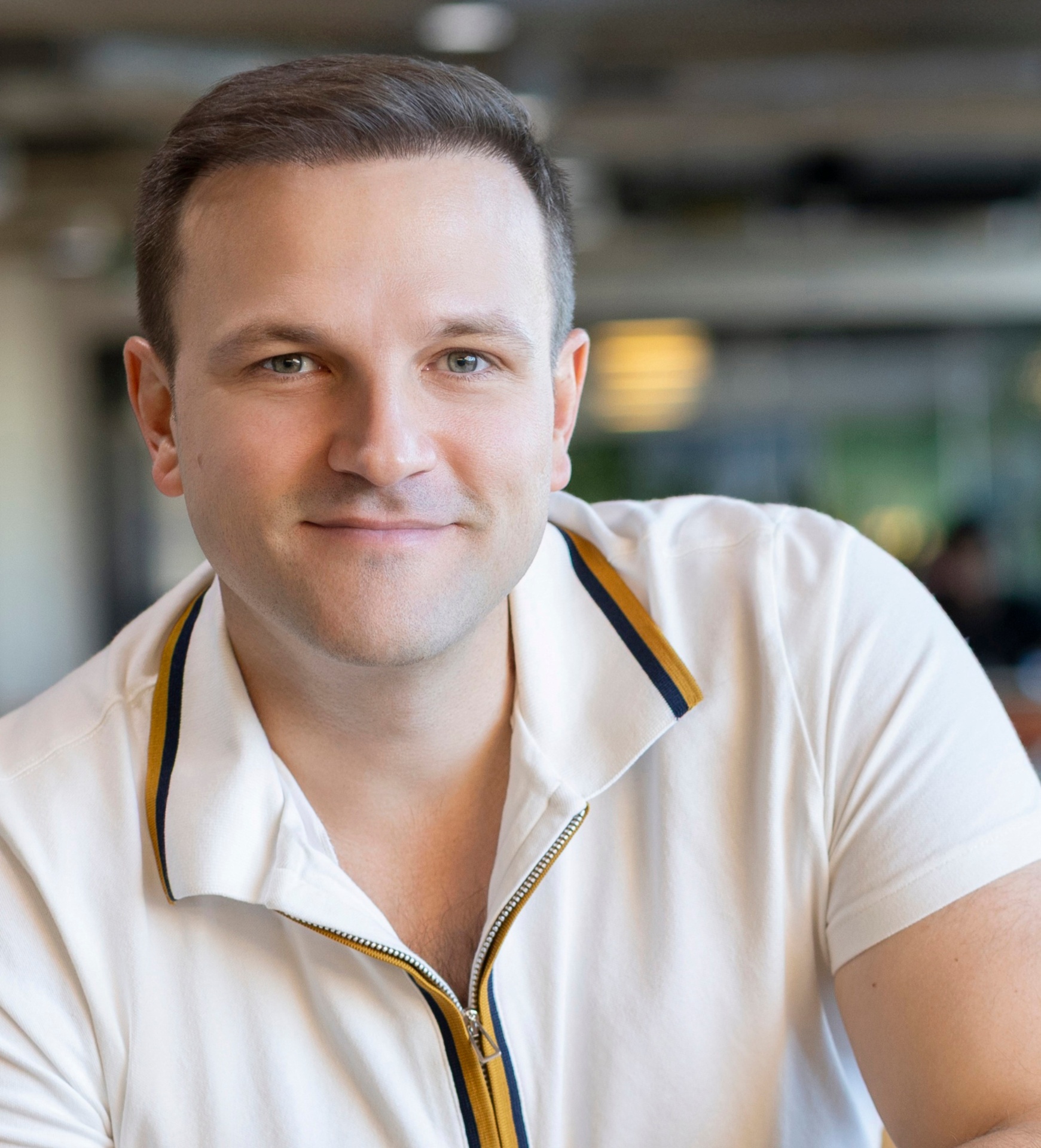
I got 19 notes. People didn't know how enterprise AI is going to look like. It was very hard to forecast. Investors understood that probably the returns on those investments are not as guaranteed and are not going to be as successful. >> Would you say you're the enterprise solution equivalent to like lovable is for like in a consumer or mass? I came from cybersecurity and people thought I hit my head in the tub. I felt companies out there really wanted to adopt AI, but people said, "No, you don't understand. You go against the laws of nature." And so believe it or not, it was hard to raise. What would be your advice to founders right now that are exploring high-growth enterprise AI? What should be on the horizon for them? For the first-time founder for VCs to put a lot of money in, there needs to be some Everyone, welcome back to 100 million dollar exits. Today we have Shay Levy with us, uh former co-founder and CTO of Noname Security that sold to Akamai for close to half a billion dollars and now is leading Unframe uh that recently raised over 50 in a relatively short period of time. Welcome to the show. Hello. Great to be here. All right. So I want to just go straight into it. Shay, you uh you've had a pretty fast and impressive uh background when it comes to securing capital. That's what the show is all about. Uh walk me, you know, walk me through the moment when Akamai came to you and was proposing the idea of buying you out for half a billion dollars. What was going through your mind? How did that happen? Kind of tell us the whole story there. Sure. Sure. So I actually bit give a bit more background because I was actually um when things kind of started rolling, I was already uh not at Noname. So basically I decided uh we'll touch on that when we talk about Unframe etc., but I I basically planned my departure from Noname at around the end of uh January 2024. And just about little bit little bit time afterwards um uh the discussions basically started. Um now I was quite in my mindset, if you think about that, I already knew that I'm going to start a new company. So my mindset wasn't so focused in in a weird way it wasn't so focused on that process and is it going to materialize? Because you know, I'm sure you talked about it previously in the podcast, you know, there's a lot of times where these things don't materialize. It's not like you get a call and next day it's being signed. There's a long thing there. And so I was somewhere in my in my mind thinking, "Well, interesting, right? Uh we'll see how this is going to turn out." But I was very busy on like the build of Unframe. Uh I I I I knew what was going on, you know, obviously, but uh it wasn't that I spent too much like mental thinking, "Oh oh, is it going to happen? It's going to change my life? Is it you know, what is the implication going to be?" It was exciting, for sure, but somehow it wasn't you know, once it's not your core priority, it somehow like, "Yeah, it's happening. It's it's pretty exciting, pretty cool." I always knew that what we built in Noname is highly valuable. Yeah, ask me, I knew that Noname is going to have success, but it was interesting to see it uh evolve. So, you know, it started with initial discussions uh that are pretty general and it started going more and more that route. Um Were you guys actively Were you guys actively Were you guys actively Were you guys actively trying to bring in buyers to the table or were they Akamai the process? Not really, but but think about that. So a year prior there were rumors you know, I won't touch on that Akamai, you know, it it got it there were there was an article saying, "Hey, you know, companies are interested in Noname." And Akamai was actually mentioned in there. So, you know, usually I would say discussions like this don't come out of the blue. Like it's it's very rare that you get a phone call from a stranger. It evolves, you know. And so when you were I guess I I what I think would be real interesting is Sure. the company raised like 200 something million relatively fast Correct. uh at Noname. Uh you know, during the peak and when 2021 was hot and everything was you know, cooking. But um why were you why were you leaving? Like what what you know, like that's like a rocket ship. Everything's you know, supposedly going up and to the right from the outside perspective. So what caused you to to step down and then uh pursue Unframe? Yeah, so so it it was pretty interesting. So a few things happened in at the same time. First of all, Noname was growing and doing very well and was selling and was was a solid company. But I feel, you know, the the more um a company evolves, especially, you know, a company like Noname that's doing API security very quiet, you know, framed space that has its boundaries, has its starts and finish, the CTO impact uh goes a bit down. Uh it's just you know, there's just so much that you can do within that bucket of API security. Like as long as you're just doing API security, that's that's kind of your role. So initially um I was also very outbound facing CTO. So they you know, I can I I can say some CTOs are inbound facing very you know, in the architecture in the tech etc. and some CTOs are very outbound with customers engaging with them, especially the important ones understanding their problem, helping them get to to a successful outcome, right? But initially every single one of them every single one of those is critical. When you're that big of a company, you have very few that are as critical and also like the the impact you can do on the org when it's, you know, within these four walls somewhat goes down. I would say, you know, you could you can be replaced. Like there's no problem with with replacing you. So that's that's point number one. The point number two is obviously there was a big thing that happened during the time Noname is that the LLM moment, right? LLM moment and and I understood that a lot of things are going to change regardless of cyber, right? And so I had this idea of Unframe and without touching on the idea, it was bubbling in me, but I always said, "Well, um in Israel, in cybersecurity, in API security, I'm going to find another company that's doing what Unframe is doing and I'm going to invest in it and this is going to be my involvement." And I just waited for someone to found a company like that. And it bubbled and I'm waiting. And it bubbled and I'm waiting. And it bubbled and I'm waiting. And eventually I was like, "I can't. I just I have I have to do it." And so already 6 months before I left, like I aligned every everyone were aligned. I didn't surprise everyone you know, anyone actually. I I talked to the board. I talked to Oz, my co-founder, which I'm in great contact with uh almost daily. Um we're great friends. So everything was aligned. We said, "Okay, this is how we're going to do this transition. You know, we're going to uh thicken the leadership. We're going to bring a VP R&D that is very talented. We're going to bring a CPO that is very talented. Gradually I'm going to, you know, reduce like where I'm being involved, how I'm being involved." And so all the stars were aligned will align so I could depart at uh January. So that was that was kind of the idea. And that's what we did. I no at no point, you know, it surprised everyone or was a bothersome uh move. It was just gradual evolvement of the company um and my gradual my own like interests that kind of shifted to be like really focused on this revolution that is happening that I said, you know, "Okay, Noname is mature. It will grow to be successful even if I'm not there, you know, it's it's up, it's running, it's alive, it has life of its own. Now I can start another thing." That was it. That was a phenomenal story and that it's a it's nice to hear an amicable uh kind of a kind of more of a growth story. Like you know, you you were evolving, the company was evolving like everything was just kind of evolving and everyone finding their own place. Um and you know, now go on to Unframe cuz with your success at Noname and sure the acquisitions, you know, awesome at 500 million. Um and before we move into kind of the details of Unframe and what you're doing there and the rapid growth you're having there, with you know, Noname in that transaction, something that I'd like to explain to to founders is like 500 million sounds like a lot. But you also raised a lot. You raised around 200 plus million. There was some early secondary uh where maybe some early employees and founders maybe got um you know, some kind of distributions. But when it came to the actual overall outcome, you know, of that transaction, you know, raising at peak valuations in 2021, how would you kind of rate the outcome of that transaction? Sure. So so that that's actually interesting to touch on because I think we see we see the evolvement of their of of that today. So um I think through after the peak of 2021 and all the um M&As that happened afterwards, fi um investors realized that in cybersecurity companies it's really really beneficial to be early. Um it's it's always beneficial to be early, correct? But in cybersecurity there is something where there's a certain range where most acquisitions happen, especially in cybersecurity. And and in that range, I don't know, you know, you can call it from like 250 up to like 6 700, I think. Even even 700 is like really high, I think, for cybersecurity. But somewhere there. And so if you come in in the late rounds, um you have to be mindful that most exits happen in that in that bucket. So this is why what we're seeing now is almost all VCs are really trying to come in early in cyber. This is why the seed rounds that you now see in cyber are much higher than they used to be back when me and Oz raised for Noname. Why? Because there's so much want to to get into the seed. Same goes with the A round. Still a lucrative round to be in. Not as lucrative as seed. So, they're also quite aggressive. But, notice how many B's and C's we're seeing. Not that many. If you look at cybersecurity now, there aren't that many B's and C's. Why? Because the investors understood that probably the returns on those investments are not as guaranteed and aren't aren't aren't not in many cases aren't not going to be as successful. And so, this is what I think we're seeing. Now, in NoName usually, you know, it's an investment podcast, so we can talk about it. Investors get preferred shares, right? And in preferred shares, you always have a certain guarantee to at least have 1X return. So, you get your money back, right? If you invested in a higher valuation, you get your money back. And then the rest of the money is distributed to all the investors that are that are left in the pool. And those definitely did you know, X amount their their initial investment. And what you'll notice is that for seed and A round, even the B round, that's very nice returns. And if if if I say that, then you obviously understand it also as founders, because you're there from day one, you're somewhat like the seed investor, the it's it's a phenomenal outcome. So, usually the founders the founders almost always have some sort of good outcome or phenomenal outcome in exits, usually, not always, unless it's an acquihire or something like that. Seed investors, A investors, those are usually like really good. And then B, C, depending on the valuation you raised, that you know, that changes. What I think is interesting about what you just shared there is the macro impact on your business. Like, you can't be growing. You grow to 40 million ARR, you grow to 50 million like you're hitting these trajectories. But, there's a point of too big to be acquired and you know, like the two you know, too small to be you know, interesting. So, it's like there's this no man's a sweet spot in that 200 700 million. And then below or outside of that, you're just not really a good target. And so, you get too big, you know, it's you just the probability you have to go public or you have to be Wiz. You have to adjust your valuation. You have to adjust it and then that's a that's a fight. You have to be aware as you're going there that you're going to yeah, you're going for the stretch. Yeah. I think it's interesting for for founders to realize that, cuz that's no penalty to founders, you know, for building a great business and trying to be a unicorn. But, the fact of the matter is the stats show that that's where deals happen and then to try to raise a B at like a $300 million valuation, you know, $400 million valuation, which is normal, it's not historically kind of proven to be not a good outcome for investors, so they're less likely to pursue it. So, this is I think it's a very important lesson for founders to be aware of when they're thinking about the next round, profitability, you know, when to sell. It's like, what's the market actually dictating? And to like do a deep dive in that market, like work with some advisors, partners to kind of figure that stuff out before you just go to market and then you fall flat on your face, you lost momentum, people are disappointed. Oh, you didn't raise a series B, you're not successful. It's like, no, you got a great company, you just chose the wrong capital strategy. Um But, now I think I appreciate you sharing that that story there. And so, when it comes to NoName and your experiences you had there and the momentum you had coming out of that, tell me about Unframe. Okay. So, um interesting. So, should I start with the the Okay. So, I'll start with the with the concept. So, what what I I recognized early on what bubbled in me, right? Was that AI came in, you know, there was the LLM moment and I felt all the existing vendors are trying to use that to get more money out of their customers. Oh, we're adding these AI capabilities, pay us more. And I felt companies out there really wanted to adopt AI. They had this burning need and they were kind of abused. They were companies telling them, "Oh, we'll build you this AI strategy, pay us a fortune." Like, I felt this is happening. I felt existing vendors are trying to add AI and get more money out of them. I felt you know, I I knew that these existing companies have a lot of use cases they they are going to want to achieve, because you look at all these manual processes, everything that happens, all the solutions you currently have and you say, "Wow, I can really make a shift here." If I I want to make everything here AI native, how do I start? And you're confused. And there's companies out there that just try to get value out of you. I didn't like that equation. I I felt it's it's broken a bit. And I felt that a lot of things that are currently happening in AI, especially enterprise AI's are are not going to be successful. This is basically two years before this MIT report that now came out that now everybody is referring to, right? That's what I sensed. And I said, "What if I can build a company like Unframe where my interests and the customer interest are going to be perfectly aligned? Meaning, they will have an AI use case. I will help them achieve it in a really really fast time, like five days. Can we actually do it? And that's the deep tech behind it. I'm going to give them a solution that they're going to be happy with and they're only going to need to license if the solution made an impact. Can I actually get to this holy I felt like it's almost the holy grail of software. You wishing a software into existence, it comes into existence for you and you choose if you want to pay for it or not. And that's kind of the engagement that I wanted to do with enterprises. And so, I had this thinking and I and I looked for for a company out there or an idea that is similar. There was this concept of forward deployed engineers where they bring a crew over to your org and but it was very expensive. You paid for someone's time, you paid for them to build, you paid. And I said, "No, let's drive real impact, drive real solutions and get paid afterwards. Let's not be a nonprofit. But, let's kind of share the value." That was the core thesis. And when I went to raise for that, and I think Jason, that's going to be interesting. I came I came from cybersecurity and and people thought I hit my head in the tub. That's what people thought. I'm not Look, I I'm telling you this was obviously fundraising is always a very humbling experience. People need to know that. Like, don't expect you to come in through the door and and money being thrown at you. But, I heard a lot of Look, if you do something cyber, I definitely want to hear about that. But, you in AI and and there was a core thesis that they really didn't like, well, where one company is talking about doing multiple solutions in multiple industries, in multiple verticals. Like, what do you know about banking or real estate or like you're you're going to meet a million use cases that you're not a domain expert in. And I said, "Yes, but this is the new world." And people said, "No, you don't understand. You go against the the laws of nature." Like, people really told me that. And so, it was hard to raise. Believe it or not, it was hard to raise. I don't think if I if I if I wasn't a second-time founder, I wouldn't be able to raise, I'm pretty sure. Um because back then this seemed the norm. Now, coming afterwards, about a year later to complete the the raise and do like an A round that was led by Bessemer, that was a lot easier. Suddenly Suddenly it's the norm. Oh, of course a company is doing multiple products and multiple solutions and it's not one product, one company. If I take you back to end 2023, beginning of 2024, it was one product, one company. That was the thing. And suddenly now with AI, it's very normal for one company to work across verticals, across industries, offer multiple products, multiple solutions. Like, it it became the thing. Because so much so much has to change in those enterprises. They have a need to change so much. So, someone needs to offer it, so it makes sense. And I had this in mind. So, that's kind of was the story around Unframe. So, wasn't easy to raise our initial round. Well, let's talk about that initial round a little bit more, cuz you raised 20 million. Um like right off the gate. And so, when someone says, "Oh, it was hard to raise money." Like, you you came out of the gates with a with a fat raise. Like, walk us through the decision to come out at 20. Was it your idea? Was that investors' idea? Like, how did that come about? Let me help you. So, we don't touch on the distribution between the seed and A. We did raise $50 million to date, but I can tell you the initial raise wasn't necessarily 20. It wasn't a small raise, it was still a fat raise, but not necessarily 20. 20 would be really fat raise in my opinion and too much. But, what I understood early on is Look, it's especially, you know, after meeting meeting investors, etc., is that it is a risky idea. And and and I knew it's a risky idea. And when you have a risky idea and you know you're going to need to move maybe a bit to the left, a bit to the right, a bit there, then I wanted to raise a bit more. It gives you a better cushion to move as as you're navigating this. And AI was so new that, you know, I'm taking you beginning of 2024, people didn't know how enterprise AI is going to look like. I It was very hard to forecast. And so, I was like, "Okay, I am going to go for a bigger round, although I'm going to dilute myself more." Because obviously, yeah, the valuation goes up, but there is a limit in a certain point, right? And then you can choose to raise less or choose And I was like, "Okay, I'm I'm going to I'm going to take more dilution on behalf of being more cushioned in the sense that I can move left and right. I can take a longer period of time. I'll figure it out. I'll have I'll have I'll have better buffer." So, that was my initial thinking. So, I was the one like we as a founding team, obviously I'm not alone in this. It's important to say my co-founders are Dean and Larissa. Obviously, we're part of that. But, what we thought of is we're going to push for a bigger round, so we'll be better cushioned, so we'll have better under So, so as we engage with the market, we'll feel better that we don't have to quickly find the the starting point. So, that that was it. It didn't come from I can promise you it didn't come from investors. Inve- Investors want you to raise as little as possible in the lowest valuation possible. You want to raise probably in the highest valuation possible and then maybe not as much as possible, but somewhere close to that. There's a sweet spot in the middle, probably, and I feel that's what Unframe did in its seed round. So, outside of your your your deck, your thesis, your team, what did you have when you secured that initial round? Um so, yeah, this is this is where my CTO hat kind of switches. So, we No, really, because I I was I was very curious about AI and so I really wanted to experiment. So, I experimented quite a bit. Like um is is this theory even possible? And and you know, some I I started building like small things. Give me key Not something that I actually, you know, said this is our product. But I did have something to show. An actual thing that I built. So, cuz I am My background is software engineering, is AI, is coding. So, I I didn't I didn't mind. So, I did come with something pretty that I thought is pretty exciting to show. And most people that I Most investors that actually saw it said, "Yeah, this is pretty exciting." Um and so I did come with that. You don't have to, honestly, when you raise you don't I I did it for myself. I wanted to see if what I'm envisioning is even possible. Can I actually achieve use cases that quickly? Can I actually make an impact? Can it actually fit an enterprise? Etcetera, etc. Came with a deck, came with a story, came with a founding team. And came with a bit of crazy I'm telling you, people looked at me like I'm crazy. Um and it's okay. Uh and I I guess at the beginning you some somewhat enjoy it, but after you know, after to to to to kind of open the curtain a bit, I got 19 no's. 19. 19 coming to raise a seed. I got 19 no's and 19 19 uh compare another saying saying, "If you do something in cyber, take my money now." And I was like, "No, I'm not I'm not doing that." And so, 19 no's and then kind of number 20 was was the one that That's it. There's a company. And then it started rolling. And I can tell you since then it was much easier. Every Every time since then it was so much easier because the it kind of started to evolve into our thesis being right. Um so, yeah, we didn't come with much. A deck, a story, bit of craziness, founding team. I I did come as a second timer. Otherwise, I don't even think I would have been able to raise. Uh that's about it. No, I I think that's a great story. And then you you raised the the remaining amount of the total 50 relatively quickly. Yeah. What What kind of momentum were you generating? What What were you doing with the business that kind of got investors excited to want to chase and follow on as quickly as they did? Yeah, so we started engaging with enterprises and and and our and our theory came into reality. Like, yes, you know, you come in and you say They have AI use cases. They are happy to share their AI use cases. They don't care that you didn't come from banking or real estate. They have use cases. They believe you're an AI expert. They believe you're a rock-solid company that can help them achieve those quickly. They see the alignment of interest, which is kind of the whole idea of Unframe. They believe in the deep tech. They say, "Okay, maybe they can actually deliver our use case in a week." And it started rolling. And we started engaging with customers and we haven't stopped since. And so, very quickly we had um a lot of enterprises trying us out, some enterprises signing us on very very quickly. And so, I'm telling you, it it moved much faster than than No Name, for example. And if I compare it to the No Name story, so when you come as No Name Security, right? You come in and you say, "I We do API security. Let me tell you why API security is important." You kind of educate them on API security. You kind of need their buy-in. Sometimes it's a pro It's okay, it's a project of for next year. It's different. But when you come in as Unframe, it's like, "Do you guys want to adopt AI?" It's always like, "Yes." "Do you have use cases?" "Yes." "Let's Let's get this going." So, you're almost always relevant. You do have to sift through what is real, what is not. Let's see, it's not a science experiment, etc. But I think investors started to wake up to the fact that wait, Unframe was actually right. Like the the the core thesis, the core idea is starting to be proven. And so, it was much easier. It was much easier. Like, when you have the proof points, you come in a lot stronger. Yeah, and and momentum. I think that's the other kind of key thing. It's a Yeah, proof, but also that that sounds like things were stacking very very >> Yeah, exactly. Very quickly. Yeah, very very quickly. Yeah, it's a it's it's it's a good point. Momentum is is really key when you build a company. Yeah. It's a How do you manage that momentum? Cuz like you're the founder. You're dealing with people, team, customers, and CTO. You're building product and you're entertaining investors with the next raise. Like, you know, where where did the pressure kind of boil up the most? And and how did you kind of how did you deal with that to kind of keep this momentum going? Man, so the the pressure always builds up somewhere, right? You you're Sometimes you're So, when you're dealing with investors, very classic CEO hat. Then you're you're very new. It says you know, some people you sell to enterprises, but let's be honest, when you're just 3 months in, your tech isn't really enterprise grade. So, you are going to up a lot of stuff, right? And so then the CTO hat comes on. And then you're like dealing with the tech and like actually in there. You're helping them build. Like it's not, you know, some people think see especially me and Unframe. So, you know, we're a team of three. There's me, there's Adi, which is the VP R&D, and there's Larissa, which is the CEO. So, I switch hats between CEO and CTO often. And then you have the the cons the the thing about like how do you get leads and and pipeline and all that. So, you put on the sales or marketing hat. You engage with customers. And so, I find myself always wearing a different hat depending on where I felt is the most burning area at a moment in time. That's kind of how I operate almost always. You'll find me in phases where I'm almost purely sales, in front of customers all day selling, pitching Unframe, getting it going, da da da da da. And then the last thing that I want to think of is what happens in the tech. Like don't tell me I don't Like, you know, I want to be far from it. And then you switch hats to the tech and you're like, "I don't want to engage with customers now. Like let the sales team do its thing. Let's build something worthy." And then that's kind of how I operated. It really grinds you down. Um pooh. It It kills you. Um a really really rough journey. And especially like I think even if I compare it to No Name, like the first year and a half in a new company is prob is by far the the hardest. It's almost like the static friction. It's almost You're really creating something live. Like a company initially isn't alive without its founders. Like if if you cross the street, a bus hits you, it's done. And to get it to the point in which it's alive, it has life of its own, there's a team, there's people, there's functioning, there's sales, there's marketing, there's R&D, there's and that even if you were to disappear tomorrow, it it will have life of its own. That's the hardest part that I found. That's the hardest hardest part in a company. The hardest, cuz you build momentum out of zero. Once you finish that, then you just scale it up. Okay, more sales, more more R&D, more projects, more marketing, more Let's go. Let's go. Let's go. That's already an easier part. But the zero to to the beginning, oof. Killer. Killer. Oh, that At least it was a short period of time in comparison to some other founders I know that took like two, three, four years to kind of get to that breakout momentum phase. So, at least at least it came quick and you know, you had some capital behind you in that. Um And so, one thing just fun question I want to know is when it comes to selling enterprise and selling enterprise on a relatively unproven category, let alone product. Yeah. Um it's hot. People want it. And I think you came You mentioned in the beginning like you have a killer It sounds like you have a killer offer. Like, hey, try before you buy kind of, you know, mindset, which is and you get quick turnaround. So, And you get a custom try before you buy. It's something custom. You don't have it in any other industry. No one will tailor you a suit and say, "Well, pay me if you like the the end result." Like I tailored it for you. What do you mean? But in Unframe it is like that. It's tailored, but you get to try. Real quick, if you're a founder doing over 5 million in revenue and want to know what the best $100 million plus founders are doing to fuel their growth, then make sure to subscribe to our $100 million exits newsletter. Get the playbooks that are proven on how to fund, grow, and sell your business. I'll even give you a curated list of investors that want to invest in your business. It's totally free. All you have to do is click that link down below. Subscribe. Do it now. I promise it's worth it. You won't regret it. You got nothing to lose. Go ahead. Subscribe now. Back to the show. Yeah. So, like what are you guys doing for sales? Like how do you Is Is it marketing? Is it sales? Like what what's driving the lead machine? Like the sales machine for you guys? Yeah, so that's a great point cuz unlike the classic selling, um which was like this is the problem we solve. This is our This is our statement. Let me convince you what is why it's an important problem and I want you to buy it. In Unframe or generally AI and I think they touched on it quite a bit by now that this stuff like is very much out there. The selling in AI is kind of more consultative. In the sense of you give the general idea of what the platform is, what it is you do, and the quick turnaround. And different companies will have different offerings, etc. But the selling is almost always like, "What are you trying to achieve?" Like you're you're trying to get the customer going about a use case or what it is they are hoping to achieve. So, it's somewhat like consultative selling. Now, it We didn't have to invent it. Like consultants exist in the world in the world already before. So, you could get a sales team that is more consultative in nature. There are also companies that were always somewhat consultative selling. So, to give you an example, what what I found is that database companies are almost also like consultative selling. Because someone selling you, let's say MongoDB, they don't come in with a feature list. is the They come in and say, "What are you trying to achieve? Let me convince you why MongoDB is the best the best the best thing for you to to solve this use case. So, they're almost like naturally more consultative selling. It wasn't like that in Noname. Noname was API security. I need to convince you API security is important. I'm not consultative to anything you want to do in cyber. I'm telling you you need API security. But, um so that was the shift. So, we're very much sales-driven. There is marketing concept because AI is very hot and enterprise AI is very hot. Like a lot of companies want to adopt it. We help them solve real problems. Um word to mouth is very strong in AI because people are very proud of what they're doing in AI, especially when they get outcome out of it. And so, that started working for us quite well. But, our motion and generally enterprise motion is sales. It's It's a sales process that you have to go. And And is it safe to say, and you know, correct me if I'm wrong, but are you Would you say you're the enterprise solution equivalent to like Lovable is for like on a consumer or mass So, you know, I I I I heard that before. But, the thing about the the Lovable and those They're They're DIY. They're meant for the enterprise to build themselves. And Unframe in the sense that we're not a DIY platform. We don't come in at least not not for now. We don't come in and give you building blocks and say build it yourself. We say, "We have the building blocks. This is why we're able to deliver use cases very very fast. But, we'll deliver you the turnkey solution. You'll get a solution for the use case that you mentioned. And we better do it fast or we we will pay for it, right? Not you because we wasted our time. We better do it with value because otherwise we would pay for it because you won't you won't want to license. And so, we take all the risk and all the work and all the the burden upon ourselves. There is the concept of a platform. All the solutions are running on a single knowledge fabric that makes them smarter, better over time, etc. There is deep tech behind it. But, we took the burden of getting a turnkey solution. In Lovable, if you're a B2C consumer, you know, you come in, you try to solve your own problem. And you you don't just talk about it and person takes it from you and does it. Uh so so that's kind of that's kind of more like what we do, I'd say. Okay, that gives me a little more context. And is it safe to say it's a kind of like hyper-scale tech-enabled service? Like you guys can very few human at like not as much human effort to get a substantially scaled up output. Yeah, but think about that that's also like in the terms of service, right? Because this is kind of the twist. You're right that it's a service on our end. We spend time. We But, the customer does not we we never charge for services. They don't pay per per our time. They don't pay for our build. They pay per solution per year only after they got it and if they're happy with it. So, it's very much to the customer in front of customer is very much like a product. You license a product in a yearly basis based on the fact that you liked it or didn't like it. To us internally, there's some work around it in terms of like creating the solution, giving it to them, making it a value. So, it's somewhat unique. So, to the customer, not a services company. Internally, maybe somewhat like a hyper-scale services company. And that's kind of the mix of Unframe operators. And being that you're kind of like innovating on a front that, you know, not too common. Like there's like traditional like dev op, you know, like devs outsource services where Correct. >> Yeah, sure. We'll come and spend 6 months and build you something. Right. >> But, you know, you're turning something around in in weeks and iterating and optimizing to get to the point where they'll actually pay. Uh so, you take a huge risk up front. So, like how do you price something like that? Good question. So, there's no Yeah, so something in in Unframe is that before we talk about your use case, we we don't know to tell you if it's small, medium, or large. We do have t-shirts to size pricing. It starts at 75k per year all the way up to 500k per year for the larger, really complex use cases. And when we talk about your use case, we try to estimate the complexity. We never surprise you. It's not like you get the solution, try it, and then, "Oh, you liked it? Guess what? It's a million bucks." It's not like that. You know up front before we go ahead and make it, you know how much it's going to cost shall you license it. And you usually, you know, it's usually very cost-effective, much more cost-effective than building it yourself, much more cost-effective than outsourcing on consultancies or, you know, those heavy companies that come with four deployed engineers that are very very expensive. We usually are a very cost-effective route. You don't have to make that of a strategic decision. It doesn't have to roll all the way up to the CEO to sign a $10 million check over the course of 3 years. It's much more focused on a use case, get you up and running, get you those quick wins. And on top of those quick wins, we'll build something far greater. So, as we start working with enterprises, after we did one or two use cases, there it starts to be like a flood. We get 16, 20 use cases from within the enterprise that they say, "Well, Unframe is really great in the sense that we get to see the solution, use it." And then it just goes. It just goes. >> Yeah, you you you got a killer strategy for land and expand an enterprise, which is the holy grail of enterprises. It's one thing to get your product in the door, but how do you That's like the hardest thing is once you actually have an agreement with an enterprise to get more money out of that. >> Right. Uh which you guys have a perfect playbook to do. And I I want to kind of point out a couple things cuz you know, for audience like you're all this stuff's rolling off your tongue and it's just so natural. But, you're you're hitting on things that are like absolute best practices. Enterprise sales, ACV, 75k to 500k. You're out of you're you're below that, it's not a good business, it's not sustainable. You're above that, it's like not achievable. Um you know, the the capital allocation you're you're speaking from like a level of experience that, you know, most of our listeners probably won't catch the fact that like, you know, you're saying all the right things, which probably leads to a successful capital raise. So, the question I want to ask you is like, was that always the case? Like what Did you kind of conceptualize it with that sweet spot of ACV that kind of like killer offer to land and you know, knowing that if you land that client and they're happy, they pay once, they're going to now spread across the org? Uh and I think that's what VCs are betting on is the fact that you're going to capture so much market share within dollar Yeah, or should I say wallet share of these enterprises. It's a it's a such a clear VC play. Um I just want to ask you like when when you're building all this out and conceptualizing all this, were you building with that exact, you know, mindset or did you did you kind of like have to change things to get to that narrative? Yeah, so I had the mindset that the price range I had in mind, like I kind of knew. I didn't know how, but I knew that 75k. And fun fact, Noname also had a minimum ticket size of 75k. So, I don't know. Like, you know, someone tried in your company and Noname wasn't expert in this. And like you knew that that enterprise. Yeah, I I kind of knew that this going to be the price range. Um we did have certain things that we changed. Initially, we thought maybe we'll have some off-the-shelf like off-the-shelf solutions. We still we still have those, but we thought to start with that. Just have off-the-shelf and offer custom or like tailored as a as a side thing, like less of a But, we very quickly understood that the tailored is the more interesting thing because companies started going after that. Like we got this feedback from the market. But, in terms of the price range and estimating the complexity and all that, some of it was very early, some of it baked later. I think the biggest difference though is when we did raise the seed, we talked about like having on off-the-shelf solutions. Like that that's going to be the main driver. And the tailored are going to be the less of a big driver. It's still going to operate in that way that you get it, we make some changes, etc. But, um in retrospect, that wasn't the the the right approach. By the way, a lot of VCs probably did not like that. So, they did identify something and they were right. Um but uh yeah. So, so that's something that we we learned very quickly. After like 2 3 months, we were like, "No, it's it's the tailored. That's what they're going." Because it's very hard to guess, you know, they have processes in banks and processes in insurance. You would never know it. Like even if you worked in banking in a different bank, you wouldn't necessarily know what business process they are trying business process or pain point they are trying to resolve for now with AI. It would be very hard to guess. It's something that is usually they're happy to share, but it's for them. Well, and it's it's very much driven by the humans. Like the people making the decisions like it's, you know, it's a VP of some org who's pissed off about something and wants something something solve that his team hasn't solved it. So, he's like, "All right, let's you know, can AI solve this?" And it's so you know, kind of individualistically driven, not necessarily greater or like the CEO's making some kind of mandate that, you know, this AI has to be there. Um and it's just like, you know, now I I challenge people all the time. It's like, AI it's so much of like knowing that anything is possible, what could you do What would you ask for? You know, it's like it's such a different way to think as opposed to like, "Hey, we have the SaaS product. You should buy it." It's like >> Exactly. Exactly. Exactly. And I'm What you just said, a year and a half ago, if you would go and tell that to VCs, they will think you're crazy. Yeah, or you're just a dev ops. You're I mean, not dev ops. You're you're like a dev shop. Like >> Yeah, like what do you mean they have to come up with a solution? What are you off What's your product? And it's like, "Ugh, you you guys don't get it." The the and I'm seeing a general shift in the mindset of VCs is like this AI-enabled output. Um and some people Yeah, could be service like tech-enabled service. Like Yeah, even for our company, we for the amount of volume and deals that we do for the size of team we have. It's because we're so we built all these internal tools and automations that just make it so much more efficient and faster than say a traditional, you know, shop who, you know, doesn't have access to those those tools. So, I'm Um like for you guys to be kind of It's AI. You built like a platform and you built tech and all this stuff. Like you you can't build as fast as you do. Like one week turnaround times is nuts. Yeah. Um Yeah, so I I got I can kind of see why this, you know, builds up the momentum and, you know, excitement around the, you know, investors and whatnot. Exactly. And you have you have the combination and you touch on it before. You have you do have a push from the board to in the CEO to let's adopt AI. Let's make something with AI. And then on the other side, you have the natural So, every one of us has used ChatGPT. And so, we kind of know what it's able to do. And so, if we're at work and we're doing something annoying that we can't use AI to do for us because it's not all connected in that, then the use case starts to come up. It's like, why am I still manually typing now working 2 days to do Why can't AI do this for me? And bam, a use case is created. So, you have the push from below, a push from above, and that that's why Unframe, that's the momentum. Then Unframe hits it, hits it, hits it, hits it. That's that's what creates the company. Just for fun is one of the biggest application requests from you guys reporting? Reporting is a bit We have three main categories. Reporting is one, extraction and abstraction, although manual files, you know, the the the Excel sheets and and and contracts and that. Those those two are pretty big, yeah. Yeah, I I had a feeling that was going to be a bit like my wife works for a big corporation and she has that same like just can't they can't ever get the numbers right in these reports and it's like absolutely you know, it takes a month and a half to get the report and it's like >> Yeah. you know, someone just doesn't want to do it cuz the job sucks. Yeah, yeah, exactly. There you go. Right. Uh But, um so I I had to digress a little bit. I thought that was a fun, uh you know, kind of topic there. So, when it comes to you know, the the momentum and kind of where you're taking the business, um you know, what what's next in this market for you guys? Is it to like go mega rounds and like and be, you know, profitable IPO? Like where where where's where's Unframe go from here? So, it it it's you'll think I'm crazy again, but it's really ambitious. So, what what I see Look, now now as you look at Unframe from outside, let's say you're you're a CIO, you're a director CIO somewhere in a big company. You're looking at Unframe, the offering is really really appealing. It's it's somewhat de-risked, but it's Unframe. And then you can compare it to, I don't know. Let's say you could compare it to Microsoft or Google or Palantir or a bunch of Accenture, bunch of companies like that. So, you look at Unframe, the model is very attractive. It's a it's a but it's just Unframe. I don't know them. They're still a startup. My mind will still say, well, I can go with Microsoft. I can go with Palantir. I can It will be more expensive. I'll pay up front. I don't know about the outcome. I don't know if I'll get the right outcome. I don't know. I don't know. I don't know. But, it's but it's Microsoft. But, it's Palantir. But, it's that. So, but but this is the scale that Unframe needs to break. And the way to break it is by actually building credibility and trust by actually growing. There is going to be a moment in time and I don't know what is the number of ARR or number of paying customers that this is going to hit that you're going to look at that and Unframe is going to also have the credibility to it. Maybe not as big as the other names, but, you know, quite familiar. And that's going to be the most important point in time for Unframe because then your model is so attractive and you had to build such deep deep IP in the sense of tech, soft IP in the turn in the sense of building the right solution, delivering it, understanding how the customer is using it, building the right product growth strategy. How do you evolve to other use cases except You have so much going for you that is very hard to replicate. And your model is so attractive to new business that I think that's going to be the moment in time which Unframe is going to get a lot more business in that it can possibly process. I'm I'm telling you I think it will sell more software business than than we can possibly do. And that's going to be the exciting moment. And I think if we can get there and, you know, we're building up towards that, then Unframe can be a gigantic company. And this is the reason that I started it. I wouldn't have started a company that I thought just another box and I can sell this for billion dollars. Sounds a lot billion dollars, great exit. I I already like find It's not the financial Not my personal financial driver that is driving this. It's the the making this big impactful company that's actually valuable to its customers, but also like a a giant thing. And I think Unframe has the potential to be this giant thing. And I always tell the team here is, look, if if I miss a step and we don't become this giant thing, then we will be an interesting acquisition target. We will be cuz we'll sell to enterprises, we'll be a good company. And then we'll take the exit. But, I almost see it like there's a highway and I'm going to drive as long as I possibly can and and prefer not to take any exit. So, yeah, big IPO and and beyond, but we need to see. And if somewhere I recognize Oh, the road is pretty risky. I don't know. We missed some turns that let's take an the exit. And then you start shifting the company a bit. You package it more for an M&A target, which looks kind of different. It's a bit different. What would you Okay, that's a great question to segue into like what does that mean? What does it mean to package up your company? So, from like VC high growth Mhm. to like, you know, try to get the highest valuation is the objective to now packaging it up to an M&A target. Yeah. Like what does that look like? So, I think when you package it to an M&A target, you need to to recognize the core the core interests that a potential buyer will have to to to acquiring you. And then you can map the potential buyers and see what their interests are going to be. Is it Is their interest going to be the actual product that you built? Or some verticals that you have dominant entry in? You're so strong in those verticals that they want to be in those verticals and they're going to expand it that way. Um Is it Sometimes it's the talent In AI, it's very common that it's just the talent, right? We see what they did with They just got the company. They don't even take the product, right? They got the company, they take the talent. Sayonara, right? So, that's also suddenly a bit and those are big exits. We used to acqui-hires being small. Those AI acqui-hires are like insane, right? And so, that's going to also be a thing. So, I think you need to understand, okay, what are the potential acquirers and you can map it all the way from the large services companies, you know, Accenture and Deloitte and those because you're very much hyper-scale service. You can start mapping it from the the concept of like core tech, multiple products to enterprises and it's like Salesforce and like the folks like that. Um you can look at it from the cloud perspective because you're helping drive like like So, there's a lot of different players. You start partnership discussions around the common interest. Um Not necessarily from the point of Oh, I I want to be acquired. It's not like that. You don't You can't come like that and it doesn't make any sense. But, usually a conversation starts evolving and and that's how that's how I felt M&As are really built. They They conversation starts evolving around common interest. How would this work together? Maybe let's, you know, talk to some customers together. Maybe you're already selling on their marketplace and they see you booming. You already talked to their sales rep. Something starts to go. You just it it starts moving. And so, when you build towards an exit, you don't necessarily maximize on like as a as a core business. You You don't The ARR is no longer necessarily the most interesting metric. It's important, but not not anymore. When you aim for an exit, will be the potential ARR, the potential sales you will do to your acquirer. That's becomes the most important aspect. And so, to a large company, you know, in cybersecurity, to a large company like Palo Alto Networks, whether you have 5 million and 20 million, they can't even see it with a magnifying glass. They don't What is What is this number? Like it has too little zeros. But, they want to understand that if they acquire you, they are going to generate hundreds of millions uh of of uh recurring revenue from your solution. And for that, they need to understand how well it aligns with their strategy and how well they it aligns with how they sell and how well it aligns with what happens in the market. And so, if you frame your company in that way as you talk to them or as they hear about you or as then you become a more interesting M&A target, right? So, that's kind of how I view it. You need to kind of shift the way of where you're aiming to. Now, I I that is such accurate advice in my my opinion and my my experience as well of what's the value after and how do you make that a very clear, for them. And you nailed one piece that I I tell founders all the time. It's like you don't go to market and saying, buy me, please. Um you know, that puts you in a position of weakness. It, you know, looks like you're trying, you know, desperate to sell. And like typically, you want to be in control and have options and have multiple players at the table. And, you know, start partnerships. Like, hey, let's do a a POC together. Let's do a collab, you know, collab on this thing together. Like, hey, let's, you know, do this. And once you start having a little bit more intimate knowledge of how each other work, those turn into the much more attractive, very amicable, win-win uh outcomes versus, you know, like, hey, please buy me. Like, we're for sale. Um So, I I completely agree. That's great advice uh for for founders. Switching over to some some advice, I would curious to get your thoughts. What do you believe separates founders from like those that you like you like raise massive rounds, uh you know, bigger valuations versus, you know, founders with maybe great businesses or great ideas, but aren't achieving those, you know, valuations or capital raises? Yeah. I you know, I always looked at at capital raises and valuation not necessarily as a metric as as a success indicator. Like I I I, you know, even in in No Name, yeah, we had, you know, we were riding the 2021 for sure. And so, there was a lot of buzz. We were hitting that. But, I think in many many cases, you can have a company that didn't raise that much, It so, you know, didn't raise in that high valuation, but the outcome is phenomenal, you know? There's companies selling for 150 and 200 that their outcome is phenomenal. I think um in terms of what usually happens in in large raises, there has to be and and we're talking about first-time founders, right? Purely first time cuz obviously second time are usually can raise more and higher valuation just for the just because they're a second time. That's just the reality of stuff. But but it makes sense, right? When you go to a doctor, which one do you want? The new one or the one that's experienced? You'll pay more for the one that's experienced. So, natural, right? So, we understand that. But as a first-time founder, for VCs to put a lot of money in, they have to understand you know, either you're in a very aggressive There needs to be some justification to raising that much. So, for example, if you're building an AI company and training a model, and to train any model, the the the you you have to have at least 50 million, let's say as an example, then your round, by nature, like you can't raise a round of under 50. So, when you'll come to raise, you'll have to say 50 or above. Maybe they'll believe you that you're an AI talent and you can build this model and it's worth it for them or they won't and they won't invest. But if you'll come in and say I want to raise 10, and they know that training a model cannot be done with that then something is misaligned. Same way goes when it's a market that is very aggressive. If you operate in a market that's very aggressive, you're going to need a lot of capital to move fast. So, that's a good justification of why you need to raise a lot. If you come in with a number that's very low, they might tell, "You're going to get eaten alive. Like those guys raised so much. Like if you come with a number that's too high, they might say, "Well, you're completely detached from your the market your market isn't that aggressive. Why do you need to raise that much?" So, this kind of has to be a certain alignment of why you want to raise this much beyond just oh, I want to raise as much as I can for the highest valuation possible. I hate those. There has to be some reason, right? I want to raise this much because I have to move fast. I have to get a lot of sellers because if I wait 2 years, the market's already been captured and we don't want to miss that, right? And you tell VCs that from the perspective of me and I both, I don't want to miss it and you guys don't want to miss it, right? You invest in me, let's play the game. We either play it play to win or not play. So, that's kind of how I position that. Yeah, I appreciate the the perspective there. That's really candid and something that I think founders really need to think about is why are they asking for as much as they are asking for, but also what's the external factor? Like what what's the external factor? What do the VCs know that you don't that you need to take into consideration and get that information before you go out to market cuz again, you fall flat on your face like, "Oh, we're going to raise five." It's like, "Well, everyone else has raised 50." They're like, "Well, well, five uh 50 sounds too much." You know, they're like, "No, like you need it." Otherwise, you're going to be a distant 10th in uh a very competitive market. Or it's not that active of a market, but you have a unique opportunity to capture. You don't might just might not need that much money. Right. Um and so, it's really sitting down and thinking about that before you go to investors cuz once you meet the investors and they hear that you want some outlandish number, whether it's too small or too big, they're like, "All right, I'm not interested." And they basically want nothing to do with you usually thereafter. Yeah. And you you blew your shot. Uh so, it's very important to kind of nail that narrative up front. Um So, what would be your advice to founders you know, right now that are exploring high-growth enterprise AI? Like what should they be looking at? What should they be looking for? What what what should be on the horizon for them? Right. So, I I I will make a distinction between first-time and second-time founders and and their really their their goal, like their own personal goal. I know externally that you'll ask any founder, the goal externally will always be I want to build a really big company. I want to IPO. But when you sit with yourself, if your goal is to to to get financial freedom and to make to to become a millionaire, right? Then then understand your route towards that. Don't You don't necessarily have to build this grandiose thing um because when you try to build a grandiose thing, there's much more chances that you're are going to fail, right? So, for example, right? I'm I'm going to I'm going to give an analogy. I mean, it's a dumb analogy, but let let's think about it for a sec. If Elon was a first-time founder and what he wanted to build with SpaceX, I don't know. Like, you know, you first No, not exactly. Don't start that. You can have the chance to go after if your chance if what you want is to become a millionaire, don't don't try to build in SpaceX yet. That's because because it's not your you know, the his core his core goal that sits behind it is not to become a millionaire. He was already a millionaire. He was already financially settled. And so, this is what I feel I I I do in Unframe. I'm aiming towards this grandiose goal because I do want financial I do want it to be financially successful, but I'm not I didn't build it for the sense of getting financial freedom and making like a lot of money for myself. If I am in that case, I would pick something less risky that I think has a lot of traction and a lot of momentum. I think it's an interesting M&A target and this is what I'm going to build in. And I think Israel, which is where I'm from, really does that well in cybersecurity. There's a lot of great cybersecurity companies in Israel. They operate in a certain way and a lot of them almost all of them go to M&A. Almost all of them because cybersecurity is a is a general market, it's very hard to build a moonshot. It's a it's very hard. So, um so, I think I I would I would recommend it to fit into an ecosystem that you're strong in, play to your strength, don't take too much risk because your core goal is to build something that that will give you financial freedom. So, aim it to an M&A, understand what the game you're playing is. Um that's kind of it. Um whereas if you are very ambitious and you want to go big and you then you can play in any game and then you can take high risk and I even encourage you. Like if you do if you play this for the the grandiose, for the moonshot, for something like that, then go crazy. Go crazy because this is the only way that the the world actually changes is when you go >> you got to be crazy. Got to have a little crazy. >> Got to You got to be crazy cuz that's that's what shifts the the boundaries of what's possible. If VCs are not calling you crazy, you're probably not crazy enough. Yeah, correct. Correct. Correct. Correct. Correct. But as a first-timer, aim for the more packaged offering, nice, good company, solid, go through an M&A, make millions, become a millionaire. Um if that's what that was your core goal, then then do it like that. That's my recommendation. No, I I start every conversation with a new founder with what do you want? Let's cuz that sets the tone. It's like cuz and they're always the first response cuz they're they're not expecting that. They're like, "Oh, I want to IPO." They're like, "Okay, okay." >> Yeah, I'll wait. Okay. Sure. What do you want? Exactly. Um and that helps set the tone of like, "All right, well, okay, that's your North Star. Okay, you would love to I You had a company the other day that was like, 'I want to sell for 25 million.'" Great. 25 million. That is totally achievable with where you're at. Like let's go and reverse engineer that and within 18 months, that's very plausible. Like that's a great outcome. Versus like when you first started the conversation, they're like, "Oh, yeah, we'll be I was like, your industry has zero billion-dollar companies." Exactly. Right. Exactly. Exactly. So, it's nice for them to have the realistic like conversation cuz they had like conversation about like, "Oh, it'd be so nice if we had 25 million dollars." Which is fine, but their VCs would kill them. Correct. So, we don't say it. They don't say it. They don't say it. Yeah, exactly. But when you sit alone in a quiet room, think about that and that's your North Star. Yeah. Like that's what I would recommend, yeah. I do I do tell some founders like, "Okay, like I know what you really really want, but we're going to paint this picture so we can get the capital to get there." You don't have a choice. You don't have a choice. You don't have a choice. Um and yeah, so that's there's that game, too. But it's being open and honest and like knowing what you really want and then just engineering outcomes is is so much easier versus kind of the pie in the sky. Oh, well, that's what everyone else tells me to do. It's like if you're going off what other people tell you to Be careful of that. Game over. Be careful of that. Be careful of the pie in the Exactly. Be careful of the pie in the sky. Exactly. Maybe it's what your VCs want, but not necessarily what you want, right? So, you have you have to be mindful. It's it's it's your show. You built this company. You put your blood, sweat, tears. Make sure you you follow your road. Don't just Oh, everybody's driving that way. Wait. What am I aiming towards? What do I want to achieve? Let's make sure this is my North Star. It's tricky to You you lose it sometimes. Yeah. And and it's still possible to know your North Star authentically about where you really want to go, but still be projecting the narrative that you need to to get to that outcome. Albeit that narrative might be slightly different. Correct. >> Um and but it's knowing that discrepancy exist so you can manage communication and expectations of those around you. Cuz I think like I see so many founders and boards, you know, the VCs and stuff like just clashing, clashing, clashing. And even when I sold to Walmart, like our VCs were like, you know, "Billion or bust." I was like, Yeah. Exactly. I want this. Right? Give me this outcome today. Uh and yeah, we lost a more attractive deal because they tried to push back and you know, the acquirer CEO went to prison in the meantime. Wow. >> we had to do it Samsung's uh CEO went to prison when our deal was closing. So, we ended up having to sell to Walmart about a year later, which turns out roughly the same, but our investors kind of squeezed us and put us in down rounds and like a bridge round that kind of, you know, hurt us a little bit more than I would like. Um and all because our our board got greedy on that first transaction. And had they kept stayed out of it and stayed true to the terms, we would all been way better off. Um and that's, you know, that communication and alignment on, you know, who you get on your board and setting expectations of what really is feasible. And also, the market was going to go totally crush us. You know, if we didn't sell, we were totally screwed. Like there was no billion-dollar bust outcome. It was like we had to sell to get the resources. But yeah, so I think that's such valuable advice for for founders to just truly look within and what's actually motivating them and get aligned with their co-founders on that. So, there's misalignment on the North Star, it's just it's so hard to build against that. Um so, sage advice, much appreciated. Shai, this has been a phenomenal conversation. Honestly, so much alignment in terms of how you communicate and kind of what you're driving towards and what I've you know, speak with companies about. You know, what would be the best way for for founders to to learn more about you or for enterprises to learn about Unframe? What what would be the best place for them to go? Yeah, so you know, for founders, enterprise, everyone who wants to contact me, they can easily add me on LinkedIn and drop me a note. That's first. Second, enterprises can definitely land on our page at unframe.ai and learn all about what we do in the variety of industries, can leave their details for a demo to get in touch, etc. Yeah, my email is shai@unframe.ai. You know, pretty simple. Yeah, s h a i. This is how I spell it, s h a i. And yeah, that's so you have you have it all. You can easily just reach me. That's amazing. Really appreciate that and we'll make sure to include those notes. Probably won't put your email directly in the YouTube description, but you know, if someone's a good listener and they actually listen all the way through, they can they can earn their right to to reach out to you. Just make sure you give give Shai some context. Um but really appreciate being able to look forward to getting this out to our audience. Sounds good. Thank you very much, Jason. If you were inspired by today's episode, then go ahead watch this next episode. Promise it's worth it. And if you really enjoyed this last episode and you want to connect with the guest I had on today, make sure to leave a comment down below telling me why you would like an intro to this guest and I'll make it happen.
%20scale(0.03125,-0.03125)'%20d='M78%200V1760H782V1420H436V1077H768V746H436V343H805V0Z'%20fill='%23f5f1ea'/%3e%3cg%20transform='translate(29.22,37.12)'%3e%3cpath%20d='M0%200%20L9.244171875%200%20L30.81390625%2038.115828125%20L21.569734375%2047.36%20Z'%20fill='%23e8aa4e'/%3e%3cpath%20d='M0%2047.36%20L9.244171875%2047.36%20L32.48%204.87%20L25.94%20-1.67%20Z'%20fill='%23e8aa4e'/%3e%3cpath%20d='M36.98%20-6.16%20L32.60%2011.03%20L19.79%20-1.78%20Z'%20fill='%23e8aa4e'/%3e%3c/g%3e%3cpath%20transform='translate(71.39,84.48)%20scale(0.03125,-0.03125)'%20d='M62%200V1760H402V0Z'%20fill='%23f5f1ea'/%3e%3cpath%20transform='translate(88.77,84.48)%20scale(0.03125,-0.03125)'%20d='M229%200V1422H20V1760H790V1422H581V0Z'%20fill='%23f5f1ea'/%3e%3cpath%20transform='translate(116.96,84.48)%20scale(0.03125,-0.03125)'%20d=''%20fill='%23f5f1ea'/%3e%3cpath%20transform='translate(134.84,84.48)%20scale(0.03125,-0.03125)'%20d='M78%200V1760H555Q747%201760%20834.5%201666.5Q922%201573%20922%201358V1281Q922%201157%20877.5%201080.0Q833%201003%20742%20979Q861%20949%20901.5%20838.5Q942%20728%20942%20569Q942%20398%20910.0%20270.0Q878%20142%20794.0%2071.0Q710%200%20555%200ZM422%201097H494Q543%201097%20557.0%201135.0Q571%201173%20571%201226V1403Q571%201488%20496%201488H422ZM457%20310Q594%20310%20594%20440V660Q594%20735%20571.5%20778.5Q549%20822%20487%20822H422V312Q444%20310%20457%20310Z'%20fill='%23f5f1ea'/%3e%3cpath%20transform='translate(168.35,84.48)%20scale(0.03125,-0.03125)'%20d='M498%20-16Q287%20-16%20175.5%20111.5Q64%20239%2064%20480V1316Q64%201542%20174.5%201659.0Q285%201776%20498%201776Q711%201776%20821.5%201659.0Q932%201542%20932%201316V480Q932%20239%20820.5%20111.5Q709%20-16%20498%20-16ZM501%20308Q581%20308%20581%20463V1322Q581%201452%20503%201452Q415%201452%20415%201319V461Q415%20379%20435.0%20343.5Q455%20308%20501%20308Z'%20fill='%23f5f1ea'/%3e%3cpath%20transform='translate(202.35,84.48)%20scale(0.03125,-0.03125)'%20d='M30%200%20200%201760H797L964%200H631L606%20284H394L372%200ZM419%20565H579L502%201460H486Z'%20fill='%23f5f1ea'/%3e%3cpath%20transform='translate(236.30,84.48)%20scale(0.03125,-0.03125)'%20d='M78%200V1760H618Q753%201760%20822.0%201698.5Q891%201637%20914.5%201526.5Q938%201416%20938%201267Q938%201123%20901.5%201037.0Q865%20951%20764%20918Q847%20901%20880.5%20835.5Q914%20770%20914%20666V0H567V689Q567%20766%20535.5%20784.5Q504%20803%20434%20803V0ZM436%201108H521Q594%201108%20594%201267Q594%201370%20578.0%201402.0Q562%201434%20518%201434H436Z'%20fill='%23f5f1ea'/%3e%3cpath%20transform='translate(269.68,84.48)%20scale(0.03125,-0.03125)'%20d='M78%200V1760H562Q752%201760%20848.0%201654.5Q944%201549%20944%201346V522Q944%20272%20856.5%20136.0Q769%200%20550%200ZM432%20311H493Q590%20311%20590%20405V1313Q590%201401%20566.5%201426.5Q543%201452%20471%201452H432Z'%20fill='%23f5f1ea'/%3e%3c/svg%3e)