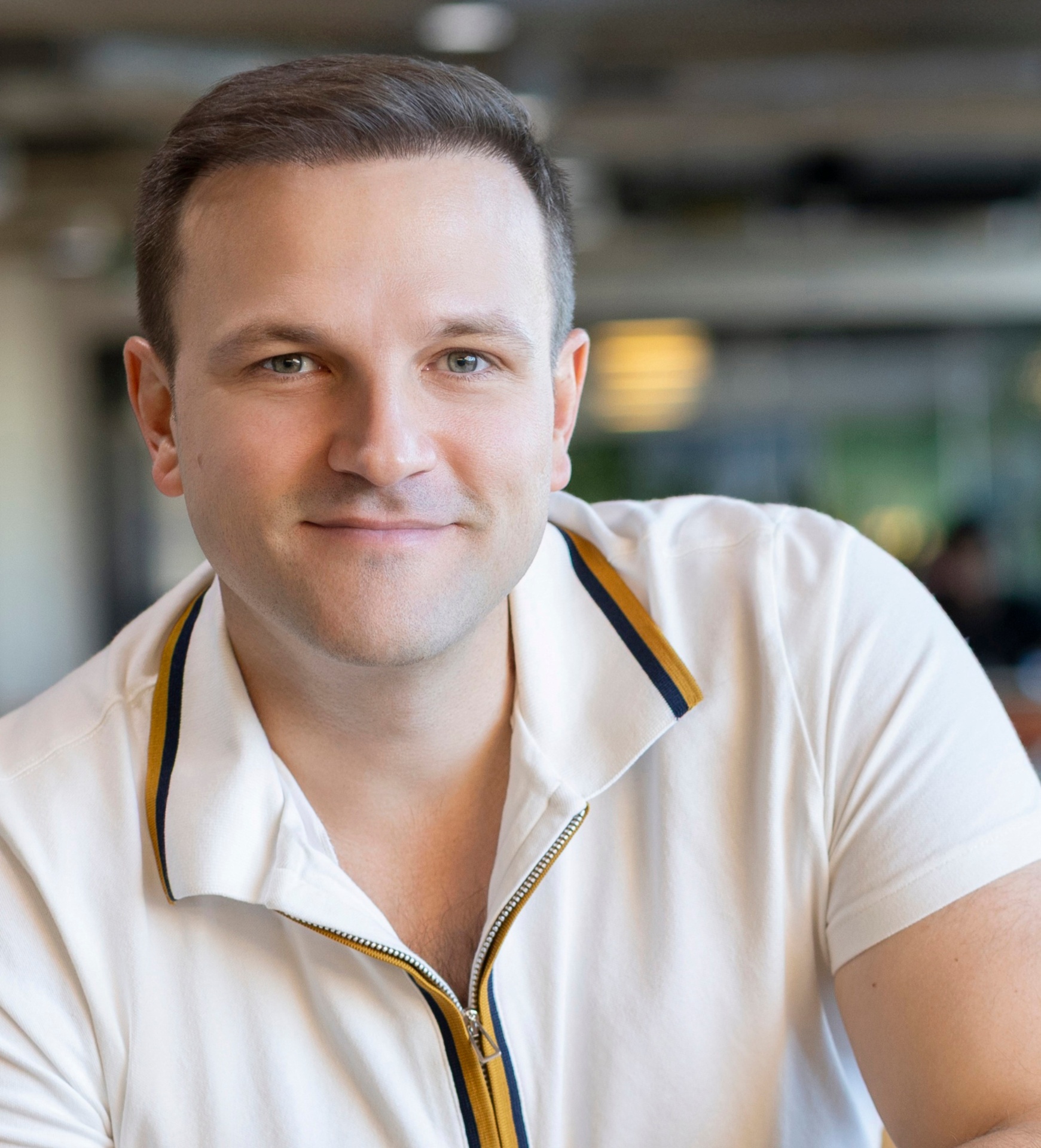
It's 2024 and less than 2% of venture capital in this country is going to women and people of color. Did you know you could raise venture capital from non-profit organizations? Well, I didn't either until I learned about donor-advised funds, DAFs for short, that my guest Patrice King Brickman is unlocking and redirecting to the venture ecosystem. That money's been earmarked for charity already. They took their tax deduction and they don't actually ever have to do anything with it. Right now, 98% of our investment capital are focused on one very narrow demographic. She shares how she does it at her firm Inspire Access and her efforts are opening the door for countless underrepresented founders to get funded in the US. Net worth families and and individuals are busy and they mean to do well, but they need the easy button. I think what's exciting is Hey everyone, welcome back to today's show. Today we have Patrice King Brickman with us, CEO and founder of Inspire Access. Welcome to the show today, Patrice. Thanks, Jason. It's wonderful to be here with you. I appreciate you having me on. No, I'm It's a pleasure is all mine. I I find your story to be inspiring and impactful and I would love for audience to to get to know you and understand a little bit more about your story and one of the reasons why I've, you know, had you on the podcast was was to talk about what is a donor-advised fund and you know, what's the current conception of a donor-advised fund and you know, what's that discovery you just mentioned there in terms of being able to leverage what is considered more charitable giving funds to be able to invest in a for-profit entities. Can you kind of educate the audience on on these different resources and tools. Absolutely. I'm going to go I'm going to go I'm going to geek out on this for 1 second, Jason, so bear with me. Um but but Okay, so at a at a very basic level for anyone listening who doesn't know what a donor-advised fund is, um it it behaves much like a private foundation in that you take money, you set it aside into an account, and when you do that, you get a sizable tax deduction because you put money into a charitable account. And it can sit and be given away um as you decide to do that and to find charities. So, that's that's this is the that's the great thing about about donor-advised fund. It's less expensive than setting up your own private foundation, so it's more efficient, pretty easy to use. You can start a donor-advised fund with $25 if you want. Um the downside is uh unlike a private foundation, if you have money sitting in a DAF, it can sit for generations. So, in a private foundation, the IRS is knocking on your door every year to make sure you give away at least 5%. In a donor-advised fund, it can sit forever and ever, right? So, never really getting out you people take the the tax deduction, the intent is that it goes out and does charitable good in the world, but it could actually sit and never really get out and do anything. Hence, we have it built up to I think it's 240 some billion dollars right now. Um but so, what we're trying to do, obviously, is unlock uh unlock some of that money. Um what we've created So, so I'm sorry, let me one more point on the donor-advised fund. The other thing about a donor-advised fund is most of the DAF holders, almost with the with the exception of very few, I'd say 90% of the DAF holders, 90 more than that percent of the people in DAFs, they can only give their money to a 501c3. So, which is great. So, they can give their money to a charitable cause that is a 501c3. We are a 501c3. So, our workaround to invest in for-profit companies led by women and people of color and underrepresented founders is that we can our explicit mission is to invest in for-profit companies. That's why people can invest through you know into us. They can invest into a for-profit company through us because that's exactly the it's the explicit mission of our platform. Um now now I'm going to geek out on you just a little bit. The reason we're able to do that is because in 2015 the US adopted the UN 17 sustainable development goals. Of those goals, you know, there's gender equity. There There's Well, there's climate, there's gender equity, there's racial equity, there's you know, poverty alleviation, economic mobility, there's So, the the the US decided that inside if we're really going to agree to to try to achieve these goals with the rest of the world, you know, we think these are 17 great goals and yes, we're going to we're agreeing to this. In some cases a for-profit company is better solving for it than a nonprofit. And and it actually started with climate. People um which is which is not you know, not what my focus is. Um my focus is racial and and gender equity, but um but the the climate folks uh had a lot of money. Uh there was group of them and they said, you know, the not-for-profits aren't solving for climate as well as for-profit companies and we should be able to use our philanthropic capital to do that. And the US said, okay. You know what? If you're solving for one of these goals, we're going to allow that. Now, importantly, if you're you're using the philanthropic capital, they can use it to infuse the for-profit company to solve the problem, right? Just like we're doing at Inspire Access. But the money And the money does not go back into someone's private capital. The money can go back to grow your philanthropic giving. So, importantly, it stays on the right side of the tax line. But what's exciting about it is when your money's sitting in a donor-advised fund or a foundation, it's invested somewhere, right? It's invested with in stocks or bonds or, you know, a mutual fund or and it's making money for an institution somewhere, and you're paying fees on it. So, I think what's exciting is we're a platform and a few other innovators in the field where you can take your money out of it, have it go be invested in something you're it's mission-aligned, you're passionate about, it's changing the world, it's doing good, and then it can come back into your DAF, and you can keep giving it away. So, it's I don't I think it's a good full circle experience in terms of doing good, but doing good in a way I don't I don't want to say profitably, but, you know, essentially. Uh and so, just to recap for the audience, a DAF, a donor-advised fund, is this vehicle to which you can make charitable contributions, do a tax write-off, um you're very popular for big liquidity events to, you know, park a ton of cash away from, you know, the the IRS tax collectors, and with the intent to do good at some point, but what you and others uh have realized is there's an opportunity to incentivize these DAFs to deploy capital for for-profit, for good, but through a vehicle like a 501(c)(3), um that has this type of mission where you're going to create economic impact for a specific uh purpose. In this case, you know, uh gender and racial equality, but it could be climate, it could be other areas that fit into those narratives. And then, as you said, like maybe those investments work out. Like, these businesses turn into, you know, real opportunities and real, you know, reach scale and and have liquidity events in themselves. That that money wasn't a donation. That was an investment. And so, that investment comes back to you and flows back into the into the DAF. Um so, it creates this kind of full circle of impact plus, you know, returns. And you know, just my personal bias here of, you know, you've got your money parked in the big banks, they're making their, you know, a couple bips, uh you know, and it's not doing anything, not having an impact, and going into people that already have the money. Um but in this case, it can actually be deployed and go to work, but still yield uh a return. So, I think that's an awesome event of capital allocation. So, I really And that's really why I wanted you to come on the show to share that that opportunity, that story. Um because I think there's this a world that people haven't explored from LPs, uh as well as founders from, you know, that might be qualified for some of these funds. And I'm sure you're focused on gender equality and racial equality, but there's other avenues where this might get founders that traditional VCs or PE may not partake in um for whatever reason. Uh and this could be an avenue for for them, correct? 100%. And that's Thank you for summing that up so well, by the way. Um I I was I appreciate when people can I don't explain it and and really understand it. So, I I deeply appreciate you doing that. Um but yes, you can go ahead. Yeah, how did you get to where you are today running Inspire Access? And And what's your mission with Inspire Access? Sure. Um you know, I'll start I'll start with what what Inspire Access is. Um We're an organization that provides access to philanthropic investment capital to underrepresented founders. And we do this primarily by inspiring uh individuals and family offices to unlock some of their um what I call complacent capital sitting in donor-advised funds. And and we focused on donor-advised funds for two main reasons. Um There's over 200 billion dollars sitting in the US in donor-advised funds right now. And unfortunately, and we'll might get to this later, but um our underrepresented founders and fund managers continue to go unseen by the conventional investment community. Uh so that is is what we're doing and and and why. Um My start in all of this probably started in 1998. Um we scaled a family business um and we did that with private equity partners. And you know, I so I had a front-row seat to how integral that that capital was for us to scale our business. Um and you know, we we had a great story and a and a really strong exit in 2013. But over that time I was probably talked like over, around, through um every financial advisor that that we ever had. And and yet I had just as much agency, if not more, than my partner. Um So you know, that that lives in me and that that certainly lived uh it lived in me and it it still lives in me. In 2000 so we get we had some liquidity in 2013 in 2015 I started my own fund investing in predominantly women-led businesses cuz I was thinking there's probably other smart women out there being talked over and through and around and I was right. Um there are many smart women running incredible companies. Um I'll jump to 2020. I expanded that to people of color and actually all underrepresented founders. And then in 2021 was looking at a business that had a donor advised fund on their cap table. And that's when I started getting curious about wow, I could I could invest my donor advised funds in a for-profit company and um so that's how we uh that's that's how it all began with Inspire Access. So I I want to touch on another question this process. So you it's correct me if I'm wrong but you started Inspire Access with your own capital um but did you go out and raise and bring other donor capital into the fund? We have this year. So um so this year starting in January um we have gosh, I I think I think we're up to 15 or 16 family offices and individuals now. Um we've we're mobilizing you know, it I I want to be so careful because you know, I know what's like coming in this week and what but um if you were to look at our 990 we're pushing 2 million but we I we're going to be we'll be 3 million over 3 million by the end of the year. Um so and we're just getting started. So uh this is what it's Septem- October already. Um but we've had we've had an exciting start, people. People are really enthusiastic about this platform and I'm encouraged that people like yourself, successful VCs, are are curious about it and um yeah, that keeps me going. Um So, you know, the the podcast is around like fundraising and whether it's founders raising capital for their their companies or GPs, you know, fund managers raising for their funds, uh there's always a journey. And you know, you had your own fortunate event of creating liquidity and you chose this vehicle with your own resources. Um but now having set a foundation, you're now out there putting your neck on the line, selling your you know, telling your story, you know, talking about you know, supporting uh your mission uh through other LPs. What's it like you know, going to LPs with this very different vehicle that they are not usually familiar with? You know, what's kind of that experience? How do you go about you know, doing that process? And that's um that's a good question and I've got I've got all sorts of ways depending on who I'm talking with, but um I think you know, Jason, I do I do I'm I'm I'm surprised that often I'm I find myself educating people on the current statistics, right? Like the fact that you and I are very much aware of what um of what the investment overarching investment statistics are in this country, but often people aren't. So, they don't realize that you know, it's 2024 and less than 2% of venture capital in this country is going to women and people of color. I mean When you when you think about about that statistic, it's just so astounding. If you happen to be a black woman, that number dips below like it's below like 8%. And yet black women start businesses at six times the national average. So, the disparity in you know, how capital is flowing is is so clear. And sometimes I find that people are unaware of that. And I guess I I I take it one step further because I I you think about you think about that. And if we think about um for the sake of our whole community, right? If our great companies often start, not everyone, but often start by a human having a lived experience, right? You're having a lived experience. And you get hit with something in your lived experience, you want to solve a problem. Like you want to solve that problem, right? Think Airbnb or all the medical things we have. I mean, we can go on and on, right? But we're we're fixing something along the way. And then and out of that comes this incredible idea, a solution, and a great company. Right now, 98% of our investment capital are are focused on one very narrow demographic. So, we're focused on one very narrow lived experience. An opportunity for solutions, right? So, imagine if we started funding the rest of the 75 or more percent of the world and all the solutions because of the different lived experience. Like I have a different lived experience than my white male counterpart, right? I'm a woman, different lived experience. My black girlfriend has a different experience yet again. So, we're going to have we're going to come up with different solutions because we have different you know, challenges and then ultimately different companies. So, the promise of expanding our, you know, venture dollars is really exciting. I mean, to me there's it's just there's so much promise and optimism there when we really pull back the lens and we think about where the investment capital to date has been, you know, has been funneled. Um, so I talk with people a lot about that. Go ahead. Sorry. Yeah, and I think um you know, there's a lot of you know, historical context that warrants the allocation for the future cuz, you know, typical white male, you know, big ego, big risk, you know, has someone at home taking care of the kids, you know, mindset of, you know, I can go big. I can do the big thing. I can take the big risk. I can go for, you know, 100x returns where often those of color or, you know, women that don't have that access or risk tolerance, you know, might be satisfied at a smaller business or, you know, maybe not have that large risk appetite to go as big and historically not attract, you know, venture capital just because it's historically that way and there's not necessarily people willing to take the the bets and put in the mentorship and the support to enable those, you know, opportunities. So, I'm curious with the the companies that you're supporting and the founders that you're supporting, you know, how do you look How do you underwrite these types of companies? And what type of companies, you know, do you look for uh cuz as I imagine it's just not just any business run by a woman or a person of color. So, you know, what do you ultimately underwrite in a deal um you know, for these types of opportunities? Sure. Um, first I want to um thank you for for touching on um what I call the unconscious bias. So, so I think um I think you're right. You named that men, you know, uh historically um white men and and in reality still um you know, are positioned and have been for for generations to take more risk and and quite honestly they're just better positioned. They're better financed, right? They're better banked. They're better they have more money. Um in 1998 no, 1988 but not in 1988 I couldn't have gotten a corporate loan without a man co-signing it with me. So you know, we've got some I it's pretty crazy, right? And we forget that um that you know, everything you just stated. So you know, you you you said it. You're like, look this you're in a situation if you're in if you're someone who's in a situation where you are so supported, right? And in fact you've been supported for generations and you probably actually got your first loan at your parents' country club, you know, and with your dad's buddies or who you know, maybe or an uncle or rich uncle, right? Or and not everyone. I don't I don't mean to be cavalier about that. But the reality is um you know, we've got some catching up to do and and I I just appreciate you stating that. I think and then I think in addition to that um because that's all we know or that's all our the investment the conventional investment community knows um it's what they trust. And I think there's an un there's there's there's a conscious bias for sure, but if I'm giving people the benefit of the doubt, there's an unconscious at a minimum probably bias um for all the reasons you just stated. So thank you. Um with regards to who I fund uh I'm proud to tell you I I it's not concessionary. So I am looking at companies the way you know, I'm I want returns. I want to be able to look you in the eye in five years when you and I do another podcast or maybe we're in a different stage somewhere and tell you like, you know what? They're good investments. Like um women underrepresented founders are are not just, you know, overlooked. They're undervalued. Um, and they're they're just great they're great businesses. I look for all the things that I think another you know, you could be talking to KKR or Apollo and they'd say, well, we're looking for a resilient founder and a good thesis and a you know, they go down the list and I would say none of those things are off my list. Um, none of those things. I I lean in I lean into co-founders. I like co-founders. I think the start I particularly with startups because I think it's a grind. Um, and I think humans get worn out. So, that's probably that's a Patrice bias, I would say. Um, you know, otherwise I I I don't know that it's it's it's too very different other than um, you know, other than I'm aware of the biases out there and I don't have them. I will I'd love to give a shout out Go ahead. And then I I have a shout out to one a big PE firm that is doing things a little differently that would be fun to talk about, but first I'll let you go ahead. No, go ahead. Well, um, there's a company on the West Coast uh, run by two women, Miriam and Maria. Um, and it's called Ulu Ventures. And they play with like Sequoia's and they play with like the bigger they're in Silicon Valley. They've been they're just closing their fourth fund. They've had three successful funds. And they're both, um, they're both at a Stanford and I forget if they were part of a I think they started this work when they were you know, soon after school, but they put together an algorithm um, that specifically takes the biases out of the investment. You know, when they're looking at these startup companies and they you know, may invest in 90 companies and you know, it's it's sort of a very conventional PE model um or VC model I guess, but but they have this algorithm where they're not asking the same kinds of questions like um where yeah, where it's just interesting and they and they end up investing in sectors like products for textured hair, you know, for you know, black women and products for the the you know, the the guys in Silicon Valley are like yeah, I don't I don't think about that and I don't know about a woman founder. So, they pass on them and they've had incredible three incredible successful funds and they just raised their fourth and um these are the kinds of models and things that I think I love to lift them up and um and brag about them a little bit because I think I hope that's the future. Quick plug for founders looking for an edge raising capital. Companies on thunder.bc have gone on to raise over a billion dollars since joining our network. It's absolutely free. Just go to join.thunder.bc to get started. And if you leave a comment on this video down below with your company's name and the problem you're trying to solve, you'll be entered to win a free coaching session with me. Okay, that's it. Just comment down below. Now, let's get back to the show. That And that's why we have conversations like this is to inspire people that there are all these different vehicles, there's these different resources. There's different paths to to try your own. Like we don't have to look historically only at what has been done, but what could be done. And that's ironically what venture is supposed to be all about. Right. You know, when you know, people that look like me are in the decision-making seats of these businesses, they know what they're comfortable with. And they know what they know and they they have ways of making money and that's what the business is about. Um but when people like you know, Ulu Ventures, yourself and others that have you said different lived experiences that can recognize opportunity that you know, isn't there today because it hasn't been supported or hasn't been funded uh that can create all new markets. You know, so yeah, like hair care products that, you know, maybe get sold in, you know, more community-oriented type, you know, scale where if they have the right resources, they could scale and reach, you know, kind of a a synonymous brand across multiple communities um and creating a, you know, a massive exit or massive, you know, opportunity. So, from what I heard from what you were sharing, you're very much, as anyone would say, a venture fund. It's just you have a completely different way of you know, raising the funds and deploying the funds and returning the funds um but as far as the mechanics, you're still looking for, you know, venture-scale returns, you know, understanding that maybe some bets don't work out. Um So, when you think about portfolio construction, it sounds like it's very similar to a a traditional venture fund. Is that correct? It really is. And uh you know, we we've we're saying not a, you know, portfolio per se where it's it's donor to investment. So, in a in a I call I call it our ecosystem, actually. So, if donors come to us, you know, we have all these these funds and and companies in our ecosystem um and they they they they determine, they make the recommendation on where they'd like their funds to go. So, that's why when and they can also bring us ideas and bring us new companies. And I'll give you an example of that cuz it's kind of it also uh it explains another dimension of of what we're able to do at Inspire, but um you know, last year I had a a woman CEO wait woman CEO on the East Coast who wanted to invest in a woman starting a sports marketing agency on the West Coast. She had appreciated stock in her company. She was about to have a big event in December. We She donated a stock to us. We converted it. Um she got the big, you know, tax deduction and got to support this woman on the West Coast. And we diligence, you know, that in the process. Um And and our diligence is is largely around making sure that the founder is getting the money and that that it is an underrepresented founder getting the money. Um So, it's not that they're fronting, you know, a white guy behind them or, you know, a big firm of white people behind them because um but uh but but that those are the kinds of things that are It's fun for us because I love when people bring me um you know, new opportunities and then and then we have, you know, it's just it's another person in our ecosystem that we can talk about. So. Um I I wasn't Yeah, like you just kind of triggered a memory of mine way back when I was in college. I was, you know, servicing these different small businesses and I remember there was this guy who was saying he's, you know, he did government contracts and he he was not the owner of the business. I was like, "Oh, who's the owner of the business?" "Oh, it's it's my wife." And I was like, "Oh, can, you know, can we talk to her?" He was like, "Oh, no, she doesn't do anything. I just put her name on the the business so that we can get the government contracts cuz, you know, a certain percentage of money has to go to women-owned businesses. She works at Marriott. Like, she doesn't" I was like, "Oh my god." I just like Yeah. I think that, you know, I that is um back in I I think they've tightened that up a lot with regards to the 8A. Yeah, this is like 15 years ago or something. But but no, I same, by the way. I knew I knew also knew some people who who were taking advantage of that and um and yeah, that's where, you know, I hold this this exemption in this 501c3 public foundation very sacredly um because the work is is so important. So, um I'm I'm doing my diligence around that. And I but I'll I'll take that story one step further. I love that you Thank you for sharing your that story because you you just nailed exactly what I'm trying to make sure it doesn't happen. But um, so I'm diligencing the woman on the the West Coast who really, you know, you talk about um, a male-dominated industry with like sports agency, you know, kind of things. And um, and she said, "Well, Patrice, what if I What if I exit? Like private equity companies have been They look at me, VC companies look at me. They're all white, you know?" And I said, "Allison, I I'll be so happy for you if you exit. And they tons of money and so I don't care about that. I want you to make the tons of money, right? And And so that's what we're up to. Um, you know, we can't control the capital forever, but we can control closing the investment gap. And hopefully and ultimately the wealth gap. Um, it's a lofty statement, but um, but if we don't start having these conversations, we're going to wake up in 10 years and to the same statistics and having the same conversation. So, you know, it's it's important. Well, that's that's one of the other topics I want to get into is, you know, how are you seeing things trend? Like what what trends are you seeing in the world that you're focused on? And it doesn't have to be just, you know, gender equality and racial equality, but the these other uh, you know, kind of for-good, for-profit uh, industries that you're seeing want to go into through these types of structures. You know, what what types of trends are you seeing uh, that you think are notable? You know, the two things um, so it's it's not all There is some bad news and I don't know if you I'm sure you're following some of the litigation and lawsuits that have happened in the country recently and the verdicts and Fair fair enough. Yeah. So, that is I'm going to put that over here cuz I get really fired up about that. So, um, um Actually, I'm going to say one thing about that. I think that would be in my mind a really a really unfortunate and demoralizing trend, and I think that um I'll just state that I think I think Bloom and I think they're bullies, and um you know, they didn't stop at affirmative action in colleges, and they're not going to stop at black women, and I don't I think they'll roll things back in time um as far as they can. And so, you know, they extracted one you know, part of our Constitution that was specifically created to protect black folks. It never did its job to begin with, and then he extrapolated it and turned it around and like really perverted the intention. So, I think that that's soul-crushing to me. Um but I think you know, that's that's that and that's that's really almost all it's it's own podcast for another day, right? Because there's so much to be said about that, and um but that does keep me up at night. So, that's a trend I would say that keeps me up. On the positive side, there are some really positive things that I see. Um number one, I think uh and I'm going to put you in the other generation in a good way, but you know, um I think you know, millennials on down are are they think about impact. They they think about about where their money how their money flows, how they spend it, where it's invested. They really care, and in a different way than my generation did. You know, we didn't even know what a what a stakeholder was. I don't even think that was a word when I was growing up, you know. It's it's really um that's so encouraging to me. So, it just it gets me excited, and then I guess in tandem with that, um we've got this great wealth transfer coming, right? We've got the the biggest transfer of wealth, and you can speak much more to this probably than I can, but that's going to start in 2025 and go on for at least two decades. And it's the baby boomers are, you know, going to transfer this wealth and and you know, a lot of it will go to women. I would like to see some structures in place so that intentionally goes to, you know, more diverse, you know, folks and I'm I'm not going to speak to that today, but there are some things in the works, you know, I know there are people working uh to make that happen and then I think that's encouraging uh encouraging to me. I I the the statistics are pointing to the fact that, you know, maybe possibly the majority will actually go to women. I find And if you forget I find that there's also statistics on how women reinvest in their community differently. Um they just do. They You can call them risk, you know, risk-averse or you can call them longer term, they're more patient. Um you know, they tend to be more concerned about the social impact of what they're investing in or um versus a return. Um and you can, you know, people can have their their opinions about that, but I think, you know, that much we know. Um So I think those are some really positive things that are coming our way uh amongst not so positive things, but Uh I'll back that up. Yeah, I saw an article come out the other day where it you know, showed Gen Xers, Millennials, Gen Z and how they're allocating uh investments or thinking about their investments across different, you know, profiles. So it's like, you know, whole indexes and, you know, real estate, that kind of stuff, but impact investing and thematic investing were, you know, on that list where boomers were like sub 10% on impact invest I was like 10 or 15% on impact investing and Millennials were like 60 or like 56%. So you can just kind of see that there there's a narrative there that you know things you know people are getting educated and exposed to different opportunities and you know the was it a rising tide raise rises all boats kind of mindset and everyone's worried about you know what will our planet be like in you know 30 years or for our kids and stuff like that so not just you know racial or you know gender equality but climate and and various other areas of impacting different parts of the world and I think at least in America there's a really general a strong sentiment of capitalism does work when it comes to you know supporting these different initiatives and supporting causes and you know supporting businesses that can innovate their way out of you know problems and that and that's the thing I'm capitalist here you know big big benefit It's a great time to capitalize right? Um and so you know when we talk about these different themes these different you know movements and just the the concept of what we've been talking about um you know when you get in front of founders you just mentioned that some are referred to you by you know donors or I guess it would you call would they be LPs under any circumstance or they all just donors? It's um actually conceptually yes but but here's how it works. Um you know we Inspire Access sits as the LP on the fund cap table. We or we sit as the investor in the company and and then in a cool way like we can we almost act as an SPV. So let's say we had three people who want to come into Black Star Fund. They can all come in they they they'll come in to Inspire and then we sit as one LP on Black Stars which is super helpful for the VC number one. Um we can take smaller numbers than they want to deal with. We only take one spot. Um but but back to your point, I think you were asking what I call our our participants in in Inspire Access. And I find myself saying our donor investors. Because I'm I'm they are they're they're technically making a donation to us. Um and they are now, you know, yeah, they're making a donation to us. Um they and then we're in turn making an investment, but they're really taking their money and and not being complacent anymore, right? And they're doing some they're investing through us with it. So, I I I say donor investor. Yeah, and to kind of go back and educate the audience again, it's like in a don- in a donor-advised fund, it's not sitting in cash, you know, it's it's usually sitting in some investable asset, usually public markets. Um but it could get technically be invested in anything. That's where you kind of come in and it's like, "Well, why not this?" Um but when it comes to just to help understand the flow, like so, say I'm a donor investor of yours. Uh and I care about a particular, you know, I so it sounds like I get to choose, you know, you present me a palette of options and I'll be like, "Oh, these are the ones that I align with." And then you're be like, "Okay, we got four other people like you that want to put in X amount of money. Let's go and commit, you know, a certain amount to that fund." Um fund has a 10-year hold period. Say it's early stage, you know, after 10 years, there's payouts. There's a, you know, 80% of the you know, proceeds go back to um you know, to the investors. So, how how does that, you know, at the point of, you know, DPI or distributions, you know, how are distributions handled um for your investor donor investors? Yeah, no, thank you. And that you just gave me the opportunity to brag about Inspire a little more. So, I when I built this, what was paramount to me was A to be the easy button because in my own world of high net worth families and and individuals are busy and they mean to do well, but they need the easy button. So, uh first to be the easy button, second to be super transparent. So, people can see exactly where their money's sitting, what it's doing, you know, where it is and and you know, anytime they want. And um so, in that case of like a an HNI fund, that fund will likely and hopefully be making distributions back. Um so, importantly, we take a 1% transaction fee on the whole thing when it comes in. And then our model right now is is so inexpensive, it's it's ridiculous, but um it's the model for today. So, it, you know, it we may have to change that and go up later, but for right now, we then would take like a 1% um as transactions come back in, only on the profit, not on the corpus. So, just on profits that come back. So, it's a very low um fee, you know, we just are trying to cover the transaction part of it. Um we haven't Yeah, that's that's that's where we are right now. Um but but yeah, so when you're come when now you've got this account and you put, you know, X amount of dollars in there and it went into this fund. Two years later, the fund has a great exit or three years and starts making distributions back. 25,000 is our is our floor of of moving any capital in with investments because we just we have to have a floor. But, let's say $50,000 goes back into that account. Number two things, we'll either transfer it back into your DAF um if you if you're interested in that or we can you can make an, you know, a donation into something else or investment into something else. So, it's, you know, So, it's basically just like a regular investment, uh just uh you know, coming out of a DAF and you know, recycling. So, you know, effectively uh donors have the choice. Like, I can I'll just make up examples, like give to this community food kitchen that will supply and feed, you know, 1,000 people over the next month, or and that money is gone uh and put to use to have that very specific impact. Uh or it can create economic growth in in an entity uh you know, targeted on you know, again, whatever the the focus is of a particular, you know, fund strategy. Uh but then that money can come back and be recycled. And I think that's where same kitchen Right. Yes. And then you could basically double down on that, you know, same initiative. So, if you allocate, let's say a million dollars to a particular, you know, mission that you want to have an impact on, that's a million dollars creating economic value that will hopefully double, triple, quadruple, whatever, you know, the the outcome is. And then you could put that money right back into either a similar initiative, or if your priorities change after 5, 10 years, you can put it in something else, but you're basically getting to recycle it. Uh and all tax free. Correct? Uh now, you can't use it personally. You're not going to go buy your next Ferrari. But, uh you know, in in hanging out in this world of of high net high net worth individuals that have the means to put a million dollars into such an effort. It's really about, you know, moving money and and having impact as opposed to, you know, buying more stuff or, you know, things of that sort. They usually have plenty of money um to live their normal lives. No, it Jason, you're exactly right, and you you touched on something that um you know, I always forget to say, but or our remind people, but that money's been earmarked for charity already. You've essentially in in one way Well, in many times people think, "Oh, check. I gave that money away." Right? Cuz they took their tax deduction. And they don't actually ever have to do anything with it, which, you know, that's a whole other conversation um for policy one day, but um but yeah, and you know, so it's it's just it is it's money that, you know, otherwise is making money for an institution somewhere, and um and it's there for them to give away, but they, you know, we're we're recycling it, so. Yeah, it gets to get recycled, minimal fee, uh you know, structure like 2% over the course of, you know, a 5-10 year allocation, as opposed to, you know, well, I guess there's you know, the fees and the and if Yeah, there there are fees, but But But they're working We're intentionally I, you know, we're we're at at the dawn of this work, but um my intention was to keep the fees, you know, lower than Fidelity, right? The cheapest place where you've got your money sitting, you're actually paying them an annual fee. We're not going to charge an annual fee. Um uh you know, and this is our our state right now, but but it's um yeah, you know, we're changing a behavior and a thought process, and I I want it to be as easy and clear for people as possible, so. So far it's working. Yeah. It's a It's a great mission, and I I love getting educated on this when it comes to, you know, capital allocation, capital raising, uh that there's these other vehicles that exist out there, and that's where I spend a lot of my day with founders is just exposing them to alternative paths that might be a reality for them. Uh part of the reason why I do this podcast is I get, you know, awesome education uh on these things in these conversations, but um you know, switching gears to the founders listening to today, you know, that are not maybe yet in the means to participate in a DAF, and you know, start giving away money, they might have aspirations to at some point when they have, you know, the the their businesses materialize. But, this is to say they're they're potentially a good fit for maybe not uh Inspire, maybe for Inspire. Um how do they start discovering the existence of these types of funds and vehicles and these, you know, mission, you know, driven um capital allocators? Well, that's um first of all, they they should listen to people like you. Uh and I love I do love how you help founders, by the way. So, I I I should have said that out of the box. Um but I I don't want to end this podcast without telling you how much I admire what you do with you can your heart forward with these founders, and it's just it's so cool. So, A, they need to listen to more listen, you know, more people need to be listening to you and your um creative thinking, I think, about this. You know, the DAF the DAF uh the capital is new. It is new, and there are a handful of innovators out there. Um certainly, they can go to inspireaccess.org. Um I think, you know, it's funny. DAFs are getting a splash, um you know, in the news, um but getting to the people who are are doing the work, um you know, I can name I can name a few. There's Legacy uh uh Realize Impact are another great, you know, they're doing great work. Impact Assets are doing great work. Um you know, there's there's a there's a handful of players out there that are that are really that are doing this work. Um and in my mind, uh there need to be a hundred of us, right? Because there's still two hundred billion dollars, um you know, sitting unallocated uh in this country, and and only growing. So, uh it's a lot of complacent capital that could be really changing the world, in my opinion. Um but I'm certainly happy to talk with anyone anytime and and point them to a different, you know, I I our focus is is uh explicitly women and and underrepresented founders, uh with people of color and every underrepresented group. Um so and and our exemption is for the US. So, I often get um, you know, requests or great ideas and great companies from outside the country and I point them to to my my fellow my fellow innovators and I'm grateful about that. So, it's there's a lot of work to do, but we're we're getting at it. So. What would be the best way for a founder to get in touch with you? Probably just go to inspireaccess.org. We have a like an inquiry. Um we're really set up to receive information and and we'd love to hear from you and then we've got uh materials we can send out to founders to equip them with, you know, it's it's we've got a one-pager, we've got a deck, but where they can really take to their investors and they can take to their potential LPs. And um it describes what we do and then and then, you know, somebody from our team gets on the phone because people are usually like, "Really? Are you sure we can do that?" And then we just we walk them through uh uh through how great it is. So, and how how easy it is, really. That's that's um I think that's a key a key part of this. I'm learning it more and more is um you know, people time is their commodity. So, um it's I think people are they they love the concept and it makes nothing but good sense. Um but it's we've got to make it easy for them. So, it's I think we're doing that. You know, for for me when it comes to, you know, donating, I would say that the hardest part's just the decision, you know, educating myself on the decision. You know, and then that's once the decision is made, it's incredibly it's just a how much. Um you know, what what's the appropriate calculation for for each individual, but uh I think it's the fact that you make this easy, too, that just it's kind of a no-brainer for those that have, you know, accumulated wealth to to have that option and to deploy it as opposed to sit on it. And I think in the great wealth transfer, we will see a lot of millennials being like, "Well, what do I do with this many zeros?" I know. That's right. Yeah, they're just like, "What what are my options? What are my choices?" And so, I think it's great to, you know, educate people, do podcasts like this, and and have, you know, more material out there for for founders to explore what might be a good fit for them and um you know, when they when they have an exit. And I'll have a a prelude to another episode that will, you know, be releasing in the near future where we talk about founders, you know, making the pledge towards donor advised funds. excited for you to talk about that, by the way. And I'm um yeah, I'm really I'm proud of you for, you know, being early and uh you know, at the dawn and helping pushing that forward. I think that's really exciting. That that to me would be one of the optimistic trends. Um and I'm um glad you're being a you're a part of that. So. Well, Patrice, it's been an absolute pleasure having you on the pod cast today, hearing your story, what led you to starting Inspire Access, and uh and opening up a a new world for opportunities that, you know, doesn't get enough attention and we'll hopefully start to see more and more uh of funds like yours, you know, coming to market and deploying into, you know, great causes and great founders that can have material impact in in our world today. Thank you, Jason. Thank you for lifting up our work. All right. Thank you for watching today's episode. As a reminder, I'm your host Jason Kirby. I have built and sold multiple companies with over 135 million in transactions as either a founder, operator, investor across multiple industries. I'm currently the managing director and founder of thunder.bc where we help companies and founders at all stages navigate what capital to raise and who to raise it from and help improve companies odds of raising capital. If you need help, reach out to us at help.thunder.bc. If you like today's show, please share with your friends. Give us a like or comment down below. As a reminder, this show is published weekly. To get notified of new episodes and our newsletter, be sure to go to our website at join.thunder.bc. If you sign up today, I'll send you a few freebies on how to negotiate a term sheet, how to get a free list of relevant VCs, and much more. That's it. No more shameless plugs. Thank you and see you next week.
%20scale(0.03125,-0.03125)'%20d='M78%200V1760H782V1420H436V1077H768V746H436V343H805V0Z'%20fill='%23f5f1ea'/%3e%3cg%20transform='translate(29.22,37.12)'%3e%3cpath%20d='M0%200%20L9.244171875%200%20L30.81390625%2038.115828125%20L21.569734375%2047.36%20Z'%20fill='%23e8aa4e'/%3e%3cpath%20d='M0%2047.36%20L9.244171875%2047.36%20L32.48%204.87%20L25.94%20-1.67%20Z'%20fill='%23e8aa4e'/%3e%3cpath%20d='M36.98%20-6.16%20L32.60%2011.03%20L19.79%20-1.78%20Z'%20fill='%23e8aa4e'/%3e%3c/g%3e%3cpath%20transform='translate(71.39,84.48)%20scale(0.03125,-0.03125)'%20d='M62%200V1760H402V0Z'%20fill='%23f5f1ea'/%3e%3cpath%20transform='translate(88.77,84.48)%20scale(0.03125,-0.03125)'%20d='M229%200V1422H20V1760H790V1422H581V0Z'%20fill='%23f5f1ea'/%3e%3cpath%20transform='translate(116.96,84.48)%20scale(0.03125,-0.03125)'%20d=''%20fill='%23f5f1ea'/%3e%3cpath%20transform='translate(134.84,84.48)%20scale(0.03125,-0.03125)'%20d='M78%200V1760H555Q747%201760%20834.5%201666.5Q922%201573%20922%201358V1281Q922%201157%20877.5%201080.0Q833%201003%20742%20979Q861%20949%20901.5%20838.5Q942%20728%20942%20569Q942%20398%20910.0%20270.0Q878%20142%20794.0%2071.0Q710%200%20555%200ZM422%201097H494Q543%201097%20557.0%201135.0Q571%201173%20571%201226V1403Q571%201488%20496%201488H422ZM457%20310Q594%20310%20594%20440V660Q594%20735%20571.5%20778.5Q549%20822%20487%20822H422V312Q444%20310%20457%20310Z'%20fill='%23f5f1ea'/%3e%3cpath%20transform='translate(168.35,84.48)%20scale(0.03125,-0.03125)'%20d='M498%20-16Q287%20-16%20175.5%20111.5Q64%20239%2064%20480V1316Q64%201542%20174.5%201659.0Q285%201776%20498%201776Q711%201776%20821.5%201659.0Q932%201542%20932%201316V480Q932%20239%20820.5%20111.5Q709%20-16%20498%20-16ZM501%20308Q581%20308%20581%20463V1322Q581%201452%20503%201452Q415%201452%20415%201319V461Q415%20379%20435.0%20343.5Q455%20308%20501%20308Z'%20fill='%23f5f1ea'/%3e%3cpath%20transform='translate(202.35,84.48)%20scale(0.03125,-0.03125)'%20d='M30%200%20200%201760H797L964%200H631L606%20284H394L372%200ZM419%20565H579L502%201460H486Z'%20fill='%23f5f1ea'/%3e%3cpath%20transform='translate(236.30,84.48)%20scale(0.03125,-0.03125)'%20d='M78%200V1760H618Q753%201760%20822.0%201698.5Q891%201637%20914.5%201526.5Q938%201416%20938%201267Q938%201123%20901.5%201037.0Q865%20951%20764%20918Q847%20901%20880.5%20835.5Q914%20770%20914%20666V0H567V689Q567%20766%20535.5%20784.5Q504%20803%20434%20803V0ZM436%201108H521Q594%201108%20594%201267Q594%201370%20578.0%201402.0Q562%201434%20518%201434H436Z'%20fill='%23f5f1ea'/%3e%3cpath%20transform='translate(269.68,84.48)%20scale(0.03125,-0.03125)'%20d='M78%200V1760H562Q752%201760%20848.0%201654.5Q944%201549%20944%201346V522Q944%20272%20856.5%20136.0Q769%200%20550%200ZM432%20311H493Q590%20311%20590%20405V1313Q590%201401%20566.5%201426.5Q543%201452%20471%201452H432Z'%20fill='%23f5f1ea'/%3e%3c/svg%3e)