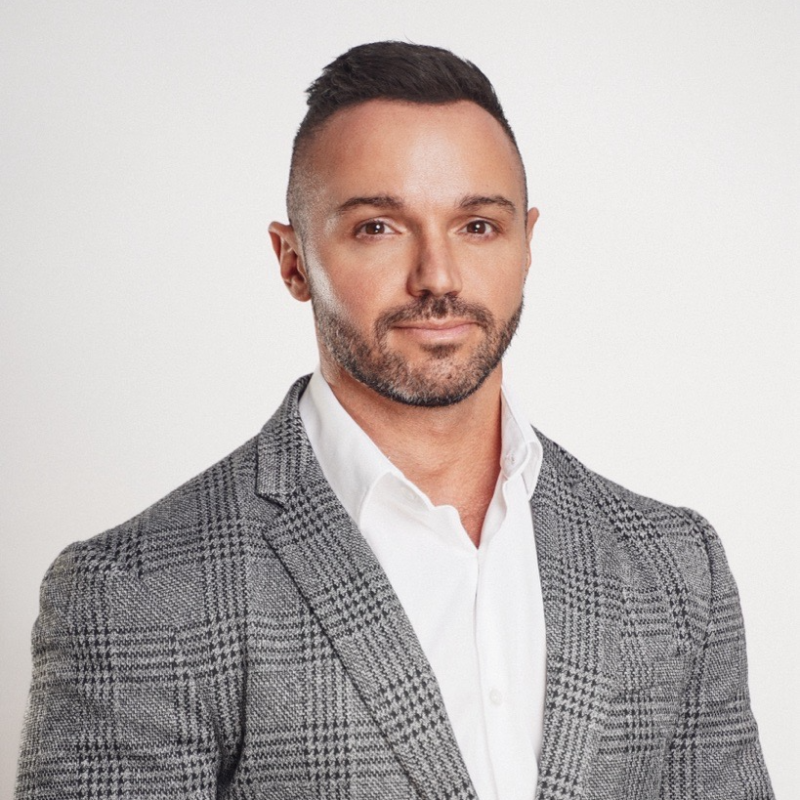
It's relatively uncommon to see founders who still own their company even after series A. How did you going to go transition from going big corporate to a smaller company? To be quite frank, it was very intense. What I always tell founders is You sell 10 20% of your company consecutively multiple times, you get diluted from 100% to 10% at a billion dollar exit. >> Was there an existential crisis for you to get out of big corporate? If your business is actually growing and scaling, what's most important to the firm is that Everyone, welcome back to 100 million dollar exits. Today, I'm excited to have George Alafrogis with us on the show. Uh George, you've been a multi-time operator building multiple companies and exiting uh and now have transitioned into uh investor role at Metropolitan, a 1.8 billion dollar private investment firm primarily focused on private credit. We're going to talk a lot about one building and now transitioning to to the investor role, but before we get into kind of where you're at today, I want to talk about how you got there and talk about your operating experience uh at your past companies having you been a part of two high-level exits. Uh kind of walk us through a little bit about that experience as an operator, what it was like being boots on the ground. Yeah, absolutely. First off, thanks so much for having me, Jason. I know we've been uh working together on getting this scheduled, so I'm excited that today is the day. Um from my perspective, I am still very much the operator in the investment firm. So, prior to joining Met, I was the CEO of global tech company called Srias. Um we were essentially a niche Infosys meets uh Cognizant and Accenture where we would support large enterprise clients with their digital transformation road maps. And we had a vertical uh focus around Telco first and foremost, and then we had a few other verticals that we would support as well. So, I was the boots on the ground CEO very much focused though on growth, so CEO meets CRO. You wear a few hats when you're a a mid-size business. Um and then with that, we were able to drive um quite a bit of substantial EBITDA positive growth in a short amount of time, made quite a bit of noise um in the PE world, and then we exited to Orion, which is a PE-backed larger system integrator leading global tech company. We can obviously dive into a little bit on, you know, additional details on that front as well. And then before that, I'm actually originally from Canada where I led one of Canada's largest independent Telcos, which was called Ultima. And interesting story there as well that we can unpack, but essentially we um sold and exited to Telus, which is a public company in Canada, one of the largest Telcos, and that's when I moved to Miami. So, I'm currently based in Miami. Our firm is headquartered in New York City. So, I have um the pleasure of going back and forth uh quite a few times a month, but I love it. Could be a lot worse, and I'm actually currently in in NYC as we speak. Yeah, and you got into kind of the Telco space going in for Ultima from Bell. You were there kind of rising the ranks um in kind of big corporate >> many, many years. Um how does a kind of career big corporate person like yourself transition out of a large conglomerate like Bell and into a a leadership role at uh either I It was Ultima wasn't really Was it a startup really or like what How would you define Ultima back then? So, Ultima was at that point more in in its growth stage, and we were I would say top eight uh independent Telco in Canada. So, definitely not early stage, much more later stage and in full-on growth and expansion mode. So, how did you going to go transition from you know, going big corporate to what would effectively be a you know, not small, but a smaller company? Great question. I get that one a few times. I would say what comes to mind is the following. So, one, sometimes folks over-index on big corporate versus small companies. I think it really depends on what is the actual sooner genius and tradecraft that that operator brings. Um and how do they either survive or thrive in different environments. So, what I mean by that specifically is from my point of view, I've always been very entrepreneurial even at Bell, which is a 40,000-plus um employee company was one of the many intrapreneurs, right? So, often times when you're in a large corporation and you're entrepreneurial, that's kind of the term that they use. Um but my tradecraft over the years was always very much focused on growth and scaling, and within large enterprises, you also have a series of business units, right? So, it's never just one conglomerate across, you know, across the entire org. It's really a combination of business units, divisions, you name it. And within that, um I ended up starting off actually in the small medium business world. Both my parents also are entrepreneurs. Um they built their businesses from the ground up. I essentially grew up in their businesses, so have some unofficial experience at a very young age, let's just put it that way. And again, all throughout my um all throughout just, you know, different life experiences, different age brackets. And then within Bell when I first started, Beth and I started within the small medium business space. Bell, although it's a Telco, it is still very much a high-tech company relative to the solutions it sells to the market because at a Bell level, you're not just selling internet, you're selling a solution as a whole, so that can encompass a number of different product lines. So, I shared that just because again, it it it really comes back to kind of where where the corporation is at, how it's structured, what specifically does that individual bring to the table, um and and also, you know, what has been their track record and what they focused on. Um and then kind of fast-forwarding Bell to your earlier point was a 13-year career. Definitely didn't plan to be there for that long, um but it was amazing cuz it it taught me the rigor, the institutional discipline that's required to actually scale. It also, I would say, zeroed in this focus on EBITDA positive growth. So, was vastly responsible for um again, EBITDA targets and EBITDA growth, which is not something that small medium businesses think of, I would say, naturally. Um and then there is uh a need to drive to institutionalize the business as you're scaling across different stages, right? So, so I think the the notion there is adapting the governance, adapting the level of how much you institutionalize to the business itself to not over-encompass. Is it it's And then kind of have it slow down, you want to keep uh maintaining that speed factor. Um but that's really kind of how it all came together, and then really the the domain expertise that you build over time, right? So, thankfully at Bell, covered all markets by the end of my um tenure. So, was very familiar with the different markets that also ended up being the same markets for the smaller the smaller players essentially. So, it's long-winded answer, but essentially it's a combination of all that, and um you do have to make sure there that who you're bringing on um is the right fit relative to attitude, mindset, relative to how they structure their teams and themselves. Are they just coach? Are they coach player? Obviously, there's a few nuances there, but I would say it's a it's a combination of all of the above. Couple of question out there. I'm just curious. Was there an existential crisis for you to get out of big corporate or was it like an opportunity came, you took it? Was it like a self-reflection of like I need to get out of this? I need to find some different. This is soul-sucking or you know, you just found a new job, and you're like, all right, let's do that. No, I love the question. Um I only have actually had that one asked that way before. Um I was I was actually going through I would say kind of my my own not crisis, but reflection. I was at the 13-year mark, and actually the studies show this, so I was very much in line with stats that are out there. Once you've been with the business or the same organization for 10-plus, especially 12-plus years, you start asking yourself, so what am I going to do? Am I going to stay here forever? Cuz at that point, the you're at an inflection point within your career where obviously, you know, pension benefits, stock options, you name it, start looking very different, and if you continue staying there up until the 15-year mark, it is actually a lot harder, quote unquote, to leave just because you lose a lot of the upside. Um so, I was at that, and then that's where, you know, reflected deeply because I I still to this to this day still very much love Bell. I love the people at Bell. I mean, you get to work with incredible human beings, especially as you're working with, you know, hundreds and hundreds of colleagues. So, it's a diverse group, and it was an incredible group. So, that part is not the issue. It was more so a reflection on like do I want to only experience this forever? And I think that's where I realized that the answer was no. And and I think that's where also I reflected on myself and saying, you know, there's a few things that I've endured and that I've gotten used to within the corporate world um that didn't necessarily align with how I prefer to operate. They weren't necessarily deal breakers, but you know, as a concrete example, just um very candidly, in very large corporations, when you are constantly looking to drive EBITDA positive and continuous you know dividend paybacks to your shareholders, you are actually you're actually also just constantly restructuring, which means you know anywhere from three to four layoff cycles a year. Which again people don't often realize or understand. So from one end you could say I kind of survived 40 plus layoff cycles. And also built teams across that but from the other end just a human impact there is still quite intense. So that was something that I would say I kind of reached my tolerance level at. And then it was the opportunity that presented itself. So Frank who's my former CEO reached out. We had a series of conversations and then I remember at dinner in and around um Christmas. He made me an offer that I essentially couldn't refuse and that was the right offer for me. It was going back to a smaller mid-size company which again I I know quite a bit of because both my parents have built their companies and continue doing so. And the impact you can bring there which I'm sure you've heard before is is different. So that's the leap of faith I took and don't regret it by any means. And for >> >> that transition, how clear was it to you that there was an exit on the horizon post taking that offer? Was that presented or was that like after you got in it was like that was like the mission to go and sell the business? Yeah, so what's interesting with that one actually is we were not at all considering to exit. So that was not part of the plan. Really the plan was actually to continue growing and scaling and going from being say within the top eight to being within the top three because we really had that opportunity set and the potential to do so. What ended up happening though because you know as much as you can plan for things life has an interesting way of reminding you that you're not always in control. The CRTC which is the regulatory body in Canada released what many of us would say is the worst case scenario that the industry ever projected. So the CRTC dictates the foundational costs of essentially what the tier one incumbents incumbents sorry charge to independent telcos like Ultima. So independent telcos are not to be confused with resellers. We have our own core network. But a lot of it is interconnected with other networks that are built across tier one incumbents. Right? So the CRTC is a regular regulatory body that essentially dictates those costs. And they released ruling that was again probably the worst ruling we could have ever anticipated. It essentially broke our unit economics, made the independent ISP model unviable. So we had to actually move from scaling mode to exit mode very quickly. And that's really what we did. And how did that lead you going to Surerus? Surerus. So what was interesting just before I go there with Ultima though in retrospect is even though we were never planning to sell immediately by any means. I was actually part of Frank's succession plan. We were focused from day one that I joined anyways on the business fundamentals. We were focused on making sure that we were essentially driving capital efficient growth, looking at it across what we could control and invest in today versus tomorrow and also actually driving a better positive growth which again comes from kind of that larger corporate background. And that's what fundamentally made us a very attractive asset within that regulatory kind of turning point. And that's actually what allowed us to be Telus's platform client. So we were Telus's ideal target when it came to acting as a platform for the series of ISPs that they acquired. So that I think was you know a huge lesson to me and your race of the team and potentially to this broader audience that focusing on the business fundamentals, the key metrics that matter to your business, to your growth is what's going to continue setting you apart and also essentially allow you to be prepared for anything that the market may throw your way. And then fast forward to answer your question specifically. So after that exit I fulfilled one of my childhood dreams so to speak which was to buy property in Florida. My parents owned properties in Florida when I was younger and I had some of my best memories growing up in the heat and in the humidity because the summer ironically was a little bit slower for my parents. So that's when we would hang out in Florida. It wouldn't be in the winters unfortunately. So moved to Miami and at that point didn't necessarily have an immediate plan. I was kind of determining am I going to stay in Miami six months out of the year because Canadians can do so and go back and forth. And then that's where actually a director of value creation that I used to work with introduced me to the CEO of Surerus. He essentially said listen if you're on the market so to speak you Surerus says Sorry. So how he framed it was like you are probably the best type of operator that Surerus could bring on at this stage of their growth trajectory. So ended up meeting with the CEO in Boca. Which is you know just a short drive away from Miami. We did that a few times and then he also made me an offer I couldn't refuse. So that kind of came through the net through my network and organically and then that's how that happened. And what was kind of the experience at Surerus before you ended up selling to Orion? It was very intense cuz similar to Ultima we were in full on growth mode. I would say Surerus was a little bit later stage in its growth curve. So we had a lot to focus on, a lot to impact. We also had a number of different entities and brands that had kind of you know formed over the years. So we were really looking at that as a whole. So it was really intense. It was intense days, intense weeks because we were very much in hyper growth mode. The company itself was actually entirely bootstrapped. So it didn't hadn't taken on any outside capital. Not that that slows things down but it it does um actually you know force you to continue focusing on capital efficient growth which candidly is is all I really know and know how to implement. To be quite frank. So it was very intense, very growth oriented. Essentially we we refocused our go-to-market strategy. We deepened our vertical focus. And then we focused also on building the right brand equity. Which again ironically selling was not part of the plan but ended up being a great turnout because we had focused on the core of the business, the go-to-market strategy as a whole and then the brand equity that we were rebuilding and essentially scaling. And I guess walk me through the transition post exit to Orion and making your way into an investment seat. Like an investment firm. How does how does one make that leap? Yeah. So another great question. As much as I'm often known for someone who always plans to make plan, that was also not part of the plan. So relative to the exit, that was actually one of the most efficient um and quick processes I've ever one experienced and two now that I'm on the investor side have ever seen. I think the key takeaway there is that we were so Surerus was essentially the ideal tuck-in for Orion. Which was PE backed. And because we fit just extremely well within their org strategy and we would essentially bring that telecom customer base and vertical expertise it ended up being a very smooth and effective process. And also you know they were backed by a group that is very knowledgeable in in driving very very effective tuck-ins sorry. And yeah, so that was actually quite smooth. And then following that exit um took a bit of time to recharge. Cuz again those were really that was a really intense period. Probably lasted two and a half to three weeks. I was originally planning to take maybe two to three months. And then just again went into discovery mode and thinking of okay what do I now do next, right? I know what was important for me was actually figuring out how I get to stay in the US cuz again I was still very much a Canadian citizen. Miami feels like home. It is very much home. So I was kind of considering okay do I go down the EB-2 path which is essentially you know the investor visa, invest in my own business, start my own business. You know how do I approach that essentially. So started on that path and that probably was the main focus within that exit is just re-aligning what comes next with the right immigration path so to speak ironically cuz that was really important to me relative to my North Star. And then explored a few opportunities that I can get into but really the one that was a little bit of the oddball was Met. So one of the recruiters that Met hired ended up reaching out. What's interesting with that story, her name is Zahara. She's an incredible recruiter by the way. What's interesting with with that story is I originally declined Zahara's invite because she was reaching out on behalf of Met. I had candidly never really worked with a private credit firm before, and for me, if I can bring value to um, a role, let alone so so so to a conversation or let alone a role, um, I just want to be mindful, you know, of their time and my time. Um, thankfully she was a great recruiter. She kind of reframed it positively and then PRM today, but definitely not part of the plan. Um, it was a really interesting opportunity where I was coming in as, um, essentially Met's, uh, as a succession to Met's president, which was my predecessor John, um, but really focused more so on, um, the current role that I'm in, which is heading our operating network and now ecosystem that I can, again, unpack, uh, together in a bit. So, that ended up being just, um, an incredible alignment relative to the the people around the table. So, I get to work with someone who is seven times CEO, um, who had who was also an operator, but had been in the investment world for 10 years. Um, someone who I learned to respect tremendously and essentially accelerate my learning through that transition, um, and then come into the investment world where instead of being an operator who essentially is driving impact for a single company, I could then extend that impact across a number of companies, right? So, across our portfolio. So, that's what I would say was the most compelling part of that scenario, but first and foremost it was, um, very much about the people and the people I get to work with, and and that's, um, what brought me to Met. I'm seeing a general theme of kind of opportunities being presented to you at, uh, timely moments in your career. And, uh, you know, obviously that comes with being worthy of such opportunities. Um, uh, it's not like they're just handed to you, um, without being relevant. >> definitely not. Um, but then you I I really want to kind of transition into your role here at Metropolitan because you have this, you know, really bespoke kind of career path of going big corporate and then SME to to now kind of being at the a 1.8 billion-dollar fund, um, which is not an uncommon path for most. Um, and I want to kind of now talk about what Met Metropolitan is all about cuz, you know, that's where our conversations have originally stemmed from, you and I. Uh, I find your firm to be very interesting in terms of its, uh, approach to to working on deals and make I would say better way to put it is like making deals happen as opposed to, you know, like, must check these exact boxes, you don't fit, you're out. Um, which in this market I think is very opportunistic. Um, because everyone's still trying to do their playbook, and so many companies that they the way things are moving, the acceleration of the market shifts, the changes, capital allocations moving so quickly, I feel firms should be in a position like yours to, um, be nimble and understand how to underwrite deals in a more effective strategy. So, I'd love for you to give the audience a little bit of context on Metropolitan, how you guys work, what you guys look at, and then we'll start unpacking, you know, some, you know, kind of what you're seeing in the market and whatnot. Real quick, if you're a founder doing over 5 million in revenue and want to know what the best 100 million-dollar plus founders are doing to fuel their growth, then make sure to subscribe to our 100 million-dollar exits newsletter, get the playbooks that are proven on how to fund, grow, and sell your business. I'll even give you a curated list of investors that want to invest in your business. It's totally free. All you have to do is click that link down below, subscribe, do it now. I promise it's worth it. You won't regret it. You got nothing to lose. Go ahead, subscribe now, back to the show. >> So, at a high level, Metropolitan is a private investment firm. We provide non-controlling growth capital to small and mid-size businesses. Um, we specifically focus in what the investment world calls the non-sponsored space. So, all that means is that we work directly with management teams, uh, instead of working with just other investors or PE groups or PE-backed companies. Um, and really what's interesting with Met and part of why I joined Met is the core of our thesis is actually centered around helping owner-operators and founders grow and scale while one, maintaining majority control, and two, preserving majority of their hard-earned equity. So, that obviously resonated with me tremendously. Um, our capital, like I shared, is meant to be growth capital. So, it's meant to be catalytic, it's not meant to keep the lights on. The way that I typically frame it, um, as, you know, with operators and since we're very much the operator in investment firm, is think of it as growth capital that you attach to your growth strategy. And that growth strategy can be a combination of organic and inorganic growth, so it can be both. Um, but it is meant to fund a growth event or growth milestones. It's not meant to fund a broader business plan that takes, you know, 5 plus years to materialize. Um, and it can be quite meaningful. So, our capital is anywhere from 10 to 50 million, and we can scale up to 100 million if and as required. Um, from our perspective, we're relatively sector agnostic, which is by design. Um, it allows us to provide a lot of diversification to our limited partners and our investors, uh, which is great. And then, from my point of view, this personally allows me to go deep into so many fascinating sectors, which again I really enjoy. And that's also why we have our operating network, um, is because we have to go deep across a variety of industries and sectors, and we, you know, the firm doesn't pretend to you know all these sectors and and understand the intricacies of it. Um, so hence why we work hand in hand with our operating experts, and then our broader ecosystem also plays a role there. Um, so yeah, so so that's a little bit about Met and kind of yeah, to tie into our operating network and ecosystem as well. I want to talk a little bit more about that operating ecosystem. A lot of funds, especially in the VC world, private equity world, they have kind of like their venture partners, like operating partners, you know, everyone gives it a different label. Um, I guess what separates Metropolitan's expert network, we'll call it, or operating network, uh, from the other firms out there that claim to do the same thing. Yeah, great question. So, I would say it's fundamentally, um, very different. So, our operating network, so think of it as kind of two, um, ecosystems that come together. So, our operating expert network is one that consists of a little over 600 active and former C-suite leaders. Essentially, people who've been there, done that across a variety of industries. And we work with them, which is different than, uh, VCs and PE groups, um, across the investment lifecycle. So, that is, I would say, one of the key differences. So, what that means practically is that our operating experts, um, yes, they bring us opportunities, so that is somewhat to say like a venture partner or scout, um, within VCs, which PEs don't necessarily have. So, they bring us new investment opportunities. We also, however, diligence investment opportunities with our operating experts. So, um, let me show you kind of of the VC model as well. We, however, do PE style diligence. We do, essentially, what that means is we do go a lot deeper than, um, you know, the depth that VCs go in relative to diligence. It's extremely important for us because on our end, by the way, part of our thesis, too, is if let's say we invest in 10 companies, the goal is not for just one or two to really knock it out of the park, it's all of them have to win. Um, which again is a little bit different from the VC model. Um, whereas PE, similar, they're looking for every one of their investments to drive a certain return. So, that's why they do, you know, quote unquote PE style diligence, so we go very deep, very wide with our operating experts, and then we also bring in other ecosystem partners for the diligence part. Then, once we find the opportunity, that's where we can also deploy our operating experts across our uh, portfolio companies, but always in a partner mode. So, we're non-control, right? So, think of it as our operating experts act as an extension to the management team, and they can come in either in a fractional, interim, or full-time capacity, if that makes sense for us for for both parties. Um, they can also, however, act as an extension of our asset management team, um, which is also different from the other models, so there's value creation that happens externally and internally. Um, and then, the last part for our operating experts is they also work with us on what we call fishing holes. So, as much as we're sector agnostic, we have a fishing hole practice. So, if you were to visualize the investment waters, think of fishing holes as pockets across those investment waters where we want to be proactive instead of being reactive. So, we essentially develop a thesis with our operating experts, um, we map out, you know, where and how could our capital be constructive and transformational within, you know, a variety of niches, um, and then we go fishing with them, right? So, we go fishing and understand, okay, how do we build the ecosys- ecos- sorry, how do we build the ecosystem together, and then we know which are the companies that we think, you know, we'd be a good fit for. Um, so that's really how we work with our operating experts across the spectrum, which I have rarely ever seen, um, in either the VC or PE world. And then, our ecosystem consists of other partners. So, that can be, um, M&A advisory firms, investment bankers, it can be law firms, accounting firms, um, other investors, family offices, you name it. And we also bring those relationships and that ecosystem to the table relative to the value that we bring to our portfolio companies, but we also work with them across the investment lifecycle. So, I won't kind of repeat every single but similar can apply, right? Um, Across origination or deal flow, diligence, portfolio company support, and then as we go deep in certain sectors, but also always focus on both external and internal value creation. Which again, when you combine all of that is is actually quite different from the other models that exist. Yeah, and I'll just say also the the scale of participation you guys have is astronomical comparison to most firms I've run across where it's like 5, 10 close relationships, you know, that they have, maybe a few more depending on the size of the fund, but you know, I think you said 600 plus. And that's just on the operating aspect side. We have uh a lot more on the ecosystem side. Okay. Big numbers. Um I guess that's and that's your focus is maintaining that that network and that community to know when to activate, who to activate. Um for my own personal benefit, how do you navigate that scale of a group when you come across a deal you're doing and or portco that's already in the system that has a need and or desire, like how do you activate the network? Yeah, great question. Um that's also one of the reasons why I was brought in. Um so, we had to implement a lot of structure, processes, and systems to allow us to actually activate it and then scale it, right? So, this is not just some random contact list or Rolodex. Um we really had to go deeper in segmenting our network, understanding their skill sets, understanding their true domain expertise, um the the not focus but the stage that they were involved in, and going a lot deeper. Um but we also had to essentially go deeper in understanding where they were at in their career journey, right? So, what I mean by that is you combine the intelligence you have on your relationships with also the path that those relationships want to embark on when working with you. We call those swim lanes. We we love analogies in that. Um and that's where our operating experts are it's also not a rented network cuz there's a few firms out there that have what LPs call a rented network. Um it's a network where our operating experts opt in. So, they opt in, they opt into the swim lane that they're looking for. They also get vetted. Um so, we do have um some deep vetting that takes place cuz we want to make sure that who we are bringing on, you can trust them, you know, they are what they say they are, and we validated their domain expertise. So, it's really a combination of um the right structure, the right processes and systems, which then is essentially supporting our platform roadmap that allows us to activate the right people at the right time. Um and we're continuing to invest um in the platform and and further developing that as well. Because really we we we want to we want to be in a position where we can not only activate the right relationships for us, but where we can create true flywheel effects across the the ecosystem and the network. So, what I mean by that is I'll give you a concrete example. Because of what we built, we see a lot of proprietary deal flow, and we see very high quality deal flow. That being said, as much as to your earlier point, Met is always working towards um towards getting to a yes versus getting past no. It it still has to fit our investment mandate. Um and we do end up saying no to a lot of great opportunities. So, they may be great deals, but they're not the right Met deals. Um and you know, from our perspective, we are all about um the operators and helping our founder helping founders scale in general and more broadly. So, that's where we want to be in a position to say, "Okay, if say, you know, Josh, um you are scaling X, and you know, we unfortunately can't help you here, we want to be in a position to recommend and refer him to either the other investors who are a better fit relative to thesis or to other operating experts or partners who may be able to help them along the way." Um so, that can be a combination of, you know, the right partners, you have the right relationships across a variety of capital partners. It can also be a gap that we've uncovered, which is, "Hey, you know, Josh is our fictional founder, Josh, you're doing great, but we're seeing a gap in marketing operating expertise. You know, we'd we'd highly encourage you to think about that a little bit more. Happy to introduce you to, you know, let's say two of our operating executives who have the right skill set in that column for you. We facilitate the introduction, and then we get out of the way. And then, you know, also here, you know, another introduction that can help you with the capital raising, but with other um capital partners and or introduce them directly to another capital provider that again may be a better fit. And that generates a huge flywheel effect, right? So, the operating experts that then, you know, get this opportunity that we create, obviously keep a stock in mind, and then that fuels our origination engine. And then as we send proprietary deals to other partners and investors, we essentially earn the right um for reciprocity, right? So, they do the same, and then that's how we create a true flywheel effect. So, let's talk about deal making. How do you go about making deals happen at Met? Yeah. Um so, from our point of view, we are very focused on getting to a yes versus getting past no. So, what I mean by that is um we are immediately trying to put ourselves in the operator's seat, and beyond just understanding the market opportunity or what this company is worth, we're immediately going into like, can this business actually scale, and what is the go-forward thesis? So, really bringing to the table and to the approach and into the deal making process that operator mindset and investor mindset. And that's in my mind and in my opinion where the magic happens. So, really starting there and taking that approach, um and then we do end up going a lot deeper up front than other firms. The reason that we do that is, you know, a fewfold, but one, um we are not in the business of just issuing term sheets for the sake of issuing term sheets. So, from Met's perspective, if we issue an IOI or bullets, um which is equivalent of of term sheets to a certain degree, that means we actually want to move forward. Obviously, it's always contingent on formal diligence. Um but why that's valuable is that it provides a lot of certainty of close to the counterparty and to the founders, right? What sometimes people don't realize, which I'm sure you've heard of and seen, is even if a capital partner is leaning in and they're saying they're coming in, it's only real until one, the paperwork is signed, and two, you know, the capital's actually deployed. And a lot can happen um in that period. So, from our perspective, we have 18-year track record where we have always um delivered our commitments. So, we provide that certainty of close, and then we go deeper because we look to understand, you know, what are the business opportunities, what are the potential limiting reagents for the company to scale, are there certain things that they haven't thought of that they should be thinking about, what's the actual alpha that we create in coming together. Um so, there's a lot of I would say value change that happens throughout the process. It's not just traditional, you know, grilling or kind of going deeper on financials, and and that's it. And and that our founders appreciate tremendously. A lot of them actually, when we speak to them after we funded, they actually end up saying on on how the entire diligence process was a highlight because they learned so much from it. It was so different than what they've experienced before. Um and that's what stood out to them because they felt and understood that we were trying to be real partners, and we were really trying to understand what they were looking to achieve, and trying to help them get there. So, that I would say is uh a whole, but it's definitely a team sport. It's definitely one where we bring in both the operators and our, you know, brilliant investment teams to the table. Um and that's where we do what we can to to help management team essentially achieve their their their vision and and get to that North Star. When it comes to like, you know, the topic I want to go to now is just generally alternative capital. So, for the audience's sake, like everyone knows venture, you sell 10, 20% of your company consecutively multiple times, you get diluted from owning 100% to like 10% at a, you know, billion-dollar exit. Then there's, you know, private equity, you build something, it has good fundamentals, uh good retention, you know, it checks a lot of future forecast flow boxes. Uh people want to buy the majority of your company, if not all of the company. Um then there's credit, then there's like just unique creative deal structures. Like credit, traditional banks, people think, like, "Oh, it's like a loan on a on my house." It's like, not really, but you're not getting 6% interest rate. But there's, you know, private credit, which they expect to be paid, there's cash flow coming back on a regular basis back to the the fund. Um as opposed to waiting for the capital then in the future. Um and there's everything in between in terms of just creative deal structures. I would like you to walk us through kind of how uh Met structures its deals in terms of its credit, its payback, like, and how how wide it ranges. And I think that'd be interesting cuz some of the other private credit firms are like, it's a line of credit with a 14, you know, like prime plus five, and you know, this is what you're going to get, this is, you know, this is the payment schedule, and and it has to be this exact thing every single time. Um so, walk us through how Met kind of of what you guys are capable of. Absolutely. Um, I think before I get there, what's really important and what I always tell founders, um, because I often take the intro call with them whenever I can, of course, is we are there to create optionality for them. You know, I've been in their shoes and what's most important to me and to the firm is that we help them understand the different paths that they can take in order for them to then make the best decision for them and for their teams. I think to your point, often times people default to what they know or what they think they know, um, but it's really important for you to understand the different options that you have. Otherwise, how are you making, you know, the right call and the right judgment call? So, I think building on that, when you think of capital, really fundamentally, there's truly two types of capital. So, there's equity and then there's debt. And then there's hybrid, you know, somewhere in between, but those are really essentially the two types of capital that exist. And then to your earlier point, um, you know, the VC world is typically still equity capital or traditional equity. They have venture debt arms that we can speak to, um, and then private equity can be either full-on equity or hybrid combination of the two. Um, Met really stands out because we are essentially very different from all of the above. Everything we do is bespoke. Everything we do is tailored to the business and tailored to what the business needs. What I and that's what I would say sets us apart tremendously. Um, going back to one of your earlier examples, as well as, you know, sometimes people confuse this with a bank. We are definitely not a bank. Um, I've been on the board of a very large financial institution. Banks have different products, right? And then they bring them together as solutions and those products definitely serve a very important purpose, um, but there's a reason why, you know, there's been this huge shift towards private credit, uh, because for banks you have to, you know, respect, um, certain parameters and it's a lot of templated solutions, right? So, are you looking for a line of credit? Are you looking for a revolver? Um, what are you looking for that the bank offers? It's very rare that they can create something that is truly bespoke, especially in the space that we, um, focus on, which is the lower middle market, which again just means smaller businesses below 100 million in annual revenue. Um, once you've exceeded that, um, you know, revenue threshold, then yes, we'll have a lot of different players who are willing to be creative. But that's where we really stand out. So, we are essentially, um, highly tailored, highly bespoke to what the business needs, to what the business is looking to achieve. What that means practically is that we can underwrite where the business is at today and we can also underwrite the go-forward growth plan. That's why us understanding growth strategy is so important. That is rare. Not a lot of, um, traditional lenders can do that. And what's interesting with our capital is that in the way that it comes together, it actually behaves and acts as a growth equity, but it is legally structured as debt, which is what gives you the best of both worlds. Um, so from a founder's perspective, it's usually received as a hybrid capital solution, um, and that's, you know, more than fine in terms of how to interpret it because it is true, um, to a certain degree. And and that's really how we stand out. I would say the other areas that, you know, make us different is um, there's no templates, right? So, it's highly bespoke. It can be very tailored to growth milestones to the business, um, to the different parts of the growth strategy that have to take place and how they come together. Um, so it is very flexible, um, which again is very uncommon in the private, um, capital world. And but then it's also very scalable. So, remember I said anywhere from 10 to 50 to 100 million in growth capital. So, when you think about that and you compare it to the venture world, what that practically means is that we can actually help a company that, you know, for example's sake, um, is at a series A stage and or series A, you know, kind of, um, business model and and and and revenue mark, but we can help them accelerate and skip to series D. So, going from series A to series C and how we structure the capital solution and how it's scalable. Um, what that means for them is they actually don't have to keep raising capital as they're growing, which is a full-time job on its own, and two, that's also what makes it significantly less diluted because to your point, um, the more you raise, you know, venture capital, equity capital, um, the more and more you dilute yourself. So, actually in today's world, it's relatively, um, uncommon to see founders who still own their company even after series A. So, that's usually the right time that we come in is the equivalent of a series A readiness stage, um, but again, we don't, like we we don't navigate in in in venture world, so I don't want folks or the audience to overly, um, use those examples just because those are, you know, people typically know a series A, B, C, D and E and etc. Um, but think of, you know, kind of a business that has achieved a series A readiness in terms of growth, in terms of, um, opportunities that are ahead. And then we can come in and help them skip to to to a series D ultimately because after series B, and I'm sure you can attest to this, it's very rare that the founder still owns the business, period. Um, so essentially that actually now makes that company or opportunity sponsored and that's when we can no longer help them because we, um, that it would go against our thesis and and we're we're very much focused on the non-sponsored space. For the sake of obviously not sharing maybe identifying details, but like an example of like a typical deal structure that you guys are proud of when it comes to this blend of uh, non-dilutive, but like this that written like that, but feels like equity, you know, type of arrangement, like walk us through maybe like the the deal structure of one of those deals that, um, your team has done. Yeah. So, we've done quite a few of them. I would say the ones that um, we're really proud of and that typically our management teams feel a lot of value in are the ones where say, for example, we both have alignment and a deep understanding as to what it's going to take to achieve the growth milestones in the next 1 to 3 years. So, we zero in on that and that's where we're able to say, okay, based on where the business is today and where it's going, the business would be able to, um, leverage or maximize 30 million of growth capital. Now, that 30 million is hyper tailored to different use proceeds. So, what I mean by that is you can then take that 3 million and the first tranche or the first deployment can be 5 million. So, there can be, um, 2 million of refi, there can be 2 million of growth and then a million of working capital, so to speak. So, when you bring that all together, that's actually exactly what the business needs at that milestone. And then as they continue on their growth trajectory, say, you know, fast forward 4 to 6 months later, that's where we would deploy another 5 or 10 million. And that is then put to work in the right areas. So, in structuring it that way, we actually handle a lot of the cash management, so to speak, and we don't ever have our capital burning the balance sheet, um, as well. So, we are the ones that are essentially providing that, um, financing as the business grows and scales and it's very practical and it's also very much applied to where the business is is is is looking to drive the the greatest ROI for themselves, of course, and then we get to benefit from that um, directly, indirectly. And then that's how we structure it, right? So, and then part of that can be, if I kind of take it a step further, we will then figure out, depending on where the business is at, depending as to how much is part of the plan we're taking like true equity risk, we'll then figure out, okay, the blend, right? So, how much of it is, you know, the debt ratio versus, um, the equity component and that equity component is also flexible as well. So, that can be a combination of warrants, um, can be a combination of equity kickers, can also be rev share. So, very, um, adaptable to again what the business needs and also to what the founder is more comfortable with. Sometimes there's different founders who care about different things, right? There's certain founders who, um, are fine with saying, hey, you guys are I wouldn't be able to get to the next stage without you guys and, you know, you've more than earned 10% of the business because if I were to go elsewhere, they'd be looking for 30 plus percent. So, that's one example, right? There's other founders who will tell us, you know what, I really want to preserve as much of my equity as possible, you know, how can we be creative here to make this work? And that's where, again, depending as to what the business needs and how all the different pieces come together, we can then look at a rev share model, we look at a royalty model, um, we we are very creative in in in how we look at the different pieces and that is usually again what sets us apart and that's how we structure it. And then that's also what creates our edge versus others because others will often times have to fall, you know, within their templates, within their swim lanes. And I guess the the last nugget I'll I'll share there to make it actionable is, you know, we are often an alternative to equity, um, capital or very dilutive capital, right? So, we are non-controlling and significantly less dilutive option to that. At the same time, we are not a truly traditional private credit or private lender because different private credit firms have usually niche solution sets. So, what I mean by that is I'm sure you've heard of like revenue based financing, equipment based financing, right? So, we don't limit our structure based on those areas. We can actually look at all of the different assets of the business. The hard assets, financial assets, recurring versus reoccurring versus spot revenue. And that flexibility allows us to really structure the things in the best way for the business. So, a little bit of a long-winded answer, but it essentially covers the spectrum and and that's where it allows us to really provide usually a facility that is much larger than what management teams can get elsewhere, but one that is also very focused on the the different catalysts and the different milestones that the business is is looking to achieve. Yeah, so I appreciate you giving the the example there and how flexible you guys can be and why I wanted you on the show is just to expose founders that you know, really work their networks to find out what their options really are. Um the traditional VC playbook doesn't have to be the only play you know, playbook to pursue. Uh you know, bank turns you down or you can't get an SBA like that's not the end of it. Uh or sometimes those are just not the right products. Uh there are certain terms that are associated with them and I think one thing I want to you know, kind of share here is like so many founders get hung up on like a uh an interest rate. You know, it's like oh it's I I want a lower interest rate. It's like but what terms? Like a personal guarantees or like goes wrong and like you're on the hook for $20 million. How's that feel? Um you know, and I think that there has to be an education for founders that you know, there are options out there and they all come at different costs and you know, to look at the entirety of the package and the people on the other side of that package to get a deal done as opposed to like well, my my home mortgage is at 6%. Why can't I get something like that? Some people have never done debt, have no idea actually what market rates are and the fact that um you know, there's substantial capital at risk and they're not as safe of an investment as they always think they are. You know, blending this equity debt you know, solution I think gives people an alternative like hey like typically you got to go get equity. Some people can't really get the equity they want at the price they want or the debt. You know, everyone wants you know, prime plus 2%, but that's not they're not that product. You know, they they can't get access to that product. I was going to say I think to build on that because you you had to nail that. I think what's really important is aligning the right capital at the right inflection point where where the business is at. I think the other key takeaway there is when you look at the different scenarios, debt is actually always cheaper than equity. If your business is actually growing and scaling, there is no scenario where um debt is not cheaper than equity. So, you need to understand to your point like what is the true cost of capital that you're taking on and to not confuse, you know, a debt instrument like a mortgage to what a uh tailored private credit um solution actually is. Two completely different beasts, different risk profiles and and different um you know, growth curves and trajectories. And and really again to your point, I think it's often understanding like what combination of capital do I actually need and and who am I raising the capital from? So, understanding who the partner is is mission critical because a capital partnership is very similar to a marriage. You are signing very real legal paperwork and you want to make sure that you're in it with the right partner. And the right partner who is aligned with where you're headed is part of of your North Star and that is going to help you get there and and that is not actually going to you know, potentially limit you in getting there you know, kind of throwing wrenches or or putting the wrong covenants to your other point. So, I I think that's really key. So, there's one I just uh you know, further further build on that point. All right, I'm glad you did and uh for anyone that was listening and wants to learn more about you or uh Met, what's the best way for them to do so? LinkedIn is probably the best medium. Uh relatively active on LinkedIn, so please feel free to reach out. I I usually am able to to go through all of the the LinkedIn inbox messages. Um otherwise, you know, we obviously have each other's coordinates, so you can encourage them to reach out to you and and would love to to work with them through your support and through your introductions. Yeah, so very very simple and straightforward to reach out to us. LinkedIn probably first and then if not, let's let's um let's work through through that relationship together. Perfect. Well, George, it's been a pleasure having you on and talking about alternative capital, but also your trajectory of going from you know, corporate to SME to investing uh and switching those contexts in in today's world I find always a fascinating story, so thanks for coming on and and sharing the story. Thanks so much Rob and Jason. Really appreciate it. If you were inspired by today's episode, then go ahead watch this next episode. Promise it's worth it. And if you really enjoyed this last episode and you want to connect with the guest I had on today, make sure to leave a comment down below telling me why you would like an intro to this guest and I'll make it happen.
%20scale(0.03125,-0.03125)'%20d='M78%200V1760H782V1420H436V1077H768V746H436V343H805V0Z'%20fill='%23f5f1ea'/%3e%3cg%20transform='translate(29.22,37.12)'%3e%3cpath%20d='M0%200%20L9.244171875%200%20L30.81390625%2038.115828125%20L21.569734375%2047.36%20Z'%20fill='%23e8aa4e'/%3e%3cpath%20d='M0%2047.36%20L9.244171875%2047.36%20L32.48%204.87%20L25.94%20-1.67%20Z'%20fill='%23e8aa4e'/%3e%3cpath%20d='M36.98%20-6.16%20L32.60%2011.03%20L19.79%20-1.78%20Z'%20fill='%23e8aa4e'/%3e%3c/g%3e%3cpath%20transform='translate(71.39,84.48)%20scale(0.03125,-0.03125)'%20d='M62%200V1760H402V0Z'%20fill='%23f5f1ea'/%3e%3cpath%20transform='translate(88.77,84.48)%20scale(0.03125,-0.03125)'%20d='M229%200V1422H20V1760H790V1422H581V0Z'%20fill='%23f5f1ea'/%3e%3cpath%20transform='translate(116.96,84.48)%20scale(0.03125,-0.03125)'%20d=''%20fill='%23f5f1ea'/%3e%3cpath%20transform='translate(134.84,84.48)%20scale(0.03125,-0.03125)'%20d='M78%200V1760H555Q747%201760%20834.5%201666.5Q922%201573%20922%201358V1281Q922%201157%20877.5%201080.0Q833%201003%20742%20979Q861%20949%20901.5%20838.5Q942%20728%20942%20569Q942%20398%20910.0%20270.0Q878%20142%20794.0%2071.0Q710%200%20555%200ZM422%201097H494Q543%201097%20557.0%201135.0Q571%201173%20571%201226V1403Q571%201488%20496%201488H422ZM457%20310Q594%20310%20594%20440V660Q594%20735%20571.5%20778.5Q549%20822%20487%20822H422V312Q444%20310%20457%20310Z'%20fill='%23f5f1ea'/%3e%3cpath%20transform='translate(168.35,84.48)%20scale(0.03125,-0.03125)'%20d='M498%20-16Q287%20-16%20175.5%20111.5Q64%20239%2064%20480V1316Q64%201542%20174.5%201659.0Q285%201776%20498%201776Q711%201776%20821.5%201659.0Q932%201542%20932%201316V480Q932%20239%20820.5%20111.5Q709%20-16%20498%20-16ZM501%20308Q581%20308%20581%20463V1322Q581%201452%20503%201452Q415%201452%20415%201319V461Q415%20379%20435.0%20343.5Q455%20308%20501%20308Z'%20fill='%23f5f1ea'/%3e%3cpath%20transform='translate(202.35,84.48)%20scale(0.03125,-0.03125)'%20d='M30%200%20200%201760H797L964%200H631L606%20284H394L372%200ZM419%20565H579L502%201460H486Z'%20fill='%23f5f1ea'/%3e%3cpath%20transform='translate(236.30,84.48)%20scale(0.03125,-0.03125)'%20d='M78%200V1760H618Q753%201760%20822.0%201698.5Q891%201637%20914.5%201526.5Q938%201416%20938%201267Q938%201123%20901.5%201037.0Q865%20951%20764%20918Q847%20901%20880.5%20835.5Q914%20770%20914%20666V0H567V689Q567%20766%20535.5%20784.5Q504%20803%20434%20803V0ZM436%201108H521Q594%201108%20594%201267Q594%201370%20578.0%201402.0Q562%201434%20518%201434H436Z'%20fill='%23f5f1ea'/%3e%3cpath%20transform='translate(269.68,84.48)%20scale(0.03125,-0.03125)'%20d='M78%200V1760H562Q752%201760%20848.0%201654.5Q944%201549%20944%201346V522Q944%20272%20856.5%20136.0Q769%200%20550%200ZM432%20311H493Q590%20311%20590%20405V1313Q590%201401%20566.5%201426.5Q543%201452%20471%201452H432Z'%20fill='%23f5f1ea'/%3e%3c/svg%3e)