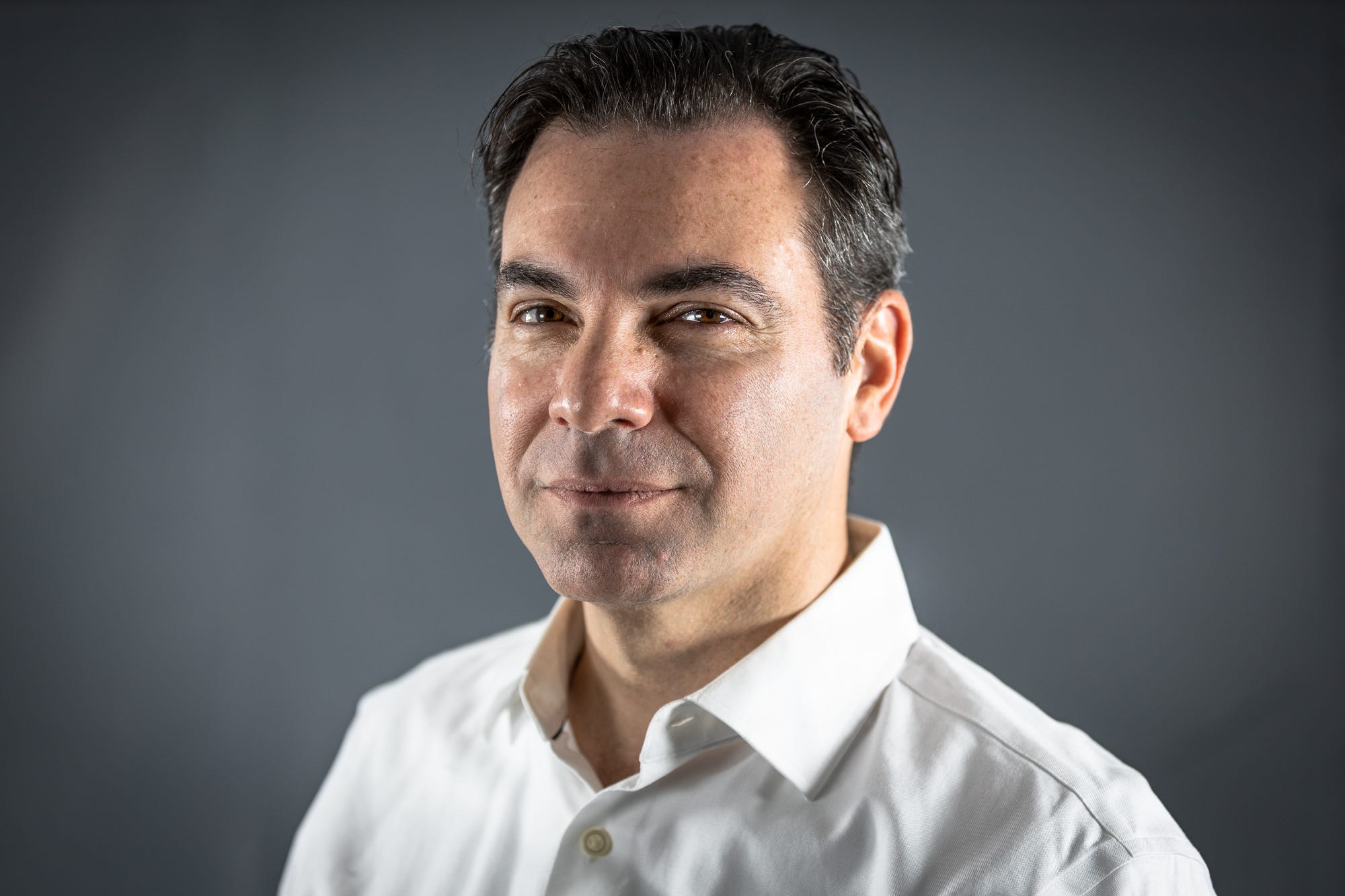
you made over 70 investments. Let's go straight into the topic of why you left building companies as a founder and operator and went into the investor role. >> I'm looking for founders who have well-reasoned but loosely held opinion. >> Me as an angel investor, I found it was a very fast way to lose money. You write these big checks and then they disappear and then you're like, maybe 10 years later something works out. >> If you're a startup thinking about accelerator, you have to ask yourself, am I in this cuz I need help fundraising? Am I in this because I need help with customer acquisition? >> How did you handle favoritism? You're meeting people. So you're shaking hands. You got to narrow down,000 to 12. Good question. So here's what we did. Hey everyone, welcome back to the show today. Today we have Andrew Acreman on the show. Andrew, I want to just go straight in to the topic of why you left building companies as a founder and operator and went into the investor role and you know leading uh departments at uh Dream Adventures. So, it's kind of funny. When uh when I was doing my second startup, I used to joke around that like if I could sit at Starbucks and just meet with startups every day and like and get paid for it, that'd be awesome because I was doing that anyway. I'd done some angel investments to start with and then I I'd come across the opportunity to take over uh Dream's New York office. I'm like, wait, I can actually do that and get paid for it. Uh in retrospect, it was a little naive. It's a kind of a a quantum level different than the angel investing I was doing before, but it was something I always knew I wanted to do. >> So, let's talk about that. So, me as an angel investor, I found it was a very fast way to lose money. Uh, you write these big checks and then it disappear and then you're like, maybe 10 years later something works out. Um, but you found the opportunity to kind of turn that passion into, you know, career. walk us through what that transition's like from, you know, angel kind of doing it on your own, operating solo to going to a more of established firm. >> Sure. Sure. So, there's a couple of pieces to that. Uh, I'll start with the first part, which was, uh, pure luck, right? So, I actually had a friend who I'd met in business school who is now, uh, the partner, the founding partner of Hide Park, uh, Venture Partners. At that point, he'd been doing an angel group. Uh, I was at the point where I was like feeling, "Oh, that's kind of cool. maybe I want to be on the other side of the table a little bit. And he was just doing pickup games, like, oh, I have this this one startup. What do you think? And he brought us a startup that was uh focused on Alzheimer's. It was a a chemical compound that would help you detect whether or not amaloid plaques were building up in your brain, which is correlated to the progression of Alzheimer's. The truth is I had zero reason or uh I should I just shouldn't have been in that, right? I don't know anything about the chemistry. Uh, in retrospect, like I I get a little like, oh my god, I can't believe that was my first angel investment. Uh, you know, I got my butt handed to me, but I got lucky, right? And it's the same thing if you walk into Atlantic City, you put a 100 bucks down on 17 and the roulette wheel hits 17, you know, there's like zero luck. I mean, it's all luck. There's zero skill involved, but you're hooked anyway. So, the first thing is I had an awesome experience and we it was like a first payoff quickly. I'm like, "Wow, that was good." Uh and fortunately my my luck uh before my luck ran out my skill got a little better at it but I only made about five investments as an angel before the opportunity to join uh Dream uh presented itself. And that's that's part number two. So part number two your question is uh you know there's a lot of people out there doing angel investments. So, how did you end up like actually making the jump or how did I make the jump to something a little bit more um structured more fun/ accelerator like and that's also a combination of luck and purpose. So, I knew I I knew I kind of wanted to do that and uh along the way I had been friends with a lot of people in the ecosystem including uh Bonnie Halper who you may know. She's been in the space since I don't know since the first VC backed an abacus, right? And she probably has dirt on those guys. So, she had uh she was launching Alley Watch, which was an online publication originally centered around the New York ecosystem and then later more generally. And when I said, "Hey, best of luck. Let me know how I can help." She said to me, "Andrew, uh, you will write for Ali Watch." And I said, "Great. I'll write you an article." She goes, "No, no, you will write a column." Uh, and then instead of me being like kind of snarky, I'm like, "That's nice, Bonnie. I I have nothing better to do than to write for free for your publication," I kind of shut up for a moment and I thought about it and I said, "You know what? If I can do this, so it's only an hour or two a month." I had the articles out, that might be good. It might build a little bit of the the personal brand. So, I did it. I came up with the idea of doing interviews of other angel investors. Angelist wasn't really a thing back then. It was just getting started. So I did that purposefully because I figured let's try it. And then when the opportunity to join Dream it came along. Like there are a lot of people out there that had networks with angel investors that had experience with prior startups uh you know that had done some angel investing on their own. But then I have this other thing. Well by the way you know I've been writing for Aliwatch for a year. I've done 12 interviews. I could point to uh a visible manifestation of the network and that made the transition easier. It was easier to bet on me in that role. And that's part of the advice I give to anyone who's looking to get into VC. Think about the four or five things you need to do to be a VC and find a way to not only get the skills, but demonstrate that you have them. And what ultimately got their attention at Dreaming? Like how how did you get in front of them? How did you build that relationship and trust that you were capable to to lead you know the edtech at the at at the start of things and then ultimately prop tech? How did that start? >> Yeah. So it's a again it's a combination of luck and purpose right. Everything in life is a combination of luck and purpose down to my first startup all the way through to every investment I make. So, um, I forget exactly how I'd come onto their radar, but they were looking for someone to take over the role, and I happened to know the guy that was running the office at the time. And not only happened to notice him, know him, I'd interviewed him for Alley Watch. So, the first thing I did, I picked up the phone, I say, "Mark, this seems really interesting, but is this good for Mark or is this bad for Mark?" Uh, and his response was, "It's effing awesome for Mark." Right? I was told this was a part-time job, and it isn't. But he had also kind of come up as an angel and then all of a sudden like why don't you run the accelerator? He's like okay I'll give it a shot and it was much much much more work for him than he thought. So he sort of given them an ultimatum which was like you find someone to run this thing and I'll help out. Um so once I had that as like oh this is kind of good news uh I kind of threw my hat in the ring and then it was a combination of like you know what skills are you looking for? Well can you source right? Can you, you know, find investors for the startups back at demo day back when we did demo day, right? Can you do, you know, coaching, all those other things that you expect someone who's running an accelerator to do? And, you know, I had kind of things like writing for Aliwatch as a physical manifestation of the fact that I had those skills. And I knew like the two or three other guys that were in the final rounds for the uh, you know, for this position. I know that because I applied for the same other jobs they were applying for and you we all ended up in like a seat. It was like a nice game of musical chairs that way. But I know for a fact that I was, you know, I got the role of Dream because I had these things that I could point to that were, you know, quantifiable to demonstrate that I had those skills and that's what got them comfortable with me. And so you get the job, you know, you're working on the accelerator. Accelerators have both very positive uh perceptions of the market and also very negative. What's your take on what accelerators used to be back in kind of early 2010s and what they are today? >> Oh, that was a loaded question. Uh, you know, that's like great. Please speak ill of 90% of the accelerators out there. Uh, okay. So, let's let's let's be like stupid candid here. uh most of them are not worth it. Right? So let's let's take it all the way back to the dawn of time you know we're 2006 2007 2008 they're basically three accelerators by combinators and dream that's kind of it then those are the first three so your first generation of accelerators and same as like your first generation of startup ecosystems were basically emergent right you had a green field opportunity and a marketplace right you know startups and investors So whenever you have a marketplace and you're early to market, you can build a pretty strong position. And it's not because you're necessarily awesome at what you do, though I would argue that the more you do, the better you get, but it's because marketplaces are so strong. So once you've got an established reputation that, you know, good startups come to your program and you have good investors who come to your demo day, well, the best startups want to go where the best investors are and the best investors want to go where the best startups are. So that first generation just by being first and doing it well even just reasonably well and and learning from that start to get further and further ahead of the competition and then you have a second generation that start coming in and they're like well I'm going to be the Y combinator of pick a city right so that's okay not everyone wants to pick up their life and go to Silicon Valley so you can be the Y combinator of Chicago or you know Atlanta or whatever the case may be and you have a bunch of like second tier uh Sorry, wrong word. Uh, second generation, right? They could be quite good, but they're the second generation where they're doing a geographic focus. And then you have like the third generation, which is okay, like, you know, we don't need uh the Silicon Valley of the Upper West Side, like that's too, you know, micro. So, let's be the Y Combinator for pick an industry where it makes sense. And we took Dream through all of those iterations. But where do you see it kind of today? Like what what do you what's the impact? >> So I see today u we're still in that third generation to a degree where people are being well okay if I'm not white combinator I'll try to be the Y combinator of fintech or the white combinator of you know AI. We'll see if that plays out. But I feel like a lot of those spaces are taken spoken for or at least contested already. So it's very hard if you're a new accelerator to come in and find green space to play in. So I don't uh you know if there's a new accelerator that's come up and I'm a startup I wouldn't I wouldn't jump to it. In fact I have a whole chapter you know in my book which I promise you we will pitch in more detail later. Uh sorry about that. Had to do it where the entrepreneur in the book is thinking about whether he wants to join an accelerator. uh in his case the the startup in the book is a speechto text focused startup so he's thinking about whether he wants to join something like that uh and I actually have it set since the book is written like a novel it's set with him in his he's sparring in his dojo and he starts thinking about like oh choosing accelerator is like try choosing a a dojo or a form like are you in it for fitness are you in it for self-defense are you in it for the social element of it so when you're thinking about if you're a startup thinking about acceler You have to ask yourself, am I in this because I need help fundraising? Am I in this because I need help with customer acquisition? Am I in this because I just need help with the block and tackle of building an accelerator, sorry, a uh a startup, right? And depending on what you need, an accelerator might be a good fit for you at that stage or it might not be. And I guess how does a founder, it's one thing for them to claim like an accelerator to claim that this is why you come to us, but as far as the impact, um what do you ultimately attribute a successful outcome to uh from an accelerator? So I'm a company, how would I define success coming out of this accelerator that I chose to to pursue? >> Sure. Absolutely. Great. And that that's also again part of what we talk about in that chapter. uh you know how do you quantify these things? So it goes back to you know what are the things you're looking to get out of that program. So if it's just the basic block and tackle of building businesses like a startup you got to talk to all the you know the graduates of the program which you should do anyway but in this case you're asking them like did they get those skills you really need to understand like the content of the program if it equips them to go on or if they feel like they just fell down flat at the end of that period of time. On the other hand, if it's all about funding for you, it's like, "Hey, I've done all that other stuff before. I've got good early customers, then you want to find out stats after six months, if it's a kind of a preede style program, what percentage of the startups have raised, right? There's a bit of mix like did they choose startups well versus they help startups?" That's hard to tease out, but those are the kind of metrics you're looking for. And the hardest is if you're looking there for primarily sales, you want to try to figure out uh you know if there's any kind of tracking of hey we made these many introductions and they resulted in this you know many hundreds of thousands of dollars of ARR that's really really hard for a program to measure. So instead if you can't get that at least understand like what are you doing differently like are you just kind of making introductions to your random network or is there like a process that's deeper or more meaningful. So the same way we talk to our startups as investors and say you know show me something that's quantitatively different than your competition that's a quantum level higher and better. Um you should be asking your accelerator the same thing like what are you doing different from the other 200 programs out there? So when it comes to going back to your experience at treatment and looking at your impact there what you did so you working on the accelerator how did your career evolve and you know what's some lessons for for people out there to kind of be aware of being in your shoes like making the decision you made I think 70 over over 70 investments what was kind of that process like from you working on the accelerator making investments and you know ultimately developing your career there at at DreamIt. >> Sure. Sure. So, there were some things that I knew were going to be different. There's some things like I only kind of figured out once I got there. So, you do your homework. You talk to as many people who have done that transition before. That's kind of the baseline of what you have to do. So, I knew that like there was going to be a lot of kind of administia around running the program like finding office space, hiring, you know, my program manager uh and all that kind of stuff. I kind of knew what I was getting into and I had a sense of how much time it was and I'm like, "Okay, that's kind of the cost of doing business." One of the things that I didn't know, at least I didn't appreciate was how much more work it was. It wasn't just, you know, let's just do more of it. It was qualitatively different when you're an angel and you get like one or two or three startups a month coming to you and some of them pretty good. That's a good deal flow and you can invest or not invest. Totally up to you. versus now you've got a program and you're recruiting for say 12 startups and it's all starting at the same time. So you need to get to 12 startups in about six to eight weeks which means that you need if you're doing preede program a thousand plus applicants. So going from kind of passively receiving three or four inbound deals to actively going out there and soliciting a thousand plus applications in the space of 2 months. That was qualitatively different. Uh and I had to go from like just sitting and waiting for stuff to come in or just kind of opening up the door say applications are good to actually going out there doing events doing virtual uh events as well. uh you know even even doing like you know promoted tweets that kind of stuff stuff that I'd never had to do before just to fill the top of the funnel. >> And I guess what was kind of the most powerful channel when it came to securing like getting that deal flow in the door? What channels ultimately delivered that kind of volume? >> Mhm. So it was a mix of stuff. So back in the day, Angelist, if you remember, was a little bit more like a LinkedIn for uh early stage startups and investors. It's totally different now, but back then you could find any startup that kind of put their their site up there and you know, any investors that they had at the earliest stage. It was kind of like what we use Crunchbook for now, but at the like I'm looking for angels or I just got angels stage. Uh so they didn't really have an API, so we scraped it pretty aggressively. uh we would look for like new stuff that had shown up or you know when we were a little further along and we were looking for companies that had raised maybe a little bit of cash but you know weren't beyond a certain point we'd look for people that you know had hit certain strike zones. So we did that pretty hard. uh we managed to get like the at least those lists of prospects and then we would match the companies with email addresses to the best we could with the ever popular info@dommain.com if you know we had no other you know no other way to figure out what they were and just you know semi-PAM targeted spam like hey I love what you're working on and it'll insert description here seems really interesting looks like you're have you know a stage that could be you know uh you know could be great time to join a program like DreamIts. You know, do you know we do X, Y, and Z. Uh the promoted tweets didn't really move the needle that much, but we got some inbound from that. Uh I also used Twitter a little differently back in the day. Like I would make lists of founders, Mr. Adam, and then they would add it back. So then, you know, as I would start basically talking about it, I would get inbound a little more organically from Twitter. So that worked at that stage, but then we went later stage, right about two years in, we switched from being a preede pre-revenue program, you know, sit your butt in the chair for 3 months and we'll bring you speakers, pizza, beer, demo day to a late I know kind of archetypical um to a later stage like, hey, you got $500,000 ARR, you've already raised your seed, you're getting ready to, you know, hit one or two or three million AR and raise your A round and then it was just just the founders come in or just the one of the founders and it's like 60% remote and vertically focused. So now we need a totally different approach. You know, Angelist, not the great fit, but then Pitchbook, you know, Crunchb like those guys became better for us. Uh Twitter was a little too like, you know, grabbag of early stage and stuff that wasn't in our focus anymore. So we do a lot more conferences. I go to conferences, see what startups are coming, uh do the same kind of semi-PAM. Hey, Jason, I love what you're working on. XYZ is a great fit for, you know, dream edtech or, you know, dream at propt tech. Um, you know, I'm gonna be there for, you know, from Tuesday to Thursday. Why don't you book a half hour with me booking link? Uh, we got pretty good at making these semi mass emails look really personal. But that ended up converting better for us. And then in general, also thought leadership. We put out um uh four to seven minute videos that would be really focused on like here's how you great make a great market slide where you know here's what most people screw up about your problem slide and those actually ended up uh getting good uptake and driving some inbound. Real quick, if you're a founder doing over 5 million in revenue and want to know what the best $100 million plus founders are doing to fuel their growth, then make sure to subscribe to our $und00 million exits newsletter. Get the playbooks that are proven on how to fund, grow, and sell your business. I'll even give you a curated list of investors that want to invest in your business. It's totally free. All you have to do is click that link down below. Subscribe. Do it now. I promise it's worth it. You won't regret it. You got nothing to lose. Go ahead, subscribe now. back to the show. >> How did you handle favoritism? Like you out, you're meeting people, you're shaking hands, you got to narrow down a thousand to 12 like walk us through that decision- making process of how you scale back, you know, that kind of list of inbound to to just selecting 12. Good question. Okay, so it was less of an issue later stage when we were more focused. You know, I used to joke, you know, how many is the right amount of applications? like, "Well, we're looking for six." So, six awesome startups would be the best. Like, I just look at six. I'm thrilled. Don't look at any more startups. That would be perfect. But, you know, that never happens. So, in the call dream at 1.0 when we were looking for like a thousand startups at the top of the funnel to get down to 12, um, you know, I did the math. It would take me on average a little bit less than five minutes per application. And that includes the ones you looked at in like 45 seconds. You're like, "Oh my god, that's so bad." and the ones that were like plausible and you have to like dig into but like you can do the math like 5,000 hours just to get through a first screen is brutal and you know I had less than two months to do it in and by the way the last month had to be final round and negotiating and closing the deal so it's really like a thousand startups in four weeks at most like my eyes started to glaze over I was not a nice human being I told people to like apply early before I got bitter >> but like how how did you stand out like how do you get how do you avoid that fatigue and like make a good decision? How does someone amazing not slip through the cracks? >> So here's what we did. So we use a couple of approaches. So number one like actually designing your questions in a way that you can solicit that and like weed out the crap that helps a lot. But the bigger thing that I did was I had this insight which was I could train people up in a relatively short period of time to weed out the lumps of coal. I wouldn't trust their judgment about what the diamonds were, but I could tell with relatively good, you know, consistency if it was just junk and I shouldn't look at it. So, I trained up about 10 volunteers. Uh, and I gave them our rubric, right? You know, this is how we this is what a fivestar team looks like. This is what a fivestar market size looks like. This is what a fivestar go to market looks like. And we had about I think six categories. And I said go to it. And I had three people looking at every application. And my decision mark was if somebody didn't get above an average of 1.5 stars across all three people across all five categories, I didn't even look at them. And that weeded out the bottom 25%. Now, I went back, you know, when things were a little calmer and I went through just to make sure there were no no diamonds thrown out in the slush pile. No, you know, there were no false negatives, but that took 25% of the burden off the top. And then I went back and then we would look through the remaining three quarters. Uh it was it was still a lot of work and we tried like maybe we would um prioritize the ones that had higher scores from the the pre-screeners and that helped a little bit. So at least I looked at the better ones and the more interesting ones early on, but we tried not to pay that much attention to the upside signal cuz that one was a little bit kind of wonkier. uh but you know three people thought it was crap like what was what was upside signal from from your perspective in this process. >> Okay. So let's let's uh let's talk from the perspective of dream at 1.0 and then I'll tell you from dream at 2.0 because they're different signals. So when I'm looking at a a vast pool of startups most of whom are pre-revenue you know any revenue is kind of an interesting an interesting uh you know standout. So we'd start and try to figure that out. Um, you know, there would also be like the team, right? Had they had a prior uh uh startup in the past because the difference between having a team where no one's done a startup and a team where at least one or two people have done a startup even if the startup didn't succeed is is kind of step level. So that was our at that stage and we're generalists, right? So, you know, anything that was at least in an industry we were vaguely interested in, those moved them up a little bit in the pile. Uh, when we went to DreamIt 2.0, when we were industry focused and we were looking for companies that were past a certain point and they they raised a little bit, they had a certain amount of revenue. Things like, you know, where they were at the, you know, revenue-wise and how long it had been since they'd raised around and how much they'd raised, that would move them to the top. But it was a little complicated, right? Right. If they'd raised um money and they oh and sorry runway, right? If they'd raised around uh like two years ago and they were low on runway and we were going to bring them in and at that point we weren't giving them extra money. Even if we were at that point giving them a little bit of cash wasn't going to make the same difference it would, you know, when we were early stage and like 50 grand or 100 grand made a big difference. We'd say like, listen, we're making these enterprise sales connections for you guys and it can take you six months to convert that and you don't have at least six months of runway. I don't know if this is going to help you at all. So for there like length of runway became much more important than it did when they were preede and you know was less of an issue. So those were the signals where you know if we saw someone at three months of runway we're like they're going to be dead before they come into the program. No, I think that's valid. And when it comes to kind of the the next phase, so you you did phase one for for or dream it version one early stage, you move to to the later stage. What kind of signals did you see once they got into the mix the later stage that you know led them to the graduation? Like what were you guys measuring? What were you guys looking at that quantified that company as a success and graduated to the next stage that you're proud of that uh you know result I'm proud of all the companies that exit you know or or that are getting there right you like that's you know it's not like there's an element of teaching to this that I actually surprisingly enjoy but at the end of the day you know I'm not looking to give people a grade like I have in my entrepreneurship course I'm looking to give them like the skills and the connections and the introductions they need to make me a lot of money. So, you know, ultimately they go out there in the near term, they're able to raise their next round, which means they got to the the right milestone at the right time and then ultimately they're getting closer and closer to exit. So, that's it. That's the goal. Uh, as a later stage company, you know, again, we're looking at team, but we're looking at sometimes different things on the team, right? in addition to have you had a prior startup or ideally an exit before domain expertise industry expertise right it's really really hard I ran first I span up the edtech program and then I span up prop tech and construction tech and those are three industries where if you don't have a couple of years or more in the trenches before starting your startup it's really hard to make it go uh a you don't have the credibility with your customers and b you don't have the skills and connections I think I've seen in the course of my career when running those two programs exactly two startups where the founders didn't have deep expertise in that space and succeeded anyway. So that's what we looked for on the team side that was different. >> And so what at dream it what was in the you know conversations with the partners that led to that switch from edte to prep tech construction tech like what what were the motivations to make that switch? >> Sure. Um to answer that I have to roll it back a little bit to what made us go later stage in the first place. So, we had a new CEO come in, uh, Abby Savar, great guy, super talented, hadn't really ever done anything in the accelerator space before, but was really good at the marketing and positioning and the overall strategy. And I remember while we were at our, you know, offsite at like Candlewood Lake, and he says like, "Hey guys, um, I know we're like top five in the space right now. Can we ever be number one doing what we're doing?" And we kind of hemmed and hawed a bit, but like that that virtuous cycle, that strength of a marketplace is so strong that we just didn't think we could take down Y Combinator. Best case scenario, didn't think it was going to happen. So he says, okay, that's what I thought. In that case, I don't want to do this anymore. Find me something that we can do where we can be number one. It was an interesting challenge, surprisingly simple. So we sat down, we thought about it for a while, and we actually talked to the market. I was like, what what is DreamIt known for that other accelerators aren't? Uh, and by the way, after once you get below like the top five or six accelerators, like it very hard for startups to articulate what they thought was good about the program, which is kind of a bad sign in general, but for us, we kept hearing among other things, you're really good at getting us our first customers. So, you know, business development for lack of a better word. And we thought we were good. It was nice to see the market come back to us. So we said okay if that's what we're really good at um and we have all these corporates that are coming to us and saying uh bring us like cutting edge startups but then we'd bring them cutting edge startups and they'd say really interesting startup sharp guys really painful problem but just too early to work with a Fortune 100 company and then track them for 12 months like like morons we kept doing that and then we're like wait a second they don't really want that they want companies that are one stage later and we have all these companies that want to come in because of our business development skills. Let's go one stage later where no one's doing it and then we can bring together. Now, we had to change uh the program and the offer because it wasn't suited to like, you know, you can't give $50,000 to a company that's just raised three million and tell them to sit in a chair for 3 months. So, we had to change all of that. Um, but that's why we went later stage to begin with. And the reason we went edtech was simply because one of the founders of DreamIt had a strong connection to Penn State and they wrote us a check for a million bucks. Then Avi looks around the room and says, "You haven't started recruiting for, you know, for New York yet, and you worked at Kaplan Test Prep for 9 months. You should build this." I'm like, "Okay." So, we built it. It worked really well. And then when I was getting ready to do my my second uh year of it, we done two two cycles uh 17 companies, some of which are still doing very well. Um you know, I just sold another piece of work to ETSs, the guys who uh do the SATs. I'm like, I'm all ready to go again. We get connected to a gentleman by the name of Jeff Vinnick, who's you may remember, he u he ran Mellin, big big big head big mutual fund. Uh, and he ultimately bought the Tampa Bay Lightning and since I'm married to a Canadian, like that was big. Uh, and he moved out to Tampa and we've gotten connected to him. Long story how he was building a brand new downtown to Tampa. So, and he wanted to bring startups into Tampa, not to like live, but to bring their technology to the big companies in Tampa, so they would get access to technology at the same time that their competitors in New York or the Bay or Boston were. So, that was actually a really good fit to our model of dealing with later stage startups. You don't have to relocate. We're going to get you customers. Uh, and we'd always wanted to do prop tech. So now we had a really good reason not only to do propt tech, we had the general contractors he was working with, the leasing agents he was working with, the architects he was working working with. That was a core customer sprint right there. But we also had a good reason if we were doing it to say like, well, this is why we're going to go to Tampa, you know, twice during the program. So it all came together. We were able to do what we wanted to do all along. We had a great partner. The only problem was it was only one of me. So, I had to walk away from the edtech program, shut it down, and then start the urban tech program from scratch. And in your career, I dream it. What was some of the like the toughest transactions for you guys when it came to either winning them and like getting them to, you know, participate uh and take your money and or you know negotiating or what was like a one of your most challenging transactions that you experienced? >> Yeah. So, there's two ways to answer that, right? So, one is like what were the hardest ones to win and why? and the other ones were kind of where was I most on the fence and you know where did I end up and how did I work how did that work out for me so let's start with the first one um the Achilles heel of a lot of accelerator programs are the economics the program itself right if you dig into it it's much much harder to run and much more expensive to run a program than most people think especially as you start scaling and doing multiple programs and people I know managing directors expect to get paid etc etc So there's a lot of different models you can do. You can take corporate money and that has problems. You can take economic development money and that has implications for the kind of startups you get. Uh we wanted our independence. So the model that we'd put together was kind of an interesting fund accelerator hybrid where the fund would approve uh bringing a startup in and then the accelerator would bring them in and the fund would buy the investment rights from the accelerator and that's how we funded the accelerator. What that meant was uh we had very specific guard rails around what that purchase could be because if we we will do whatever we wanted, we'd be open to accusations from uh the limited partners in the fund that we were taking startups willy-nilly not getting the deals that they thought they were going to get. So we had perversely a little bit of strength going into negotiations if the startups wanted to like just reopen everything like well we can't right we can't our our ppm for our fund says it has to be within this buy box but that also meant that when propt tech was getting really really hot um there was some sort of so like you know f that we can do better so that was the hardest thing not having that flexibility especially when hey your program's starting in 3 months months. We want the money right now. Our round is closing. We had a little bit of flexibility in that, but not enough. And we've lost some really good deals on that one. That was the hardest thing for me. >> Have you done a postmortem on kind of what those deals would have been had you had the flexibility? Have you followed some of those companies and some of the company? >> So I try to follow both. Um I mean most people will follow the story the investments they make and then they know if they made the wrong decision and they failed. That's a type one error to have look at the anti- portfolio and look for your type two errors like you said no or you couldn't say yes to that and then they did awesome. Very few people do that. I try to do it. It's hard to do that consistently. So, I haven't done it like forever, but for about good five or so companies, um, two of them are doing, one of them is still doing quite well and I think will go the distance. The second one was doing really, really well for a while. Um, I think it hit some headwinds with when Proptek slowed down a bit, but I think it's still going reasonably strong. Um, and then there are a couple more that, you know, they kind of fell down, but since most of the startups will fall down anyway, you know, it's kind of hard to say like, you know, was my batting average, would my batting average have been better with it. I will say, sorry, I will say, uh, there have been up rounds where I fought to participate in more fully, but we didn't, where they would have made the fund. There were a couple at least three that I can think of where we either didn't exercise our right to invest at all or we didn't exercise all or some of our prata into their next round which which was a horrible mistake on the fund side to be honest. Those are very painful. And of the companies that you've invested in the 70 plus deals, what's the one that you're most proud of that kind of or I should say like made you the most money or is likely to make you the most money? >> Um, you know, I love all my children, right? Uh, the one that's >> Some children perform better than others. >> Yeah. Some of them get more more allowance than others. Um, you know, apologies to the other 69 plus startups. like the one that's probably got the most press and is probably uh most press and probably furthest along in a lot of ways. Well, there's a couple, but let's just stick with the one that's in New York. It's a company called Cherry. They do they aggregate real estate data across thousands of data sources. They ddup it. They scrub it. Fits right into your workflow. It's the kind of thing that, you know, large underwriters or large developers will pay uh data scientists a couple hundred thousand bucks a year to do and they do it manually and slowly. This all happens uh in real time. Uh, so they went from when I was introduced to LD, they were doing just over a million dollars ARR and I can't say where they are now, but they've grown um, you know, significantly and I think I think they're very close to um, exiting if they want to. I've been following them as well, you know, when I've dug into the prop tech world and they're synonymous. Like my wife works in, you know, the large, you know, JL, one of the largest real estate ones. It's uh it's a common name brought up all the time. So they're definitely a market they earn uh in their category. Um how'd you say how how'd you win that deal? How'd you get them? >> So it's very funny, right? So ironically the better entrepreneurs see the value in the deal we were offering and it's the less sophisticated entrepreneurs who sometimes struggled with it. So um taking a bunch of the nuance out at the time the way it worked was hey startup you join the program we're not giving you any cash up front we're not taking any equity up front we get a little bit of advisor equity but we're doing it for the right to invest in your next round. So that's how we did it. We we basically brought the um bought a super praa up to $500,000 into the next round. Uh so uh you know LD the founder of Cherry he kind of looked at it and he's like oh the value of this uh you know angel or you know advisor equity is roughly 50 grand. He was doing even at that point he was doing six figure SAS sales. He's like I get one customer out of your customer sprints pays for itself. I'm it right. He got it right away. The kind of less skilled founders would often like kind of try to dicker about it. It's like, well, I don't know. Was it worth the point or the quarter point or whatever it turned out to be? Should we do it? Should we not do it? So, it was almost in a weird sort of way a bit of an intelligence test, right? The kind of founders that were going to work best with us and get the most out of the program got the deal right away. So, that's a that's a lesson I want to focus on right now. I think that is such a good point for founders to recognize around the real value of things. they're looking at like $50,000 like oh my god like I haven't even paid myself that much money you know or like oh I could hire like an entry- level person and you're giving me like part-time ad it's just like but the value that's created both in enterprise value and you know potential revenue of that you know one connection got you know most likely you're going for more you're going to provide a lot more value and it's it's a it's kind of an arbitrage play like okay if you can get an advisor are in that provide that level of value that can bring in the revenue like your valuation goes up. You know, you're if you're on a revenue multiple and you bring in 100k deal and you're on a 5x revenue multiple, that's $500,000 in enterprise value added to your company from one. >> And I'll take that one step further, right? To take that one step further, we weren't even asking for cash, right? We were we were asking for it in the form of a safe. And we actually the safe had a nominal value of $150,000, but we didn't no money changed hands. There was no cap, no discount. So we only got that equity when you raised a price round later. And depending on how much progress you made, the higher the valuation in your next round, the less equity we got, which is a little bit weird because we were shooting ourselves in the foot a bit, but that's fine. But the idea was like it was essentially performance-based. So, I would be a little bit wary as a founder because there's so many people out there that are like, you know, you know, give me X dollars retainer and I'll provide Y and you don't know if they're any good or not. Uh, but if you do have somebody who's really good at, say, bisdev, that $5,000 a month retainer and 20% revshare, like that can be one of the best investments you make. The tricky part is are they good at it? Are they really worth it? And that comes down to reference checks, talking to people, you know, seeing their their background, what they've done. But it's it's one of these things where founders I feel don't ask for that kind of help as much as they should. and the ones that do benefit greatly and those that don't that kind of keep it to themselves like I don't want to give up equity and you know that those those tend to struggle a lot more as you kind of say like the more experienced founders recognize the value because they've been there they've done that they know the arbitrage that could be played there versus ones that you know try to do it all themselves and it's just a lot harder to scale a very big company by yourself uh I think it's more or less >> um and that goes back to one of the other questions like the reason a lot of VCs don't back solo founders comes back to that point or those two points. Um, if they don't have to say it out loud across the table to someone who's their peer who can say like, "Man, Jason, that doesn't make sense. You didn't think that through." Right? There's no check up here. Everything sounds perfect. Right? When you say it out loud, like, you know, that's when you actually stress test your ideas. And then also, it's just too much work for one person. You need someone else or two other people who are so invested in it that like if something's not working at 2 o'clock in the morning, they get out of bed in a cold sweat and get to work just like you do. So, I won't say I've never backed the solo founder. It's happened once or twice. It's a lot harder to convince me that that's, you know, a good bet to make. No, I'm in I'm in a similar camp. It's feasible, but I often find that the qualified capable founder that has a track record and is solo slightly different story than I'm a first-time founder doing this all by myself. It's just it becomes the burden becomes too great unless you've already surrounded yourself by some amazing people. Um, so I want to take this moment to transition to the book. Um when we were speaking about this over coffee, you know, maybe month about a month ago, uh you had kind of shared kind of the premise behind it of being this this narrative, this novel, the storytelling, as opposed to, you know, here's my biography and here's why I'm awesome, here's why you should do everything I did, but more so like, you know, here's nuggets of, you know, value in these narratives that you can, you know, kind of pull out. So, it'd be great for you to maybe give an example of one of those narratives you mentioned a little bit earlier, but I think if you can kind of expand on one of the narratives, uh, you know, from the book to kind of give it a give people an idea of what to expect. >> Perfect. Perfect. Um, preface this by saying like the world doesn't need yet another business book, right? I'm horrible that way. I find most business books deathly boring. Like it's the same like anecdote, anecdote, anecdote, name drop, name drop, name drop, one-page summary at the end of the chapter. You rip out those onepage summaries at the end, you staple them together, you got 20 pages of good content >> or just ask. >> Yeah. Summary book. >> True. So, um I mean even the good ones are hard for me to read because of that. And they seem to all have the same ghost writer and this like boring bland style. So my thinking behind it and you I can go into more detail where I got the idea was I was going to write it as a story in part like I found that when I was giving advice to startups I would tell them the story about a different startup and what worked for them and that always stuck better. So my number one goal when I wrote this was to write it as a story and along the way embed within it like the nuggets that they needed. So, in this in the book, uh, the entrepreneur Marcus is actually on the subway with his son, and his son makes a casual comment like, "Man, if I own the subway, I'd be rich." So, they start talking about it. He's like, "What do you mean?" He's like, "Wow, everyone takes the subway, I'll make tons of money." So, the dad thinking he's going to be kind of, you know, cool. I was like, "Well, you know, isn't it kind of cool that the same $2.95 that we're taking four stops to your school, we could take all the way to Coney Island?" And his son's like, "You know, f that, Dad. like we should pay by the spot, by the stop, right? On my subway, you pay by distance and that evolves into like you know language. Um but he um it evolves into a discussion between them about different revenue models like do you go per use? Do you go all you can eat? Do you do a premium model say for like students get two rides free or do you even do a share of savings right? Sell your car give me half of the proceeds from the car. Right? So, it actually gets pretty uh sophisticated a conversation certainly for an 11-year-old fictional 11-year-old kid in the book about different ways you can charge for your product, but it's embedded within that story rather than like you and me sitting down at a weiwork coffee table looking at your pitch deck. I love that one. I I hope to have those conversations when my daughter turns 11 or daughters turned 11 uh about business models because bring my business my my work talk to home talk. But uh I find that to be a unique way to deliver things. It's disarming and I find that when delivering feedback to founders, they're so defensive and protective of their baby. And it's hard to state for an outsider the obvious sometimes which can be perceived as offensive to like oh you didn't think I considered that. But when you tell it in a a story or it's like well another founder went through this or someone else went through this experience this is what they you know experienced and what uh the result was uh or brainstorming in your case business models and revenue models. Um, it allows that like subliminal seed planting into their head of like, oh, I never really thought about doing like spot pricing. It's like, oh, AWS, CL, you know, GCP, they all do spot pricing. How does that work? How should I try to maybe think about that? And it, you know, unravels into this, you know, potential for for their business. And I think that is something for founders to kind of take away from your book is just the seed planting of like you know this kind of easy to read narrative that can be like oh you know I haven't thought about that like oh that's an interesting approach or you're like oh wow I wouldn't do that way. By the way humor works too right I I've got a couple of jokes that I tell which are kind of gentle ways of of you know getting them to see that like they're they're focusing on the wrong things. Uh but you're absolutely right. Like I wish I could remember who taught me this early in my career because it's a mantra that I use a lot. Like I'm looking for founders who have well-reasoned but loosely held opinions. I want the ones that it's like I ask them, "Hey Jason, why are you doing this?" And they have a good answer. Then I said, "Well, Jason, you know, that's based on this data and like I'm seeing this other data." And they'll be like, "Oh, I didn't see that before. Give me a couple of days. I'm going to go dig into it." And they'll come back later with like, "Okay, that data was not right because or no, that data is right. we're changing what we're doing. >> So that's what I look for. >> Favorite things to see. It's honestly a criteria I require with any any founder that I work with is that I can look at things first principle, challenge them and either I be proven wrong by their justifications or they acknowledge that there's another way or there's another approach they haven't considered and you know begin to go down the rabbit hole of that. Uh and I I feel like that's a a high quality attribute of most leaders and most founders that you know deliver successful outcomes in their businesses. >> Yeah. And and ideally then you come up with a very quick test. It's like okay we have two thesis right now. What can I do for you know what can I do for like a hundred bucks or less or free to test whether we should do you know X or Y. Those are great founders. >> For founders that are interested in exploring, you know, this book and learning more about it, uh what's the best way for them to to learn more? And well, I mean, obviously the best way to do it is to read the book. And the best way to read the book is to buy the book. So, it's available on Amazon. It's also available on Routidge Press, the publisher site. It's called The Entrepreneurs Odyssey. Uh because I'm big into puns, right? You know, there's a guy with a chainsaw hacking his way through the maze. Uh, if you look really closely, it's a novel approach because again, puns, >> you're you're amplifying your dad joke. I was going to ask, are they VC jokes or are they dad jokes? >> Um, there's a little bit of both because the uh the angel investor to kind of takes him under his wings is kind of a little old school, little borch belt, little dad jokes, and also VC jokes. >> As a dad, I can't resist, but I'm sure some younger founders might have a, you know, a roll of the eyes, but they'll they'll get around to it at some point. So, it's funny. It's weird thing. The moment you have a child, dad jokes. >> My um my oldest daughter is just finished her freshman year at college. So, like a lot of her friends, a lot of her peers are kind of at that age where they're looking at like, you know, entrepreneurship either in high school programs or in college. And a couple of them have read it and like they actually liked it, right? They told her when I wasn't around that they enjoyed it. So, like, you know, it couldn't have been the dad jokes couldn't have been that bad. >> There you go. As long as you get like a subtle smirk, I feel like it's a success. Well, a good dad joke, they should laugh and die a little inside. >> Yeah, exactly. As a reminder, it's a dad joke that shouldn't be acceptable, but they still acknowledge. >> Yeah. Um, well, Andrew, I I really appreciate you being on the show, sharing your anecdotes on your experience. There's actually a lot more that we can, you know, cover as you transition to Second uh Century Ventures, and there's so much knowledge for for us to extract. I'd love to have you on another time on the show. Um, but for the audience that obviously wants to learn more about the book, The Entrepreneurs Odyssey, uh, get on Amazon, but if they want to reach out to you or, you know, follow your journey, what's the best way for them to do so? >> Sure. Absolutely. No problem. If they want, uh, you know, I have a personal website. It's, as always, a work in progress. It's Andrew be invoacrian.com. And if they want to reach out to me directly, uh, what the I'll give my Gmail address. It's Andrew Bacriangmail.com. just uh if you do that anyone who's listening put in the subject line you know uh fund fundraising demystified uh I saw you on fundraising demystified something like that so I know it's not just the general run of spam that I get in a given day >> you actually listen to you for an hour and have a >> like telegraph to me that like you're not just trying to pitch me on some like I know fractional real estate startup or like some esports deal. uh you know tell tell me that like you've actually listened and you have a kind of specific question or you know relevant reason to reach out. >> I think that should be a qualifying criteria for anyone reaching out to anyone um is to to have some insightful >> comment or question to ask. >> Yeah, like I said if if we wanted to uh we could probably spend another hour talking about what people do wrong in fundraising with the cold outreach, >> but um I don't think we do. So we'll save it for a different podcast. Well, I I think it'll be a perfect reason to have you back for the the dos and don'ts of cold outreach >> or they just read the last five chapters of the book. >> Oh, well, there you go. You don't want to wait for us to record another episode, just buy the book. How about that, Andrew? Thank you so much for coming on. I really appreciate it. >> Thanks, Jason. I really enjoyed it. >> If you were inspired by today's episode, then go ahead, watch this next episode. Promise it's worth it. And if you really enjoyed this last episode and you want to connect with the guest I had on today, make sure to leave a comment down below telling me why you would like an intro to this guest and I'll make it
%20scale(0.03125,-0.03125)'%20d='M78%200V1760H782V1420H436V1077H768V746H436V343H805V0Z'%20fill='%23f5f1ea'/%3e%3cg%20transform='translate(29.22,37.12)'%3e%3cpath%20d='M0%200%20L9.244171875%200%20L30.81390625%2038.115828125%20L21.569734375%2047.36%20Z'%20fill='%23e8aa4e'/%3e%3cpath%20d='M0%2047.36%20L9.244171875%2047.36%20L32.48%204.87%20L25.94%20-1.67%20Z'%20fill='%23e8aa4e'/%3e%3cpath%20d='M36.98%20-6.16%20L32.60%2011.03%20L19.79%20-1.78%20Z'%20fill='%23e8aa4e'/%3e%3c/g%3e%3cpath%20transform='translate(71.39,84.48)%20scale(0.03125,-0.03125)'%20d='M62%200V1760H402V0Z'%20fill='%23f5f1ea'/%3e%3cpath%20transform='translate(88.77,84.48)%20scale(0.03125,-0.03125)'%20d='M229%200V1422H20V1760H790V1422H581V0Z'%20fill='%23f5f1ea'/%3e%3cpath%20transform='translate(116.96,84.48)%20scale(0.03125,-0.03125)'%20d=''%20fill='%23f5f1ea'/%3e%3cpath%20transform='translate(134.84,84.48)%20scale(0.03125,-0.03125)'%20d='M78%200V1760H555Q747%201760%20834.5%201666.5Q922%201573%20922%201358V1281Q922%201157%20877.5%201080.0Q833%201003%20742%20979Q861%20949%20901.5%20838.5Q942%20728%20942%20569Q942%20398%20910.0%20270.0Q878%20142%20794.0%2071.0Q710%200%20555%200ZM422%201097H494Q543%201097%20557.0%201135.0Q571%201173%20571%201226V1403Q571%201488%20496%201488H422ZM457%20310Q594%20310%20594%20440V660Q594%20735%20571.5%20778.5Q549%20822%20487%20822H422V312Q444%20310%20457%20310Z'%20fill='%23f5f1ea'/%3e%3cpath%20transform='translate(168.35,84.48)%20scale(0.03125,-0.03125)'%20d='M498%20-16Q287%20-16%20175.5%20111.5Q64%20239%2064%20480V1316Q64%201542%20174.5%201659.0Q285%201776%20498%201776Q711%201776%20821.5%201659.0Q932%201542%20932%201316V480Q932%20239%20820.5%20111.5Q709%20-16%20498%20-16ZM501%20308Q581%20308%20581%20463V1322Q581%201452%20503%201452Q415%201452%20415%201319V461Q415%20379%20435.0%20343.5Q455%20308%20501%20308Z'%20fill='%23f5f1ea'/%3e%3cpath%20transform='translate(202.35,84.48)%20scale(0.03125,-0.03125)'%20d='M30%200%20200%201760H797L964%200H631L606%20284H394L372%200ZM419%20565H579L502%201460H486Z'%20fill='%23f5f1ea'/%3e%3cpath%20transform='translate(236.30,84.48)%20scale(0.03125,-0.03125)'%20d='M78%200V1760H618Q753%201760%20822.0%201698.5Q891%201637%20914.5%201526.5Q938%201416%20938%201267Q938%201123%20901.5%201037.0Q865%20951%20764%20918Q847%20901%20880.5%20835.5Q914%20770%20914%20666V0H567V689Q567%20766%20535.5%20784.5Q504%20803%20434%20803V0ZM436%201108H521Q594%201108%20594%201267Q594%201370%20578.0%201402.0Q562%201434%20518%201434H436Z'%20fill='%23f5f1ea'/%3e%3cpath%20transform='translate(269.68,84.48)%20scale(0.03125,-0.03125)'%20d='M78%200V1760H562Q752%201760%20848.0%201654.5Q944%201549%20944%201346V522Q944%20272%20856.5%20136.0Q769%200%20550%200ZM432%20311H493Q590%20311%20590%20405V1313Q590%201401%20566.5%201426.5Q543%201452%20471%201452H432Z'%20fill='%23f5f1ea'/%3e%3c/svg%3e)