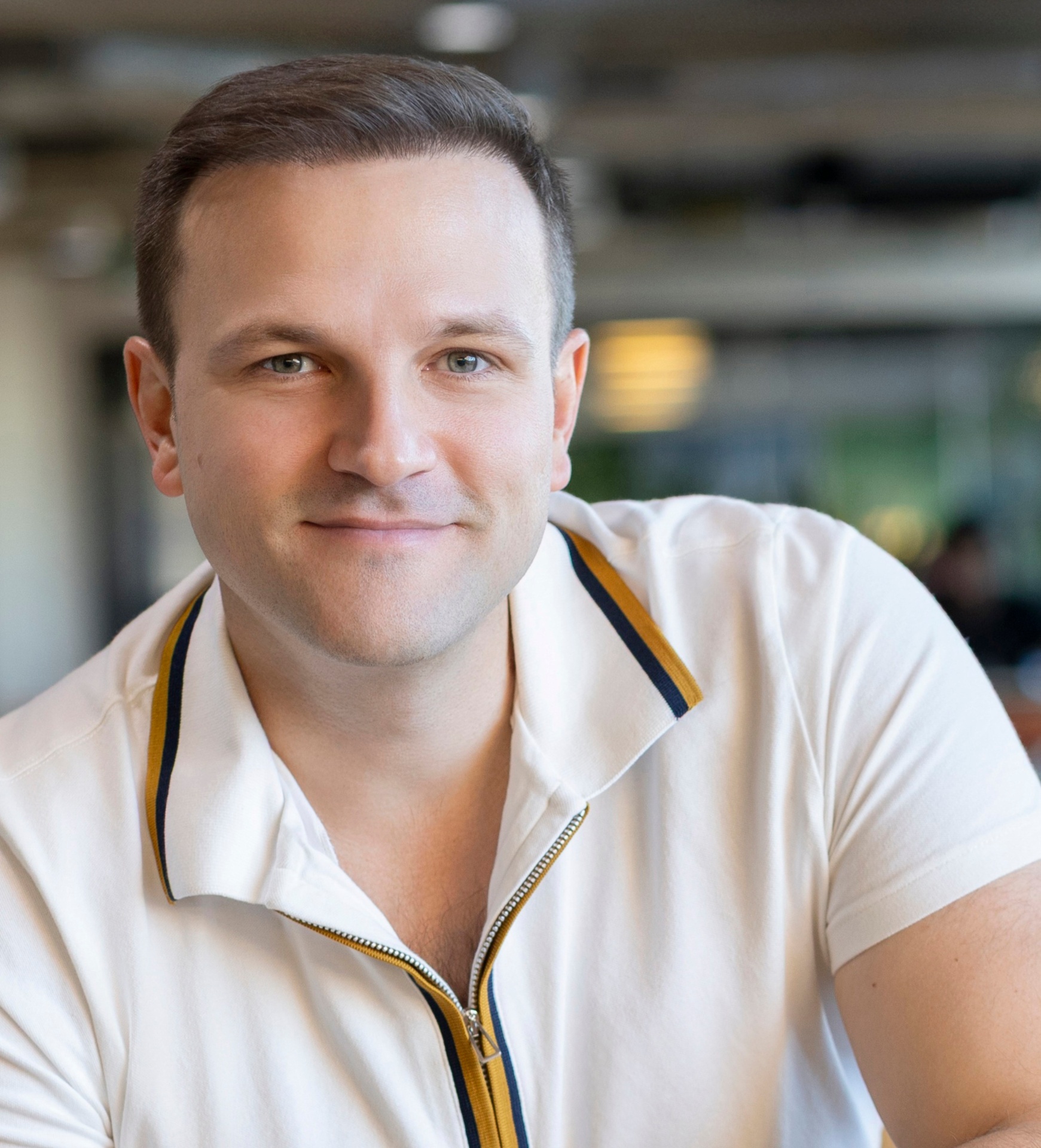
EP 126 - Amber Vodegel - Final Transcript
English (US)
00:00:00.000 — 00:00:47.110 · Amber
I knew from the start that one day I was going to sell it so I actually started building my data room almost from day one What you then don't expect as an app developer is that you one day wake up and you have two million pregnant women on your platform. I literally sent him a message saying, I'm Amber, I set up a pregnancy app, I'd love to have a coffee. And he said, yes, sure, come over. I flew to Holland. And there was a whole delegation, including &A, waiting, so you have to speed up because we will be sold in the next six months the first hundred days we had no meetings we didn't have to do anything
when you exit a company, you should get like a counseling leaflet as well But capital is not free. Like sometimes the most expensive money is the money you raise too early
00:00:47.809 — 00:01:30.750 · Jason Kirby
Hello everyone, welcome back to $100 million exits. I'm excited to be doing this podcast today from Palo Alto. and actually, ironically, as I left London, I'm now interviewing Amber Vodegle, who's in London, and having her on the show who Amber, you come from a very interesting background of starting with agency life, building and bootstrapping your first company that you grew to 12 million users before ultimately selling it to Phillips for an eight-figure sum. And within Phillips, growing it to about 150 million users over six years. Amber, I'm very excited to have you on the show to talk about your mastery and exits and talk about your experience also investing and what you're currently working on today. So, Amber, welcome to the show.
00:01:30.750 — 00:01:45.768 · Amber
Thank you for having me. I love your postcasts and great to share the story. I think I always enjoy listening to your postcasts and hear all the stories from entrepreneurs and it's great to share different perspectives. So thank you.
00:01:45.768 — 00:02:20.732 · Jason Kirby
No, I'm excited to have your story told and and talk about your exit experience because I I think it's quite rich. So let's jump into that. So the company you sold, you built an app called Pregnancy Plus, one of the most popular pregnancy apps globally across the world, used in hundreds of countries. I want to talk about the moment that you started realizing that this company was working and that selling was the right choice. So walk me through that. exit experience. So the audience can kinda g grasp like what it means to sell for an eight figure sum as a bootstrap company to something so big as Phillips.
00:02:21.482 — 00:03:26.734 · Amber
There is something I think I need to tell before because it was my third company that I founded in this space and I knew from the start that one day I was going to sell it so I actually started building my data room almost from day one I just had a feeling that that would be the path and I don't know why so maybe that did matter but I had that in my head but the moment I want to sell that was quite unexpected. It grew incredibly fast and especially being in hundred countries with a lot of different regulation and compliance it just got too big and I think I got nervous and laying awake at night thinking that's a big responsibility to look after so much sensitive data from such a
audience. So at some point you feel you've taken it to a certain point and I was incredibly proud to deliver what we could give our users but I didn't know that the next stage needed to be supported by a larger entity so I think it was it got too big for me at that stage.
00:03:27.484 — 00:03:41.874 · Jason Kirby
And so you knew you wanted to sell from the beginning and what were the driving factors of growth that kind of gave you this kind of large feeling, okay, things are getting too big for me? Like what were what were kind of the the growth engine that you had?
00:03:42.624 — 00:04:51.033 · Amber
Well, the reason we grew so fast is because I figured out because of the work I was doing at the advertising agency, but also the two previous apps that I founded, that there was a kind of a trick to the app stores because you think it's just an app store. But if you look behind it, it's an algorithm. So we looked, we didn't have money. So we looked at how can we kind of work with this algorithm to get us ranking higher in the app stores in the early days. which turned out to be incredibly powerful if you get that right. What you then don't expect as an app developer is that you one day wake up and you have two million pregnant women on your platform.
And that is a massive responsibility in healthcare. What are you going to say to two million women a day? And it turns out if you tell them, please don't drink any alcohol while you're pregnant, that's a lot more healthy moms and babies. But as an app developer, you don't expect to have such a large audience so quickly. And you don't expect... the responsibility that comes with it. Maybe not everyone feels that way, but I certainly did.
00:04:51.783 — 00:05:44.034 · Jason Kirby
you you're providing a product that is so intimate to a what would be for most women a new journey, a new experience. I remember going and downloading the app as my wife was pregnant and going through the journey and like what what's to expect at week twenty four and like what to expect at these moments. And it's very intimate to you know for that knowledge. And we were like, we have no idea what we're doing when it's your first time. so you're providing a very impactful you information that could alter yeah yes more women should not be drink no no drinking during pregnancy which is you know common sense these days but without any kind of knowledge or any kind of data that wouldn't be possible. So what so you hack the you know not a hack but you found out the algorithm, you provided a pretty you know great product experience. How are you monetizing that that app and kind of growing revenue?
00:05:44.034 — 00:07:18.860 · Amber
So we weren't, we didn't have any funding not because I didn't want funding I just didn't know it existed so I did it old school and bootstrapped the company because I thought it was the only way in which you build businesses and what because it was so lean the company and I billed them the first few companies even that company I started in the evening as like a something I did alongside my day job I didn't need to monetize the user base heavily. I just want to make the best product. I literally thought from a more ethical point of view, like if you're pregnant, knew my sister's a gynaecologist, that the first three months are quite scary. There's a lot of miscarriages, things can go wrong. And I thought what would be really bad is if you have a subscription and then you have a miscarriage and then that subscription continues. And I felt maybe we should just make it
completely free for the first three months. Let people get through that dreaded first trimester and by then they've seen the app, they know what we can do and then they can upgrade to a in those days a one-off payment because subscriptions didn't exist back in the days for the price of like a magazine or a coffee and they could then do the rest six months of the app later that changed to a subscription. But it was actually billed whole payment system with the user in mind, which I thought was fair. But because we had so many users and we had a great conversion rate after three months, it actually worked out really well.
00:07:19.610 — 00:07:33.017 · Jason Kirby
Phenomenal. I think that is a very ethical way to think about the user experience and what would be approving. I agree. Yeah, you have a miscarriage and something along those lines, and you get dinged for five bucks. You're just like, it's another trigger that
00:07:32.700 — 00:07:32.962 · Amber
Yeah.
00:07:33.017 — 00:07:42.063 · Jason Kirby
is emotional, and that's gonna be a negative association with the brand. and yeah, one payment, you know, versus like monthly subscription forever because after they're dumb pregnant.
00:07:41.775 — 00:07:42.863 · Amber
I know, yeah.
00:07:42.863 — 00:08:02.458 · Jason Kirby
yeah, not not gonna make sense. So I I respect that that approach. And when it comes to the exit, you were building this to sell. You said you had the data room ready, yet you didn't know about fundraising or you didn't know that was an option to you at the time. So how did you know selling was on the radar?
00:08:02.458 — 00:08:50.801 · Amber
I read a book about someone who like advocated for organizing and your company I don't know if you use the word data room but more like get your house in order because one day when you sell that makes sense so my data room wasn't that at once it was just making sure that everything we did we documented nicely which was a huge help at the end so no I didn't I didn't know what it meant and even I think in the process of selling I literally learned everything on at that moment in time. We were lucky. I did hire EY to do the law and the corporate part. They were very experienced and that was a massive help. It was a big gamble as well because of the large sum of money. But I was very grateful to be in good hands. It's worth spending that money. And then to
00:08:49.937 — 00:08:50.627 · Jason Kirby
Yeah, getting it.
00:08:50.801 — 00:08:58.700 · Amber
be fair, we were also very lucky with the buyer in the end. I think these things all are. very crucial to successful.
00:08:58.838 — 00:09:14.630 · Jason Kirby
Let's talk about the buyer. So buyer was Phillips, you know, major, you know, global brand. And did you know it was gonna be them? What did you run a process? Was there multiple parties involved? Or is it just like Phillips from the get go was the right fit and that's what you pursue?
00:09:14.630 — 00:10:44.748 · Amber
That was actually a really funny story because we were in a process of selling and looking at who could be potential buyers and in the process I thought it would be great to get more like some sponsors on board because we only had the mechanism of the subscription really of the one-off payment so I thought how cool would it be to have some sponsorship revenue we had I think a few small partnerships not very big so I just looked on LinkedIn who was who could be suitable and of course because I'm Dutch I thought Philip You also have baby monitors and breast pumps and all kind of products, baby bottles. So I reached out to the most senior person I was connected to, don't know how we were connected even, and I literally sent him a message saying, I'm Amber, I set up a pregnancy app, I'd love to have a coffee.
And he said, yes, sure, come over. I flew to Holland. I don't think he realized I wasn't even living in Holland. So I flew over to Holland and then went to 12th floor. And there was a whole delegation, including &A, waiting, which I thought was a partnership discussion. And they said. Yeah, so I presented the idea and I said well we can always do a partnership and do partnership for products but how about an acquisition? And I was totally not prepared and I said sure but we are in the process so you have to speed up because we will be sold in the next six months and that was they kept their promise six months later was sold and that was difficult
00:10:43.315 — 00:10:46.835 · Jason Kirby
Did you actually have other bidders at the table? Or would you did you blow up?
00:10:46.150 — 00:10:57.407 · Amber
Yeah, we had a few other companies which helped. So UI was really good in selecting those, but nothing as great fit as Philips was, to be fair. So I was really pleased
00:10:56.140 — 00:10:57.256 · Jason Kirby
That's awesome.
00:10:57.547 — 00:11:01.389 · Amber
that I didn't end up somewhere in Germany with an insurer or something. So, yes.
00:11:00.955 — 00:11:16.651 · Jason Kirby
Yeah. you the right choice. how active was the pr the bidding process? how what was that experience like? So you had EY courting you and kind of making sure that they're introducing you to the right parties and having the right conversations. Like, how active was that process?
00:11:16.651 — 00:13:28.946 · Amber
But I'm near the end. But of course, the time leading up to that is a lot of dating and have the meetings and go through the due diligence. And I don't recall that as that stressful because I knew that Phillips would be the best one. They were very keen. We kind of agreed on the price quite quickly. We were all happy with that. So it was much more of how are we going to how does it look like after the exit? I think there was a lot long discussion and that in hindsight was the best discussion. we could have had because there's nothing worse than selling your company and the day you sell it you start arguing about how to integrate or what a good future looks like.
00:13:28.946 — 00:14:08.088 · Jason Kirby
So you spend a lot of that time that's often spent nickel and diming over language and terms and contracts, and you were spending that time actually brainstorming what it's gonna be like to work together and what's gonna be that post integration. So you had mentioned before we got started that you had a a multi year earnout with them, and you were very proud of the outcome of that. and you stayed another three years, you were there for almost six years in in in its entirety. So let's talk about what it's like to sell your company to in this case the ideal acquirer. everyone's happy with the price. But like what's it like kind of doing that transition and what were some of the hurdles that you felt you had to overcome?
00:14:08.088 — 00:17:38.693 · Amber
Well, the most... What I thought was really life-changing was when we were a startup and I would ring Medicaid or a large network that I wanted to connect to in another country, it was really hard to get those appointments. When you're part of Philips, you pick up the phone and you have an appointment the next day. Or there's a legal team that can help you or there is a government like department that can introduce you. It's unbelievable the power of large corporations. And so I really enjoyed that and that really made that we could become the largest pregnancy app worldwide. So that was fascinating and I'm forever grateful for what they could do for us. We did work really hard at preserving our culture and I think it became successful, our exit, because we protected so well. So part of the negotiation, which was the hardest part, we wanted our own space within Phillips. We did not want to do hot desking.
We wanted a hundred megabyte Wi-Fi speed. We wanted our own plants, own coffee machine, our own art and our own printers in a like dedicated space that looked like a startup and felt like a startup. Of course they didn't like that and we wanted to wear what we wanted to wear. Flip flops and shorts were not allowed. I don't know how I was going to sell that to my team who loved flip flops and shorts in the summer. So... I think part of the negotiation to keep our own space was really important, very hard to do because it felt like they were making an exception for this startup, which doesn't look great on the other employees of Philips.
But it was the right thing to do because still now most of my teams still work at Philips there. We preserve the culture. I think they do hold desk now. The other thing they did really well with, they gave us an integration manager. So one of the hard things is that when you get acquired as a startup that you have to all of a sudden do all your budgets in Sage or your your employee chats you have to put in workday with like grow how do you call them, those development plans, which is incredibly distracting from the business. The integration manager we got, I could literally give a spreadsheet, an Excel spreadsheet with my budget and he would enter it into Sage or my scribbles from the coffee I had with one of my colleagues he would put into Workday. So we didn't have to do any of that. He also made sure that we only had conversations with the right people in Phillips, so we would find the right people.
for us. That just was wonderful because that meant that we didn't feel like we had such a big culture clash and we could concentrate on the business. The other thing that we did was one of my colleagues suggested that was negotiate a hundred day kind of downtime so the first hundred days we had no meetings we didn't have to do anything we're just adjusting to the new environment and then after a hundred days we gave them a hundred day plan so after observing observing life within Phillips and thinking about the next stage we we kind of handed in our hundred day plan which was wonderful because you need a few months to adjust to the new situation so highly recommend negotiating those things upfront.
00:17:39.443 — 00:17:42.856 · Jason Kirby
I wish I would have done that when we sold the Walmart, but that sounds amazing.
00:17:41.895 — 00:17:42.315 · Amber
you
00:17:42.856 — 00:18:12.225 · Jason Kirby
it was like go like 10,000 miles an hour, like you know, double the team in like eight weeks, you know, kind of thing. It was the exact opposite. But that sounds really nice being able to acclimate properly, be able to observe and adjust. And I think also kudos to you for coming in and just knowing what you want. you had a clear line of sight on the acquirer and then you made the demands necessary to be successful and it sounds like everyone won in the end.
00:18:12.064 — 00:18:29.215 · Amber
Yeah, to be fair, Philips was really experienced in acquiring companies and they knew, of course, also the things that didn't go well before. they were very, they get a lot of the advice also came from them. And then EY helped us. So was a combination of a lot of people wanting to make this work.
00:18:29.215 — 00:19:04.117 · Jason Kirby
No, that's great. And when it comes to kind of what happened next. So like you had you gave the 100 day plan, you know, for the audience sake, like you were bought at around twelve million users and or downloads and then grew up 150. So obviously things went up and to the right. from the post acquisition, what made well actually one thing we didn't talk about I think would be interesting. What made the synergy so good? Like besides like the people and just the general brand, like What was in it for Phillips? Like what was their strategic value that they got from you?
00:19:04.117 — 00:19:55.508 · Amber
Well, one of the, we were the first software company I ever bought. and one of the, earn out metrics was also knowledge transfer. So we had mobile app development. We, I think we're one of the first, well, when I started my first company was January, 2009. The app store was only launched six months before that, July 2008. So we had a lot of knowledge about developing apps when worked and didn't work. So to transfer that knowledge to Phillips, Sony Care. or OneBlade or all the other apps they had in the store. That was very beneficial for Philips. So it wasn't just our product, I think it was also the knowledge we brought in digital health in those days. So we also had therefore direct access to the executive committee, which was wonderful because you really felt you could educate on all layers within Philips.
00:19:56.258 — 00:20:11.026 · Jason Kirby
That makes a lot more sense. And you also have built deep relationships within you stayed there for longer than your earnout was. You know, what kind of held you know, kept there and how did you build those relationships?
00:20:11.776 — 00:20:49.364 · Amber
By the way, nothing ever goes smooth. I think there were moments where they wished me away and they thought she's so annoying and way too protective of her own people. So we had our moments as well, of course, within Phillips. I think a nice anecdote was the Wi-Fi wasn't what we negotiated. So when we arrived, the Wi-Fi was really bad and they said they were stuck in a contract and they couldn't change it. So in the end, I just rang up local Wi-Fi whatever supply and I got a cable separately installed in the building. That was against all protocols of course but it was wonderful because we
00:20:48.080 — 00:20:49.076 · Jason Kirby
Yeah,
00:20:49.364 — 00:20:59.052 · Amber
the only one with good internet speed at the time. So that wasn't it wasn't all plain sailing as sometimes we were difficult and start to be. about...
00:20:58.645 — 00:21:10.890 · Jason Kirby
So you're you're talking about how you navigated the diff you know the the di difficulties, but also I want to know it's like they to jump ahead, you know, Phillips Foundation has backed your other your future your current
00:21:10.491 — 00:21:10.886 · Amber
yeah,
00:21:10.890 — 00:21:30.860 · Jason Kirby
company on you know, so you built deep enough connections within this large organization to kind of fund future endeavors, and obviously set your you know original company up for success. Like what does it take to kind of build those key relationships within within these large corporations.
00:21:30.860 — 00:22:31.483 · Amber
Yeah, so back to that. So after the earn out, I actually stayed two more years at Phillips to help with digital transformation. But also because I was going through a personal, difficult time myself. I got divorced, life changes. I think when you exit a company, you should get like a counseling leaflet as well because life changes and circumstances change. So I didn't want to dive into the next big thing. And therefore it was very comfortable to stay. longer at Philips and stay there and be helpful. I took a year off and then thought I'll do one more company also to give back to society and I think because we stayed beyond the earn out and because we were quite helpful to the wider Philips team we got known in the business as a helpful group of people and that builds better relationships because we were not only working
our product we were helping Philips in general strengthen the business.
00:22:32.233 — 00:22:56.296 · Jason Kirby
When it comes to navigating the relationships, you already knew the executive team, and from there, is that kind of the relationships that you maintained and that's what led to these future investment opportunities and the support that you got? Or did you kind of have to work the room? Did you have to kind of find out who within the org you needed to talk to to get things done, or was it relatively easy top down distribution?
00:22:56.296 — 00:23:41.071 · Amber
It was actually, but also because I participated quite a lot outside this work environment. So we went skiing together with a large group of Philips. They organized like a skiing trip and then that was an amazing trip. We had lots of drinks after work or I was always quite happy to engage with them on a personal level as well because ultimately I believe in working together is also covering, if you know your colleagues well, then you're happily stepping in when there's an issue because you can see both sides. So I'm a very, I've always saw work and personal work close together and maybe not, maybe it's a European thing, I don't know. I like
00:23:40.474 — 00:23:41.015 · Jason Kirby
I think we
00:23:41.071 — 00:24:02.054 · Amber
working like that, I love. drinks after work and skiing and having some fun and sharing sometimes also personal stories where you need a bit more support and in my case because I got divorced I think it got a little bit more personal during that journey and they saw another side of me as well which is not always strong and that's what life is unfortunately
00:24:02.054 — 00:24:38.486 · Jason Kirby
So really building those deep connections and building friendships and it sounds genuine too. It sounds like, you wanted to build those relationships just as much as they did. And I think the reason why I asked so many questions on this is because so many founders get acquired and it's like get out as fast as possible, or or it's like pulling teeth to get anything done, or the acquirers trying to kind of create friction against the earnout to not have to pay, and it turns into lawsuits. And it just sounded like you had complete opposite. You know, it just sounds like you really had, you know, folks. Yeah.
00:24:35.174 — 00:24:57.559 · Amber
We did have a people business. we have, have lots of, course our, our users were pregnant women. So the passion, I think to deliver the best product for your users also means that after the acquisition, we wanted the same. that, that was, that is maybe different than when you have a manufacturing business that you sell. So it could also be the nature of the product.
00:24:58.309 — 00:25:24.659 · Jason Kirby
That's true. Yeah, yeah, and customers. So now you've took a year off. so you you parted ways with Phillips, left everything on good terms. You took a year off to kind of figure out what was next. What was that sabbatical like? You know, what did you prioritize? What did you focus on? Because yeah, eventually you came back to build again, but building with different priorities. So walk us through what that sabbatical ultimately meant to you and ultimately what that led to.
00:25:24.659 — 00:27:57.612 · Amber
Well the first thing I really noticed was I lost my identity because previously when people say what do you do and you're like I'm the founder of Ringz plus and if you say I know the app is amazing and you don't have to explain who you are and then all of sudden you're an ex-staff founder and there is no job so people then say what do you do I was like I don't know yet or nothing I'm a mum and I'm thinking about what next. That felt a little bit like a loss of identity strangely enough. And in hindsight, I think, why did I worry about that? But it did feel like that because around you, people are doing great things and at parties, at dinner parties, people say, I've just started the next thing or I'm going on this event or presenting there. And I didn't have any of those things happening in my life anymore. And it did feel a little bit like who am I beyond work? Like.
I've never had work was always my identity not the person Amber as a mother or as a friend or like of course they were there but it wasn't my first identity maybe so that was that then I got bored I think of all good entrepreneurs have a level of ADHD which we should be proud of because that makes that we keep going even though life is hard and You need endless energy to settle businesses. And then I read a book called Moral Ambition and it said the biggest waste of our generation is a waste of talent. Our cleverest minds, our best mathematicians straight out of uni are going to work for hedge funds or work on dopamine triggers for Facebook or TikTok.
was we should be working on climate change or cancer or any other really cool projects. So I thought, what if I use my talent to give something back? We can still be profitable, but maybe just build better tech for health care, a step up from what I've done before. with the knowledge I have but not needing an exit or not needing the same level of maybe, I don't know, proof that we can do this because we've done it a few times before. So that's why I started again. There's always a book isn't it or someone who said something that I think the wish was there it just does something that triggers it at the right moment.
00:27:57.612 — 00:28:10.390 · Jason Kirby
Yeah, I can understand that itch. And when it came to what you're building today, give the audience a little bit of context as to what it is and kind of how you structured it the way you did.
00:28:11.140 — 00:31:46.340 · Amber
Yeah, so building Pregnancy Plus and having like seen 150 million women pass through the app in 100 countries, you start to get a feel about the importance of that space. Because yes, there is the CDC and there is the NHS in England with amazing content on healthcare with their white pages and black letters. The average reading age in a lot of areas. is nine years old. So women and men find those pages quite often boring, simply boring or daunting. And then they go to TikTok or Instagram to find or YouTube to find their health information there, which often is not clinically validated. So apps that are equally engaging as TikTok but are clinically validated are really important to have in the middle.
The downsides of these apps, whether it's an app for meditation or sleep or diabetes or pregnancy or cycle tracking, that consumer apps are funded by venture capital in general. There some charities that do apps, but they generally don't look that advanced. really, world-class apps are funded by venture capital. quite often with hundreds of millions and that needs to be earned back. So what you then end up with is a world where healthcare apps are payable. You have subscriptions, vitamin stacks or minerals that they want to sell you or there's advertisement, there could be consultations. whatever it is, the people become the product to make that return or is linked to an insurer or to your employer.
But then again, it only serves the top layer of society. So the 5 % of society, they can afford $5, $10 a month of subscription. The bottom 80 % can't. The top 5 or 10 % has an aura ring or a watch tracker or an employer that will pay for it or ensure that they can give those apps. The 80 % doesn't have that. So I felt like, what if we built healthcare, consumer health for hundreds of millions, but without subscription? without making people the products or without even getting insurers or employers to pay for it. Because I envision it would be amazing to give a cycle tracker to 100 million women in India. So I've got some money but not enough to pay for all of that.
And because you can't simply get it funded because then you end up in the same incentive loop, we reimagined the backend and we came up with a totally different architecture to make this happen. So what we did was quite disruptive because we came off the cloud. we no longer have central databases. That took quite a while to get to that stage, but it's wonderful. So we don't have any dependencies on cloud servers. We don't have any costs. So if we scale to 100 million users, there's no incremental cost for each new user. We don't have to be so scared of cyber attacks because there is no central database to hack. I don't own it. It gives people back the power of their own data, free from mass surveillance or whatever might come your way in certain countries. And we use something called on-device AI.
So everything gets processed locally within the binary. So if you imagine you have large language models like Chatchi BT and Claude, we use tiny language models within the binary. we don't we bring basically the we don't take the data to the intelligence. We bring the intelligence to the data.
00:31:47.090 — 00:32:01.082 · Jason Kirby
So this I think is wildly innovative. And how well d is there any data that you receive essentially? Like do you even know who the users are, or any kind of analytics of any kind?
00:32:01.082 — 00:32:56.815 · Amber
No, there's literally there's nothing there Which makes it hard if you want to do paid advertisement you can't prove whether the app was installed really We have some data from the app stores. That's all we have because it is downloaded from the app stores But if we launch which we will APKs on the website We can't even see that so people can then download it from a website straight to their app to their phone So what we do do is we ask users to donate their data. It's a bit like when you... have a new iPhone and you install it, they say they want to share your analytics. So we can ask users to donate their data to improve the algorithm, but that's completely voluntary. And those are only the learnings of the algorithm that gets securely then donated for further insights and optimization. But if you don't want to, it's called, we call them cold apps, like cold storage. So
00:32:56.292 — 00:32:56.575 · Jason Kirby
Yeah.
00:32:56.995 — 00:33:52.360 · Amber
basically it's completely shielded off from the outside world. And if you want to connect to your or to your GP or to your healthcare professional or to your insurer you can open the app and then you can make a one-to-one connection but if you want to break that at any time you can just close the app off again and the beauty is like if I now go to any website or any app and I let's say I'd be interested in sexual transmitted diseases for whatever reason because someone talked about this and I just want to know more about it immediately cookies will be spread all over the internet and the next day when I go on Amazon I'll be retargeted with a chlamydia kit that I don't need besides the fact that I'm profiled that way as well within our app you can use it anything it doesn't matter what topic and nobody knows you haven't ever read it or looked at it and I think that freedom is really important
00:33:53.110 — 00:34:34.807 · Jason Kirby
And I think that's wildly disruptive, especially as we are constantly giving more and more data to the big tech companies. This is a way to retain it. But also, you your problem was you couldn't justify the cloud expense to support hundred million users. And so you you had to innovate on yeah, albeit I think there's a righteous and value add to the technology in and of itself, but you had to basically go down that path no matter what, because of the the cost efficiency. So like I think from a Just to scale to help founders understand, roughly what was the operating budget to support, you know, hundred and fifty million downloads versus kind of the operating budget to support the equivalent with this infrastructure.
00:34:34.807 — 00:35:04.214 · Amber
gosh, you'd be spending millions to 450 million users simply because you need your database security, your privacy officers and all the analytic teams and everything that comes with it. We are running with probably four full timers and ten fractional. freelancers and I actually think we can keep that size for a long time. So the costs
00:35:03.468 — 00:35:04.019 · Jason Kirby
That's amazing.
00:35:04.214 — 00:35:43.425 · Amber
are hardly anything and I'd like to keep it that way because then we can keep it free for everyone. We can have some sort of some partnerships in there we already have. Like you can order the concept of pill for free through our app and we get a kickback. We can do some recruitment for a clinical trials, but we can we will make quite quickly a lot of money because the costs are so low, even with just a few partnerships. But then we will donate that back into society. So we put a foundation above the limited and then we'll create a circular company because that's needed. And especially develop more products for similar tech for the lower middle income countries.
00:35:43.425 — 00:36:24.719 · Jason Kirby
It's amazing. yeah, I love that model. And kudos to you for kind of innovating out of necessity to to deliver on that. And I think also it's interesting because I've just from a vibe coding world, I've been experimenting and I just wanted to build an app for myself and it's like conti entirely contained on my phone. It's just amazing to kind of see how technology is transitioning that you know, cloud still has its purpose and needs and whatnot, but how you can kind of come out with something like this and innovate. on this type of privacy level as well as value to your customers. So you're not having to sacrifice the value. People usually justify, we need the data to make it better. It's like, well, you proved otherwise.
00:36:24.719 — 00:36:47.336 · Amber
We all grew up in a world where we thought data equals money. Data is gold and we were told that and it's quite often also true. But I think trust is the new gold and will be. We're in a transition period and I think that trust will become so important, especially in this space, not in all the space, but in consumer health it will be very, very important to do.
00:36:47.336 — 00:37:19.827 · Jason Kirby
It's well said, especially in the AI age where we're just getting new data to slop left and right and data is being extracted from us in every breathing moment. It's kind of refreshing to say trust is the new oil, as they say, you know, trust is the new goal. so one thing I want to talk about because I w I wanted to cover those topics, but also something that the audience hasn't heard about from you is you're investing, you know, you're actively backing founders. Talk. To me about what how you originally started with angel investing, when that kind of kicked off, why you did it, and how it's transitioned over the years.
00:37:20.577 — 00:39:11.323 · Amber
Again, I've never heard of angel investing but then when you sell your company lots of people approach you and say you should come and invest and it's really interesting and you will get lots of returns. So the first few investments I did because I thought I would get an amazing return quite quickly. I soon realized that angel investment is basically gambling, the chance you lose it is much bigger than if you ever see a return. ever since I realized that after my second investment, because I had a chat with someone who basically gave me a one on one angel investing, I thought from now on everything I invest, I just write off the money. I just expect to never see it again. And if it does,
return come to an exit and we have a good return, there's a bonus. But I don't expect it. So that's changed for me the way of how I want to invest and then I made four or five investments in businesses that I really like the founder. And secondly, I would be proud of that product when I look back when I'm 80. then even if I lost the money, still think that would be incredibly cool if that product was there. So one example is I invested in Bio Orbit, which makes cancer drugs in space. They basically get space with SpaceX, they put a box into zero gravity and they make the molecules into space, the cancer drugs. And that allows for these cancer drugs to be administered from home. So people no longer have to go to the hospital because the molecules are so stable. I mean, how wonderful is that? So even if the whole business fails, which I don't think it will, I think this woman is doing an incredible job. I think it's pretty cool and that technology will someday
be used somewhere else as well and if women and men can use these drugs at home rather than being in hospital environment that's just wonderful.
00:39:12.073 — 00:39:16.818 · Jason Kirby
I just wanna know how do they get it back? They they manufacture it in space, how do they get it back?
00:39:16.818 — 00:39:23.470 · Amber
SpaceX gets the rockets back on Earth. It goes in the sky and then lands in the sea.
00:39:22.291 — 00:39:27.615 · Jason Kirby
so it's it's literally just happening while it's in orbit and then coming back to so it's not even staying
00:39:27.090 — 00:39:27.530 · Amber
Yes.
00:39:27.615 — 00:39:29.781 · Jason Kirby
out in fleet. It's that fast.
00:39:30.025 — 00:39:40.929 · Amber
Yeah, it's made in space. Yeah, yeah, because only then if you have zero gravity you can form perfect molecules and they are then so safe that you can actually administer them at home.
00:39:41.679 — 00:39:48.738 · Jason Kirby
That is amazing. what are some other fun deals that you backed, or maybe ones that were like, mm, not so great.
00:39:48.738 — 00:41:11.775 · Amber
One was a company that does e-pharmacy. Amazing woman. She fled, I think, with her family from Iraq, then went to Egypt, then landed in Germany, then came to UK as a... immigrants and she worked her way up. Did an amazing, I think, three degrees. She's a pharmacist and she started as e-pharmacy company to improve the NHS. She knows she's going to exit an IPO for an exact amount, which is a few billion. And I actually think that she's going to do that. But I just love her energy. she is like on fire and she's profitable from day one. She grew the team at some stage from think 20 to 90 people in one year. She was still profitable. good on her. So I love those businesses. They are incredible. And of course, what else do we have? We have one that is
It's all in healthcare because I like that space. One is democratizing fertility treatment for women who have less money and still want to have a baby. I think very important. Again, a founder that scaled to 40 locations in one year and was still profitable. I really like those stories and it's always the same hard work. Women that don't watch Netflix in evening or men, back to few men as well. just hard work and vision and intelligence.
00:41:12.525 — 00:41:19.922 · Jason Kirby
So I gotta ask, do you watch Netflix now that you've kind of made it? Or do you are you still grinding?
00:41:18.446 — 00:42:05.729 · Amber
I honestly, I do watch some TV, but it is the dopamine of the masses. If you don't watch too much TV, you've got so much time to do incredible things. I really advocate, you can do two things in life. You can be a creator or a consumer. Either is fine, but you need to know what you want to be. So if you want to do things in life and you want to have an exit or build companies or do something that gives back to society, then you have to become a creator. You can't just consume. And I think we have at the moment slightly an overkill of consumers in our society. We need some creators more.
So if you're listening to this and you have exited, then maybe start creating again.
00:42:06.479 — 00:42:46.725 · Jason Kirby
sit and consume keep building now I I respect that and I want to also touch on the fact that you're the I don't try back to but it's like the you built and scaled and exited a company but you were also you know and still are a mom have a family have a personal life and things of that sort how do you because like this is for my situation like I'm raising two kids just moved to a new location, trying to do it all. How do you manage the balance if if there is a balance? How do you prioritize your time to be as productive on the building side as well as maintaining personal
00:42:46.725 — 00:42:50.087 · Amber
Not well. think
00:42:48.529 — 00:42:49.691 · Jason Kirby
Okay. Fair enough.
00:42:50.087 — 00:44:56.572 · Amber
I'm in a constant state of guilt and I got slightly used to that. It's not ideal. I think what I learned over the years is that it's not the amount of time that you spend but the quality of time. So me and my daughter Lauren and I have for example a habit of going every year three days on holiday together just the two of us no one else those three days is very intense we chat about everything we go clubbing and it's wonderful and it's it's it's the my son has long days at school, six days as well at school, so he comes home at nine, he's dayboarding but he comes at home at nine o'clock and leaves at eight. So we have half an hour an hour in the evening. I really make sure I'm present then so my phone is not there and I make sure we have a nice cup of tea. So it's not the length of time, I really have tried to optimize the quality of time and really be there and the same is with friends. It's incredibly hard and I've often failed. The moments I succeed
are wonderful and that's what you need to do. And the same thing with my partner, he's very independent luckily. There's weeks where we hardly see each other and then there's moments where we really make time for each other and that is incredibly important and very difficult to do. someone said if you spend as much time and energy in your relationships as in your work you would have a wonderful like rich personal life and sometimes the balance is off and I do get angry when I feel that so I have days where I give everything to my team or to work I come home and I'm almost angry that I don't have to switch to a more personal
like setting, I don't have the energy left and I really need to take myself sometimes look for 15-20 minutes, have a shower, get into a different zone before I then go into family life. It's really hard to make that switch and to get the new energy for the second part of the day.
00:44:57.543 — 00:45:40.470 · Jason Kirby
that makes me feel a lot better because that's exactly how I try to approach it as well. Because I feel like it's there's always that get like, I should be doing more, you know, be more present. And I think that's also like culture, I think as the generations of you know kind of move on, we're realizing how valuable it is to have that time. But also we have our own ambitions, we have our own, you know, kind of desires and whatnot. So I'm struggling with kind of managing that time and making sure that the family time is there. But also it's like, this still gotta create and like build and add value and and whatnot. I hope my daughters see that and develop that desire as well at some point. But it's it's a fun fun and difficult challenge at the same time.
00:45:41.220 — 00:45:42.105 · Amber
It is. It is.
00:45:42.855 — 00:45:51.636 · Jason Kirby
Ambert, are there any parting words that you would like to share with our audience that are aspiring to be exited founders in the future?
00:45:52.386 — 00:46:54.219 · Amber
if I look back on my career, the things that I am proud of is that I made ethical decisions and had like spent a lot of time thinking about the people that I work with because those made the time I spent worthwhile. One you can control more than the other. What you can control is where you get your money from. I think people always think, just pick up some money. But capital is not free. Like sometimes the most expensive money is the money you raise too early or some of the money you think you can accelerate your business with later becomes the biggest constraint. in growth but also ethically. A really good example is if we would have got venture capital with Pregnancy Plus early on, I couldn't have declined the partnerships for a cellulite cream for pregnant women, which is complete nonsense because no pregnant women should be busy with her looks of her legs and pay a hundred quid for a cellulite cream.
00:46:54.872 — 00:47:14.998 · Jason Kirby
Well, with that I I I totally agree with you on how you think about how founders should be thinking about a future and and their exit and how they should be prioritizing the people they work with. And Amber, for for our audience that would be has been inspired by your story and what you've built. What would be the best way for them to learn more about you or get in touch with you?
00:47:14.998 — 00:47:40.900 · Amber
I've got a very unusual Dutch name, Amber Voedegel, so I'm probably the only one on LinkedIn, so please feel free to reach out. And if you know anyone that wants a free, safe, and no subscription based cycle tracking app, go to 28x private period, so it's 28, which is a number and then x is the female chromosome. And it's free, safe, and why not? Try it out.
00:47:41.650 — 00:47:46.996 · Jason Kirby
I appreciate you coming on, sharing the story. I will go let you be the mom you gotta be. And
00:47:46.282 — 00:47:46.972 · Amber
Thank you.
00:47:47.177 — 00:47:51.220 · Jason Kirby
we'll definitely catch up. And thanks for coming on the show.
00:47:51.220 — 00:47:56.979 · Amber
Jason was wonderful. Thank you for the conversation and good luck. Palo Alto.
00:47:56.979 — 00:47:57.419 · Jason Kirby
Thank you.