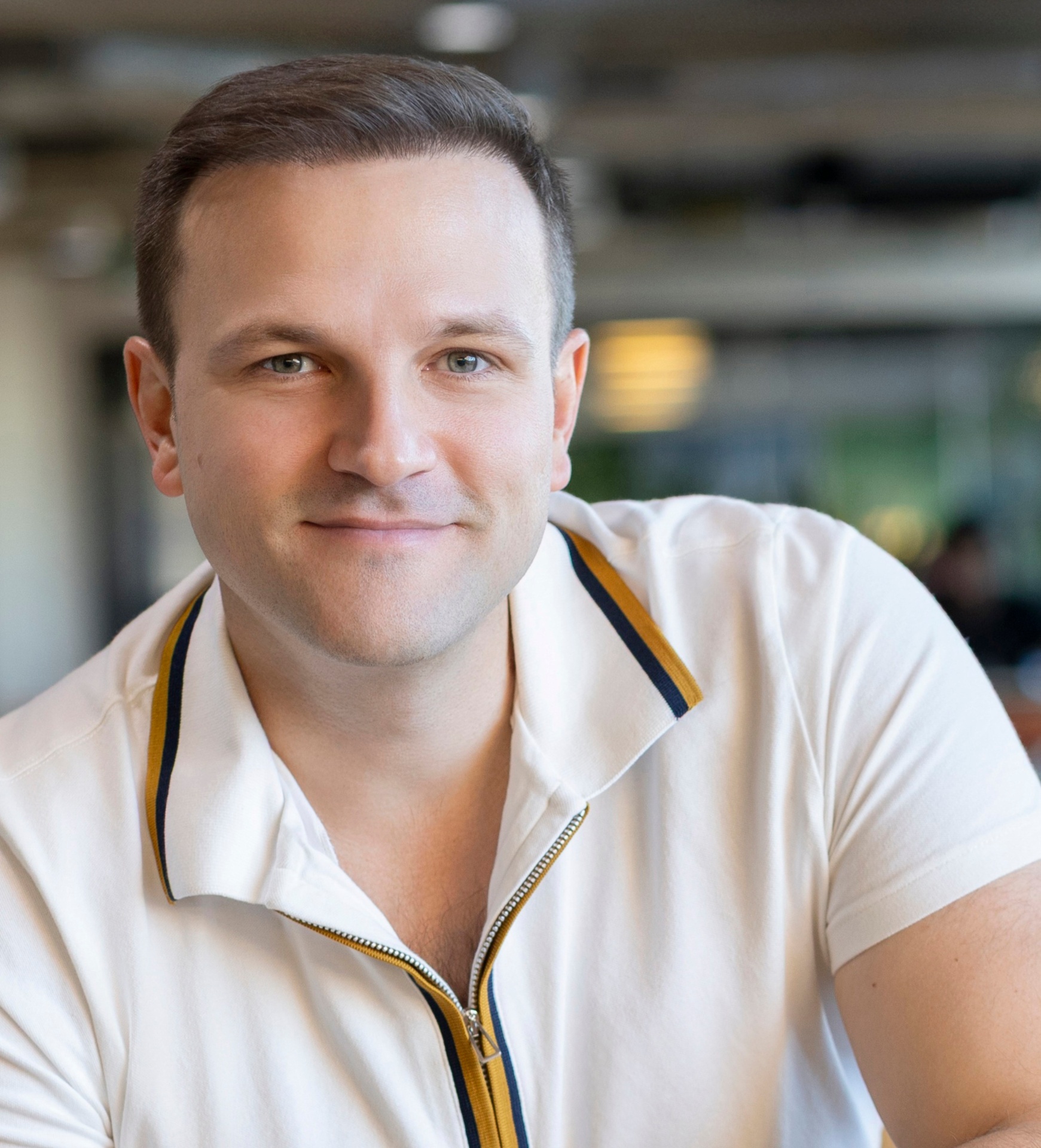
EP 124 - Sam Pasupalak - Final Transcript
English (US)
00:00:00.069 — 00:00:12.367 · Sam Pasupalak
Everything was the deal was about to close. All the employees were gonna move to California. Everyone was super excited. And just I think three weeks before the press release, they said no. Cash, cash, fifty
00:00:11.707 — 00:00:12.100 · Jason Kirby
Nice.
00:00:12.367 — 00:00:46.889 · Sam Pasupalak
million cash at around a hundred fifty million valuation and such. So we're like, hey, we can raise the fifty million or or you can acquire. I think companies are, in my opinion, bought, not sold. the the acquirer has to really want to buy you. You can't sell your company like that. fundraising in Silicon Valley primarily operates by FOMO and hype. Fear of missing out and hype. are you gonna be comfortable yourself giving an LLM, a large language model, a billion dollars and be like, go run my business? LLM will never be able to do it.
00:00:47.466 — 00:00:57.511 · Jason Kirby
Hey everyone, welcome back to Hundred Million Dollar Exits. Today I have Sam joining me, co-founder and CEO of Skyfall AI. Sam, welcome to the show today.
00:00:58.011 — 00:00:59.961 · Sam Pasupalak
Thank you for having me, Jason.
00:00:59.961 — 00:01:11.919 · Jason Kirby
Sam, you were doing AI before it was cool. You started Maluba back in two thousand eleven in machine learning, what it was originally called before AI became the cool thing.
00:01:09.819 — 00:01:11.374 · Sam Pasupalak
Yes. Yes.
00:01:11.919 — 00:01:34.772 · Jason Kirby
you raised eight million dollars to that company and you ended up selling it for over a hundred and sixty million to Microsoft in two thousand seventeen. How did you catch that way before it was cool, before anyone was really talking about it? Yo, tell us a little bit about what Maluba was and what you were building that made it so valuable that Microsoft had to pay a premium for you.
00:01:34.766 — 00:05:20.368 · Sam Pasupalak
Absolutely. I think so it's it's interesting, it's I feel like very old because it's been fifteen years of doing AI of sorts. So it's been a long time to be very honest with you. And I've seen AI morph in different variants, so as to call it. So I remember my first class in artificial intelligence was in around 2009, 2010 when I was a computer science student in University of Waterloo and we're talking about life like Kaufmann filters and and the traditional algorithms for machine learning, support vector machines, Conditional random fields and such. And back in the day, there's not much actually it was the AI winter. Let's be very honest with you. It was actually the AI winter. No one cared about AI. I think cloud was cool back then, network up network operations was cool back then. mobile phones were coming out because of Apple, so the whole mobile app ecosystem was cool back then, and AI was not at all cool.
So as soon as we graduated in twenty eleven, me and my friends, including Kahir, who's part of my company again in Skyfall, we we started Maluba and Maluba was one of the first foundational deep learning research labs back in the day. I think we were working with for example, Professor Joshua Bengio, who's the fo godfather of deep learning. We worked with Professor Richard Richard Sutton. He's the godfather of reinforcement learning. And they later on became Turing Award winners. so which is the I guess the Nobel Prize of Computer Science of sorts. And then we so yeah we worked with them. We created deep learning for natural language understanding systems. And it was very very early days because no one believed in us at all, to be honest with you. People are like, what is like because if you think about some of the applications of what we're building, we built one of the first ever personal assistants, virtual personal assistants. So if you think about Apple Siri, Google Now, Alexa, in fact, all these companies I mentioned, they all wanted to acquire us at one point or the other. So we were so yeah, I remember.
Remember the week Siri launched back in twenty eleven was we also launched our first product back in the in in around a few weeks later and before just before Siri launch, we're like, my god, we're developing something very similar. What's going on? but their methods were very old school, they were basically developing ontological based methods at the beginning. So basically you have this huge, ginormous ontology that you create by correlating concepts that are similar similar to each other. That was the traditional. Traditional way of doing things and we were advanced, more advanced in 2011, 2012. We were building the traditional machine learning systems using support vector machines and conditional random fields and such. And then we migrated from that to the deep learning era. Again, everyone moved to machine learning, we moved to deep learning. And then yeah, we're ahead of the curve back then. And let's say around four or five years into the company, we built one of the the coolest demo I remember.
that caught everyone's eye in twenty fifteen, twenty sixteen and I think twenty fifteen was this demo in which we had this Harry Potter book where you can do any question answering in the Harry Copter book. Okay. So this was cool because at the time d using deep neural networks, that was very, very cool. Now obviously you think about few years later, ChatGPT came out in 2022 and they do it across the entire web, the exact same experience. That's why they're used by billions of users. So we're a bit ahead of the curve back in the day, but we built the foundational technologies that were later on used by these LLMs and such in in the future.
00:05:20.368 — 00:05:25.863 · Jason Kirby
And so from back then you only raised eight million dollars. Did you were
00:05:25.115 — 00:05:25.513 · Sam Pasupalak
Yes.
00:05:25.863 — 00:05:32.208 · Jason Kirby
you generating meaningful revenue to keep the business going? what kind of scale did you reach? Yeah, what kind of scale did
00:05:27.856 — 00:05:32.089 · Sam Pasupalak
Yes. absolutely, yeah. Yeah, yeah, yeah.
00:05:32.208 — 00:05:33.594 · Jason Kirby
the company reach?
00:05:33.594 — 00:06:44.269 · Sam Pasupalak
Yeah, so I think You back in the day raising w our first round was two million dollars by the way, and then the second round was six million. There's a lot of funny stories in between of how did we survive as a company in between. It was a lot of grind. nowadays money comes so easy by the way. People raise few all these neolabs raise a few hundred million dollars before before they have built any product or market or anything. So we had to actually grind it out super hard back in the day. So, the first round was two million dollars and we were funded by Let's say Samsung was one of our biggest investors. And back then, when we raised two million, everyone was so excited. you'd raise two million for just some prototypes and for demos and for building this AI company. Whereas people, all all the other entrepreneurs were building really strong businesses, whether it's like B2B SaaS and such, with with so many products and customers and users. So that was a big gamble for the investment that they took for us.
later on we we built all these products and such. We were generating revenues primarily from OEMs. So all this smartphone manufacturers, car manufacturers, yeah, exactly. Samsung, LG, Blackberry,
00:06:39.950 — 00:06:43.890 · Jason Kirby
Okay. Yeah.
00:06:44.510 — 00:07:19.123 · Sam Pasupalak
General Motors, so many customer we had a lot of customers and yeah, we're generating good enough revenue that we can sustain ourselves throughout the whole whole period of time. For five and a half years I ran that company. and The OEM business at some point of time was good, but we were looking to get into the enterprise business. I think that's where we were trying to move towards because that's where a lot more revenue would have come had we actually properly migrated to that. But before that, Microsoft actually acquired us. So yeah, and that was the whole goal of the integration with Microsoft and such.
00:07:19.123 — 00:07:58.426 · Jason Kirby
So let's stop and talk about that. Getting acquired by a strategic is often the holy grail of acquisitions, because everyone believes that strategics pay a premium, they pay more, and they're willing to pay more, and it's usually better terms, versus say selling to private equity, which this early in the game of machine learning and stuff like that, private equity had probably no idea what it was. so give us first a concept and just answer briefly, what were some of the high level stats of where the business was in terms of scale of employees, potentially revenue, and when did Microsoft come into the picture? so give give us those quick answers on where you guys were at with the strategic exit.
00:07:58.155 — 00:11:41.347 · Sam Pasupalak
Yeah, I think we were around fifty five employees back then. Most of them were researchers. I was the only well, I still have a computer science background and I lead the research teams, but I was the only non researcher or non engineer so as to speak. I was the only sales, marketing, re research research organizer. so as to speak. but I was not I was not doing the research as in my day to day job. I was just their le the I was part of their leadership and vision of what the research should be. and Yeah, so and we had a bunch of products deployed. We actually had hundreds of million more than a hundred million users using our product across these OEM distribution channels that we had. so that was quite nowadays people do billions. Back in the day more than a hundred million was a big deal, by the way. so in twenty sixteen, around twenty sixteen.
And so that's number of users. in terms of revenue, we were close to around 10 million. I think I remember something around that. high high single digits is what I remember. And I don't Microsoft didn't care about our revenues, to be very honest with you. Microsoft didn't even care. Microsoft pretty much as soon as the acquisition happened, they canceled all the deals as fast as they could. because they wanted to really embed our technology across all their products and so. At least that was the goal for Microsoft across all their enterprise software systems. yeah, that was the highest level where the company was when we got acquired. Now, how the acquisition happened is a very interesting story, which I can share as well. so basically what happened was we were we were like
And so we went through a lot of ebbs and flows in the startup. Okay. Startup is a roller coaster as and a precursor to the acquisition was a funny story that in twenty fifteen Yahoo wanted to buy us. Okay. I can now say in public, so so who cares now? It's long time. So and they gave a term sheet Everything was the deal was about to close. All the employees were gonna move to California. Everyone was super excited. And just I think three weeks before the press release, they said no. And then everyone was like, Whoa. And I had rejected a investment deal which was for the five or six million dollars back back I think it was five, that that I had rejected the investors for and I had told Hey, I'm gonna do a Yahoo acquisition and and then they're like, Okay, congratulations, good for you. but then the Yahoo acquisition didn't happen. So I had to go back to the investors and be like, Hey, I need investment. Sorry, I'm running out of money and I need your money back again. So it was very difficult choices and not
The greatest terms that I had to agree, but fortunately they they agreed to invest. and then I had to go back and I was like, you know what, we're we're in the right place, right time with respect to this whole deep learning revolution coming out. And we set up a research lab in Montreal, and which was very strategic back in the day. We worked with Professor Joshua Benjo and Richard Sutton, as I said before, for for our research lab. And we had so many demos coming out. For example, I mentioned to you the Harry Potter demo that came out in public and then we had some benchmarks where we were beating Google and and and and Facebook in the CNN C B T data set, for example. So there's a lot of momentum going on and then so yeah, I got set we actually had a demo set up in Mobile World Congress is this whole how this whole Microsoft acquisition started. So Mobile World Congress is this
I guess conference happening in Barcelona every year. So I so if someone wants me to visit Barcelona, I I say no, I can't because I've been there every year from 2011 to 2017. Yeah. So so
00:11:36.856 — 00:11:41.052 · Jason Kirby
I've I I've been a few terms myself to W C
00:11:41.347 — 00:14:59.848 · Sam Pasupalak
so I don't want to go there for vacation. So anyway, so I've been there too many times. So so we used to have a booth where we were where we were integrated with a Qualcomm car with their latest chips back in the day, and then that That caught the eye of one of the CVPs at Microsoft, corporate vice president at Microsoft. He saw the demo. I I instant coincidentally I wasn't in that meeting, but so so but one of our my VP of engineering was in that meeting and he showed a cool demo and then they set up a meeting with Satya Nadella directly the CEO of because they're so impressed with the demo. That's how the conversation started. I think that was around March 2016. and then so they had an executive vice president who I also used to interact with, Chi Lu, a very famous guy at Microsoft, and he flew down to Montreal to meet us in around I think May or June. But I was so oblivious because I thought I wanted a strat I wanted a strategic partnership with Microsoft. you know how we have Samsung, LG, all these big corporations. I wanted a big deal with Microsoft as well.
For our AI technology and they came, they visited us. I guess this dropped subtle hints, but because they can't say directly they want to buy you or something like that at this point of time. I didn't get the hints at all. I'm like, I'm still pushing for strategic collaboration with Microsoft at that point of time. and then yeah, I think close to September I was gonna do a fundraise and we had a whole bunch of investors inver interested to invest. And I'm hey Microsoft, do you guys want to participate in our round or something like that? And I think at that point of time they're like, hey, let's Let's talk about serious acquisition talks and that's that was in September or September or October twenty sixteen and yeah, the deal closed in early twenty seventeen. That's how that's how we get to the got to the acquisition.
00:13:25.738 — 00:15:13.344 · Jason Kirby
So I'm really glad you walked us through the story because what I want founders to understand is the length of that relationship, the original intent from your purist perspective of I just wanna, I wanna show my product, I wanna build these customers,
00:15:09.072 — 00:15:12.782 · Sam Pasupalak
Yeah.
00:15:13.344 — 00:15:15.525 · Jason Kirby
and you wanna grow your business. That
00:15:15.070 — 00:15:15.418 · Sam Pasupalak
Yes.
00:15:15.525 — 00:15:22.068 · Jason Kirby
excitement and that enthusiasm of trying to focus on the business and get good economic terms,
00:15:21.684 — 00:15:22.021 · Sam Pasupalak
Yes.
00:15:22.068 — 00:15:28.191 · Jason Kirby
created defensibility for you, I imagine, when you could essentially say no to Microsoft if you wanted to.
00:15:26.290 — 00:15:27.757 · Sam Pasupalak
Yes, absolutely.
00:15:28.421 — 00:15:43.993 · Jason Kirby
and that position. Positioning makes you more desirable. And obviously the acceleration to meet Satya. 'Cause I imagine when Satya met you and saw the team and saw what you guys can do, there was probably a go make it happen, come back to you.
00:15:41.834 — 00:16:17.408 · Sam Pasupalak
Yes, exactly. That's what I figured out after the acquisition. They told me about everything that happened internally. yeah, it was quite quite interesting how they thought about that, but never never reveal their intent on the first day. It's it's it's about building this they also wanted to probably see how far can we go within the next six months or nine months with respect to research and so I think. I I'm not sure, but I think they wanted to evaluate that. So there was this like Yeah, song and dance of like let's figure out if we're good partners and such. Yes.
00:16:15.392 — 00:16:24.176 · Jason Kirby
Well it it's mission critical. so many founders feel like, let's go do a strategic exit. Let's and we have three months of runway. It's like no. Not at all.
00:16:21.299 — 00:16:44.528 · Sam Pasupalak
it's no. No, it's never gonna you you will only be I think companies are, in my opinion, bought, not sold. the the acquirer has to really want to buy you. You can't sell your company like that. Unless you want to sell for non-strategic value and for much lower valuation and stuff, then sure you can just do a fire sale or something like that. But in general companies are bought, not sold.
00:16:44.528 — 00:16:48.953 · Jason Kirby
Yeah, and people need to know that you're for sale or need to have a conversation, but at the end of the day,
00:16:48.204 — 00:16:48.821 · Sam Pasupalak
Exactly.
00:16:48.953 — 00:17:02.487 · Jason Kirby
you need to be worth something to someone in order to have anyone at your party to to sell to. And when it came to Microsoft, was was it just a we're going down the pipe with Microsoft? There was no competitive bid or like no other party?
00:17:01.834 — 00:17:24.416 · Sam Pasupalak
No no, there was competitive so I rah so as soon as I smelt that Microsoft wants to acquire us, one we got a bunch of term sheets from investors. so I think that was in our favor and Microsoft okay, I I so we were trying to put together I think we had a fifty plus million dollar term she term sheet at that point of time, from ab from two from three investors.
00:17:24.182 — 00:17:26.615 · Jason Kirby
Valuation or cash? Nice.
00:17:25.541 — 00:18:13.150 · Sam Pasupalak
Cash, cash, fifty million cash at around a hundred fifty million valuation and such. So we're like, hey, we can raise the fifty million or or you can acquire. So that's one angle. The other angle was like we had all these other potential acquirers like so I had discussions with all the corporative teams over there so and they were also wanted to bid up in the process and stuff, but then Microsoft paid the highest basically. So we had to I had to do two kind of processes in parallel. One is the investment process because I didn't want to be in The same game again that I had that happened in 2015. I remember I just told you, we were like rejected the investors, acquisition with Yahoo didn't happen. Go back and beg the investors again. I didn't want the same situation, so this time I was prepared for multiple outcomes at the exact same time. Yeah, trying to do that.
00:18:13.150 — 00:18:21.379 · Jason Kirby
Yeah, it's one very similar to story I had, building our company and selling it to Walmart eventually. We were supposed to sell to Samsung and
00:18:20.813 — 00:18:21.117 · Sam Pasupalak
Uh-huh.
00:18:21.379 — 00:18:24.292 · Jason Kirby
we were just doing a process with Samsung.
00:18:23.692 — 00:18:24.050 · Sam Pasupalak
Uh-huh.
00:18:24.382 — 00:18:32.176 · Jason Kirby
Deal fell through the day the CO CEO went to jail. I don't know if you remember it. You remember that? When Jay Jay went to prison? Yeah.
00:18:27.541 — 00:18:32.039 · Sam Pasupalak
wow. No z yeah.
00:18:32.176 — 00:18:35.727 · Jason Kirby
That was the week we were supposed to clip. Yeah.
00:18:34.689 — 00:18:35.473 · Sam Pasupalak
my gosh.
00:18:35.727 — 00:18:40.079 · Jason Kirby
So they wanted to do the deal. It's just every deal was dead when he went to prison.
00:18:38.624 — 00:18:39.303 · Sam Pasupalak
Yeah, yeah, yeah.
00:18:40.079 — 00:18:42.440 · Jason Kirby
but we had no other options. We got bent over backwards
00:18:42.040 — 00:18:42.365 · Sam Pasupalak
Yeah.
00:18:42.440 — 00:18:45.222 · Jason Kirby
by our investors, we got a bad deal from them, but then we ultimately
00:18:44.685 — 00:18:45.022 · Sam Pasupalak
Yes.
00:18:45.222 — 00:18:54.106 · Jason Kirby
sold Walmart, but we had other bidders at the t we made sure that there was at the least a very high perception that there were multiple parts of the table. There was only really two.
00:18:52.001 — 00:18:55.220 · Sam Pasupalak
Yes, yes. Yes.
00:18:54.780 — 00:18:57.801 · Jason Kirby
But Walmart didn't know that. So
00:18:56.507 — 00:18:57.336 · Sam Pasupalak
Yes.
00:18:57.801 — 00:19:03.462 · Jason Kirby
and they never did. and yeah, but they we we had teas that there's other investors at the table that were getting these attorneys.
00:19:03.063 — 00:19:03.379 · Sam Pasupalak
Yes.
00:19:03.462 — 00:19:05.990 · Jason Kirby
It was a total bluff. A hundred percent.
00:19:05.557 — 00:19:17.445 · Sam Pasupalak
Yeah, that's how I mean to be honest, that's how both investment and acquisitions work, in my personal opinion. I think both for the VC side and from the acqu acquisition side. From number of founders I've talked to, this is exactly how it works.
00:19:17.407 — 00:19:20.767 · Jason Kirby
Yeah. Now we made sure not to lie, but
00:19:20.118 — 00:19:20.507 · Sam Pasupalak
Yes.
00:19:20.829 — 00:19:31.214 · Jason Kirby
we were definitely show bluffing that we had a stronger hand than we actually did. so it's yeah, it's fun game. Yeah. Hundred million dollar poker.
00:19:25.323 — 00:19:31.738 · Sam Pasupalak
Yes. It's a game of poker in a b in a at that point of time. Yeah. Yeah.
00:19:32.653 — 00:19:43.976 · Jason Kirby
yeah, so it's it's fascinating to hear what you went through, but ultimately got the deal done and then you were off, So you you agreed on terms, you sign with Microsoft, you only stay with Microsoft for a year, and
00:19:43.188 — 00:19:43.495 · Sam Pasupalak
Yeah.
00:19:44.176 — 00:19:54.908 · Jason Kirby
you obviously skip what we are now, eight years later, seven years, nine years later. What have you been doing this entire time? You sell this company for a big amount
00:19:49.940 — 00:19:54.874 · Sam Pasupalak
Yeah, yeah. Yeah.
00:19:54.908 — 00:20:02.686 · Jason Kirby
of money, you didn't raise that much, so you did pretty well. what does one do with their time after an event like that?
00:20:02.686 — 00:22:12.240 · Sam Pasupalak
Yeah, so I think for me First of all it was it was great resear a great outcome for all the shareholders, the investors, the employees, because Microsoft also made sure that the employees are very well compensated. So and a lot of them stayed for years and years. even some of them are there na right now to be honest with you. so they they they really liked our research team because we're really at the f forefront of deep learning research back in the day and now LMs and Post-transformer world as well. So 2018 I took off. I'm like, okay, I can't deal with bureaucracy and politics. I'm just horrible in that. I I'm much more well suited for a small startup where I have more control over how things would be, and and I can actually build things with the people I really like and not deal with like hey, can I get some EVP at some other organization to
Agree with what I want to do. It's like it's a lot of like I'm not that kind of a person to play those long term for political games. Working in a big corporation is very much like that. And and and so yeah, I decided with within the year it was very obvious to me I can't work there. so I left I first I just traveled. I started because from the most from the earliest period of time when I was in university and stuff, it was a huge grind in Waterloo because we just had non-stop we used to have a study term, work term, study term, work term. It's like we had a co-op system back in Waterloo. So you never got any time off basically. And then Maluba happened, so I didn't get any time off because I was working twelve, fourteen, sixteen hours a day.
six days a week and actually back then some of the days might be seven days a week too nowadays I do six days a week and so I first traveled so I went to South America, I went to Eastern Europe, I went to Africa. Africa was one of the best places I traveled to ever. I've been to eleven countries in Africa, did all kinds of cool stuff. then I did a master's degree in political Science from London School of Economics, very random, but I did have
00:22:11.634 — 00:22:12.028 · Jason Kirby
Bearing.
00:22:12.240 — 00:23:50.689 · Sam Pasupalak
a very good time over there. I wanted to explore what's beyond this whole tech bubble we live in. And I'm back to SF again, but in London I can have conversations with people about pretty much lots of different things. but here I'm back to talking about LLMs and world models and stuff again. But so I lived my life a little bit over there and did try out venture capital, and Realize it's not at all my cup of tea. It's it's it's not even close to my I'm not even close to being a VC ever. it's a very different skill set and a very different mindset. I'm I'm I'm not good at all in smoothing people. Let's put let's put it at that, for example, or or going to find the best deal. that's not my skill set. So I think that's a lot of that in is in VC and a lot of
Deep di deep dive in specific analysis about which sector and which investments and stuff. So I'm not good in that. So realize I'm not gonna be good in VC. So I stopped that. And then 2022 is when I'm like, you know what? I have to do something. I have to do something important in life. I can't be just retired. It's like it's like I'm too young to be retired. So I first started with consumer social, and this is I wanted to build this app which is gonna Be the next LinkedIn for Gen Z. So LinkedIn is as very outdated, for Gen Z specifically, and it was created in 2004. So we wanted to create this whole new format, TikTok style videos and such where Gen Z, because Gen Z is the most underserved market for LinkedIn, and so we created that app, and then we realized in a within a couple of years that I'm just not a good founder market. There's no
00:23:50.177 — 00:23:50.651 · Jason Kirby
Yeah.
00:23:50.689 — 00:24:23.135 · Sam Pasupalak
founder market fit for consumer social for me, and then I Realized that I should do something which I'm good at, which is like doing AI RD, which I did back in the day, and that got me to start the current company I'm at. So, yeah, lots of different things I tried. I at least tried a lot of different things and figured out things I'm not good at, and back to the basics, which by the way, people told me you should just do an AI company. People told me back in 2021-2022, and but I just followed my heart and did what I wanted to do. So here I am now. Right now.
00:24:23.383 — 00:24:36.921 · Jason Kirby
And now now you're back in AI when it's hot, very relevant and wildly competitive. So tell the audience about what Skyfall is and why you chose to build it.
00:24:37.421 — 00:30:35.696 · Sam Pasupalak
Yes, for sure. so we are in the post LLM era. In my opinion. Okay, so LLMs have been one of the best inventions in mankind since and it's been it for the last three and a half years we've seen all the different applications of LLMs. I think that if you think about the overall AI landscape because of what LLMs are, let's let's quickly touch on that. I think first I think the biggest applications for LLMs are like information retrieval or search. I think that's it's basically The next version of Google, if you think about it in a nutshell. So if you think about ChatGPT, Gemini, Claude, and so on, I think that's the first big success. The second big success I would say would be code generation. here, you have companies like obviously Cursor, Claude Code, and such that have succeeded, and a third.
A third category that has succeeded is to a much smaller extent is video generation. And here you have companies like Runway ML and Google's models and there's many other companies in the same space. So, and there are all these AI wrappers that sit on top of these model companies. And underneath the model companies, let's say you have the infrastructure companies and the GPU providers, the data centers, and so on and so forth. That's the highest level of the whole LLM ecosystem, so as to speak. So we believe that we want to create completely autonomous enterprises in the long term because we think that's the closest. That's the fastest and the most straightforward path to get to AGI over the next 10 years. And if you want to build a completely autonomous business, it requires a few different functions, but let's quickly talk about why we want to do that, why we want to build a completely autonomous business because we think human creativity is very much unrealized right now, and we want to push that to the next level, and we don't want humans to work on all the operational.
tasks that they work on even as a CEO of a startup more than 50% of my time is at on operational tasks and we want to bring I think that this time is very interesting because it's like It's like, in my opinion, the time we're at is a combination of the Renaissance and the Industrial Revolution both combine into one time, one period of time. I think that's that's it's very interesting right now. And we want to be one of the pioneers in the space for for this reason. We want to we want to remove all the operational tasks that human beings do so that they can all we can all pursue our creative pursuits and creative passions, whether it's sports, whether it's entertainment, whether
It's arts, whether it's philosophy, everyone should follow their passions. and I think for that to happen, you need to create autonomous enterprises. And so for an autonomous enterprise to operate, you need a few different things to work out. First thing is you need is an AI CEO. All of us talk about an AI software engineer, everyone's so excited about an AI software engineer. But if you think about it, the software engineer's task is very deterministic, very logical. It's like you do you you pretty much have to programmatically work on tasks you're assigned on but if you want to create an AI CEO it's way more complicated complicated than AI software engineer magnitudes of order compli complicated because if you think about a CEO
Let me let me jot down. Besides the human human management, ma management of person personnel and stuff and dealing with people's egos and and making sure that everyone's motivated, if you remove that side of the job, there's three big components that the CEO has to deal with. I think the first and foremost is lot of decision making under uncertainty, high stake decision making under uncertainty. I think that's a very that's that's like something which is similar to the partially observable space that that in the in the in the ai realm so we'd have to always deal with that and our LLMs can never be able to deal with that. The second one would be a lot of long horizon planning. As CEOs like for example we have to take steps which are tens of thousands or hundreds of thousands of steps ahead. Like for example I'd have to plan okay I'm gonna do a big fundraise sometime in the near future let's say six months from now or something let's say I'd have to
build products and build sales orgs and do go to market and it these are very complex operations that require coordination by not just me but my entire executive team and then the executors who are the employees underneath them so there's a lot of there's a lot of complexity in such such decision making that we have to take so that's the second part I think the third part would be sample efficiency And and for the sample efficiency part, we human brains are very sample efficient, We take 20 20 watts per hour to operate, so it's around 480 watts in a whole day. Whereas each LLM call, especially for the reasoning call, if you if you it's gonna take in the order of around a thousand to fifteen hundred watts or something like that. So it's so much more inefficient. That's why you're
To build all these massive data centers that's going on with LLM. So we believe the solution to solve these three problems that I just mentioned for building the AI CEO is going to be a combination of world modeling and continual learning. So world modeling is a high level concept that as human beings we try to imagine what the future rollouts or the future steps are going to be before we take an action or a policy in a real world. And continual learning at the highest level is basically as human beings we try to we try to decide what's important and remember that and forget what's not important and forget that and we try to always be acquiring knowledge with on at every instant of time so those are two fundamental pillars of what we're trying to build right now
00:30:36.196 — 00:30:55.870 · Jason Kirby
So when it comes to this level of thinking, you're you're not just trying to build a Hermes wrapper or an open claw where it's like, you are now my CEO. which candidly I've tried. doesn't really feel like the CEO. Yeah. Yeah, mostly claud, yeah. Cla caught in Chat GPT for the most part,
00:30:49.273 — 00:30:55.799 · Sam Pasupalak
using using Claude models, I'm guessing, or Kimmy or okay, okay. Okay.
00:30:55.870 — 00:31:06.501 · Jason Kirby
sometimes Gemini. so it's fascinating they're working on this problem. When it comes to standing out, there's what's it, Pulse, Pulsey, which raised thirty
00:31:05.819 — 00:31:06.282 · Sam Pasupalak
Mm.
00:31:06.501 — 00:31:21.219 · Jason Kirby
million dollars from Andreasan and they are AI slop backwards, which I think is kinda funny, but they're promising a business in a box, say what you want it to do, make me a million dollars a year, and it'll just build a business that does that. Now,
00:31:20.910 — 00:31:21.168 · Sam Pasupalak
Mm.
00:31:21.219 — 00:31:24.280 · Jason Kirby
in practice, I haven't seen it work.
00:31:24.280 — 00:31:24.648 · Sam Pasupalak
Mm-hmm.
00:31:24.413 — 00:31:31.997 · Jason Kirby
But how do you differentiate from something like that that's building on I would say available models and more or
00:31:31.507 — 00:31:31.920 · Sam Pasupalak
Mm-hmm.
00:31:31.997 — 00:31:41.023 · Jason Kirby
less a what they call it, a not a rapper but a orchestrator or whatever, you that that terminology where it's harness, thank you.
00:31:38.065 — 00:31:40.678 · Sam Pasupalak
Mm-hmm. Harness. Yeah.
00:31:41.023 — 00:31:48.307 · Jason Kirby
more of a harness versus actually what you it sounds what you're building is a proprietary AI model. So what how do you
00:31:47.385 — 00:31:48.286 · Sam Pasupalak
Yeah, so I think
00:31:48.307 — 00:31:49.528 · Jason Kirby
differentiate?
00:31:49.528 — 00:34:25.052 · Sam Pasupalak
I think we're also trying to build for the future. And I we're we're trying to build what's gonna what's gonna come up After this whole LLM era, that's why we call it the post-LLM era. And it's gonna be a few years of research trying to build these world models and continue learning to scale. So if you think about why LLMs took off, is because if you if you trace it back, no one cared about LLMs in 2018-2019. Just for your information, by the way, in 2020, when the scaling laws paper came out, so scaling laws was written by Dario by the CEO of Anthropic, he was one of the lead authors in that paper, and it
Basically said that you have more compute, bigger models, and a lot of data, and then you can have high accuracy. So I think that's the high-level gist of that. And that's why scaling laws took off. And LL, that's when Dario realized basically that LLMs are gonna take off. And then and you can build amazing applications from that. And he left OpenAI to join Anthropic. The same thing has to happen for world modeling. So the same same scaling laws has to apply has to happen for world modeling for it to be the next big thing. And it will probably take where I'd say we're 12 to mate 18 months away from that to happen. Because if you think about it, what we are trying to build is we are trying to build the human imagination layer. Even when I'm talking to you right now, Jason, I'm trying to imagine the future steps of what I'm gonna say. Everything is becomes a planning problem, by the way. As human beings, we plan and read.
Replan and keep planning all the time, every single second, right? And what LLMs are capable of are what we call system one. thinking and what we're trying to build is we're trying to build the system two thinking, which is like these long horizon planning tasks. And if you don't have a breakthrough in world modeling, this is never going to happen. You're always going to be do having a co-pilot experience which you have with LLMs right now. So you you ask your query, you you and it you ping it ping the rag agent or whatever, it comes back with the right results and you're going to have that back and forth experience. We don't want to go we want to we don't want to do that. We want to build a a truly autonomous business.
And for that, the business has to go through the AI CEO has to go through the different rollouts, the different simulations. So what are the different possibilities? the Tom Cruise movie from 20 years ago, minor minority report. If you think about if you remember that, you could see all the different possibilities of the future and you select the best possibility that's best for you. And for this, by the way, Jason, we actually are buying businesses as we speak. So so we have
00:34:24.617 — 00:34:28.669 · Jason Kirby
Yeah, this this is what I wanna talk about was your your go-to-market.
00:34:26.606 — 00:34:28.273 · Sam Pasupalak
Yeah. Yes.
00:34:28.669 — 00:34:48.078 · Jason Kirby
so all right, you got cool tech, you're working on innovative AI that you maybe no one else is working on or you're doing it in a different way. But how do you go to market in something like this? And I think what you're doing is very interesting from a go-to-market strategy. So walk us through why you're yeah, walk us through your go-to-market and then why you chose that as your go-to-market.
00:34:48.078 — 00:37:02.438 · Sam Pasupalak
Yes. Because I think if you see majority of the companies right now, Jason, most of the companies are basically gonna build you. Okay, let me build you a a marketing agent, a sales agent, a customer service agent. They're all very very domain specific and I call it narrow AI, so as to speak. For us, we think you cannot truly build an autonomous business unless you see the entire operations of the business end to end. You have to see the entire thing end to end. Otherwise, you will never be you'll be built, you will be maybe slightly better than an AI wrapper or something like that if you build agents in specific verticals and stuff. So that's why we are trying to acquire businesses. So we're looking right now to buy B2B SaaS businesses, D2C businesses, like in the shop.
Shopify like Shopify and such as well. And so we're we're willing to pay up to a million dollars to buy businesses. so a few hundred thousand ARR is what we're looking at. and yeah, we're very interesting businesses. We just put a LOI for one of the businesses I can mention right now because it's just an LOI right now. so we just put it this weekend. So hopefully we're gonna buy a few more over the next few weeks and months. And then we'd be able to run these experiments of can we move from these few people running and operating the business to as automated as it can get. over the next few months and we want to double the revenue over the next six months through complete automation. it's it's very hard research problems are involved and hence we are trying to create this enterprise world model and we're very excited about what the results are gonna be and we'll present it to the world. We're doing this experimentation in public and we'll present to the world when the results are ready probably
early next year is my guess. yeah, so that it's a very unique go-to-market strategy. I think people are saying that, so are you gonna be a PE firm, Sam? A lot of people are still asking me that question. Are you gonna be be a PE firm and roll up these businesses and try to acquire them and try to make them more efficient? And my answer to that is no, I don't think so. yes, we'll be buying probably next year when the experiments are successful. to buy because because Jason, if you think about it, last year I don't know if you ever played the game Roller Coaster Tycoon. Did you ever play that game?
00:37:02.438 — 00:37:05.224 · Jason Kirby
yeah, love that game. Yeah, it's a great game.
00:37:03.359 — 00:37:30.638 · Sam Pasupalak
you did? Okay. So it it all started last year, by the way. So la last year we want we wanted to Sorolo Costa Ga Tycoon for the audience is this game in which you are basically simulating a theme park. Okay, you're simulating a theme park, you're organizing rides, you're trying to trying to maximize the ra amount of revenue you're trying to get into your your theme park and such.
00:37:30.247 — 00:37:33.073 · Jason Kirby
And reduce the amount of vomiting occurring on the
00:37:32.681 — 00:37:42.755 · Sam Pasupalak
Yes, yes. If the rides are too steep then the customers are vomiting. Yes. Yes. So you need you're so
00:37:35.319 — 00:37:43.876 · Jason Kirby
Yeah, or or trying to send them and off the ride and leading them to an untimely death. It was a fun game for a twelve year old.
00:37:43.215 — 00:39:55.038 · Sam Pasupalak
You're trying to operate the business in the virtual world basically is is what roller coaster tycoon is and the goal is to maximize revenues and profits. so what we try to do is we had some initial success with some of our internal models last year. and then we decided you know what, we should actually buy a business. We shouldn't just try to do it in the virtual world, we should try to do it in the real world. So this year the progression is like, okay, we are moving to buy businesses for up to a million dollars and try to see which of the which of these businesses can be actually automated completely in the truest sense and then next year hopefully if this round of experiments succeed we'll be able to buy businesses between the 10 to 10 million to 100 million dollar range i think and then then it will be much more interesting and much more exciting I think there's a lot of research problems involved don't get me wrong it's extremely difficult but I do think if we are able to do that then it'll
Help us In the future, get to the post-scarcity world, which we really believe will uplift humanity and take it to the next level, so that humans can really pursue their their truest passions in sports, entertainment, philosophy, whatever. So I do think that that's the goal that we want to pursue. And and yeah, so people ask us, is this your go-to-market strategy? Is this your true go-to-market strategy to be a PE firm? I'm like, no, but you because I do think you can build you can definitely build a hundred billion. into our company by doing something like this Jason. But if you want to build something which is the next big thing, which is like After Anthropic, what's the next big company? Because we do think Anthropic and Open Air AOL and Yahoo in the early internet days. There's gonna be many more companies coming up over the next few years that are gonna be even bigger. and automating the business is a very grand goal because it's 70% of the entire world's GDP is business activity. So if we want to get there, we have to develop technology which is like
Which is much ahead of the L L L curve that we are at right now. So that's why we're very much focused on developing the world modeling and continual learning technology and p pouring a lot of time into the research of it so that so that the business can run by itself. Yes.
00:39:55.038 — 00:40:03.135 · Jason Kirby
So you're buying SaaS companies, e-commerce businesses, things that I imagine that are predominantly digital that will be a strong enough data set. Yeah.
00:40:01.654 — 00:40:04.416 · Sam Pasupalak
Right now, yes. Yes, absolutely.
00:40:04.416 — 00:40:12.104 · Jason Kirby
W give us I obviously you can't tell us who you're buying, but what what's an example of the type of companies that you would be buying in this situation?
00:40:12.604 — 00:40:38.521 · Sam Pasupalak
So mm so I think the easiest one to describe to you would be like Let's call it microsaS businesses where where where they are making up to a few hundred thousand in revenue. I don't want to describe the exact business because then I'll be I'll be going against the terms and conditions, but you can go to a lot of different websites like acquire.com, trustmr,
00:40:36.064 — 00:40:38.034 · Jason Kirby
Acquire dot com. Yeah. Yeah.
00:40:38.681 — 00:40:49.879 · Sam Pasupalak
flippa, there's a lot of businesses listed that that that could be potential targets. Now we don't want to buy a business, Jason, that's gonna be Declining in revenue because there's a bunch
00:40:49.521 — 00:40:49.827 · Jason Kirby
Yeah.
00:40:49.879 — 00:41:29.675 · Sam Pasupalak
of those business because then it defeats the perfect. will AI come and save the business? So I think that's gonna be a different ballgame by itself. So it has to be so I'll give you some of the metrics. So it has to be at least not decreasing in revenue. It has to be steady, ste it has to be at least at steady state in revenue and and if possible, organic. user acquisition because we don't want to be like, hey, we just put marketing ads and then the whole business ran by itself. So we are looking into metric because we are we truly want to do this experiment in the in the truest sense, right? So we have to we have to be very honest to ourselves when we're trying to buy a business and trying to and try to automate it
00:41:30.175 — 00:41:50.044 · Jason Kirby
So what do you do with the people? You you buy, what I imagine be a founder owned business that's doing half a million a year, growing thirty percent, whatever, year over year, SaaS business, niche. what do you do in that situation when there's maybe two, three employees or contractors and there's now an AI CEO sitting at the top?
00:41:50.544 — 00:42:25.812 · Sam Pasupalak
Yeah, I first of all we try to make the deal sweet for the founder, obviously. Microsoft made a good deal with me, for example. So I always want to give back and such. So so yeah, we want to make the deal good enough for the founders and we also try to make it good enough for the employees as well, so that they are well compensated, a good enough pay pay package, compensation package for for a few months after that. So I do think that we do take care of the exit package. For the employees involved in the business, a good severance package, let's put it at that. Very good severance package. Yeah.
00:42:26.312 — 00:42:27.330 · Jason Kirby
And so essentially
00:42:26.925 — 00:42:51.410 · Sam Pasupalak
So that they're motivated and they have to have an interest that the business actually does succeed and does become automated. We do want to leave take the business over in good terms and conditions. So that if there aren't questions and concerns or something like that, of how do we increase the revenues or what do you what are your ideas or something like that, we can go back to them and and ask them for ideas and such, right? Because we have to be in good terms.
00:42:51.410 — 00:43:22.667 · Jason Kirby
So when you're doing these transactions, sounds like you're gonna be trying to do a lot of transactions. And when you think about raising money for what you're doing, w how do you communicate cause this is this is novel in the sense, which sometimes very attractive for VCs and sometimes it's their head hurts because it's not, catching on the coattails of someone else that's, already proven it. how are you thinking about the fundraising landscape or which something like this?
00:43:21.985 — 00:45:39.523 · Sam Pasupalak
Yeah. So let me let me let me be first of all a bit honest about how fundraising works, in my personal opinion th in the last fifteen years. I think fundraising in Silicon Valley primarily operates by FOMO and hype. Fear of missing out and hype. I do think that's the one of the main ingredients by which by which fundraising works. Yes, you do have to have substance. Yes, you do have to have a good research team or engineering team or a product team that's executing on the vision. But a lot of the big deals now you see like you see these researcher led rounds that you I don't know if you have noticed and Jason in the last few months, but there's a lot of neo labs that have that have sprung up in the last last year or so. And they have no product, no market, no idea. But since you're let's say a deep mind or a open AI or whatever researcher.
then VCs are willing to put a lot of money in your company. We don't want to be one of those companies, to be very honest with you. We want to build a a real product and a real technology that can scale in the next few decades to come. So yeah, I think from our end we just want to do the best we can to prove out that an autonomous business can actually work by itself through through minimal human involvement. That's from the product and business side. From the research side, we want to beat a bunch of benchmarks and create amazing demos which showcases the future. So we're trust so we're working very, very hard to create these these
Demos and the research behind it to showcase via research papers, which we have been doing over the last six to seven months, and we'll continue doing that. I think that's a proper way to build a company in the long term, not just rely on FOMO and hype, which which which will be maybe good for one or two rounds. you can only build a company on FOMO and hype for one or two rounds max. But if you want to be long-lasting company, that's not the way to. Go. Yes. A lot of I unfortunately a lot of SF founders I see try to cash in on the FOMO and the hype. And I've seen this not just now. Back in the day it was tens of millions of dollars, now it's hundreds of millions of dollars. So it's a very different ball game right now compared to before. But yeah, I don't think those are the founders that will succeed in the long term.
00:45:39.523 — 00:46:06.475 · Jason Kirby
And what's your take on the the king maker strategy that VCs believe in? And for the audience that may not be familiar, like what you just referred to, putting hundred million dollars to work into an early stage, pre-seed seed stage AI startup, which is wild to conceive of. And if you told the VC ten years ago that was gonna happen, they would lose their mind. But with the consolidation of these megafunds and
00:46:06.142 — 00:46:06.442 · Sam Pasupalak
Yes.
00:46:06.575 — 00:46:24.249 · Jason Kirby
they have to put so much money to work. There's a belief that they can be king makers in the sense that they give so much money to one company that it increases the odds of that company winning the market. What's your take on that in the AI space? And are you seeing examples of that?
00:46:24.249 — 00:48:43.684 · Sam Pasupalak
we're clearly seeing examples of that. I think th what's happened is open AI And Anthropic have have really Anthropic's the fastest growing company of all time, if you think about it. they're they're gonna be at 80 or 100 billion potentially revenue by end of this year, which is insane, which is crazy. So I think and VC saw that okay, Dario's a researcher and he created that company. So that so people are like, okay, there'll be more researchers as well. Let's find the best researchers who can in from DeepMind or OpenAI or Anthropic or whatever who can start who who can potentially start. Company. So they're basically overindexing on the research credentials part and not so much on the on the idea or the product execution part at all to be honest. I think and that's gonna I think backfire and take a hit over the next few years. It won't come right now, but it'll come over the next few years because they just raised their funds. So now they have to see the whole thing. I guess I guess they have to see the whole
Build it trying to build product if they want to. I don't know if they're gonna even try to build the product. Because if you think about it as a researcher, because I've worked with researchers for 15 years now, Jason. I've worked with the best researchers in the world, I think Yosho Benju and Richard Surtain are creators of deep learning and reinforcement learning. I think the researchers don't care about business very much. Dario is an exception, not the norm, is what I'm trying to say. Dario is definitely the exception, not the norm. And I think most researchers have a research agenda they want to carry out for 10 or 15. 15 years and they don't care about productization, they don't care about monetization, they don't care about business at all. So I think so I think yeah, I think this is gonna be this is gonna be some some I'm not gonna be surprised because I I know how researchers operate, but I think it'll be a surprise for the VCs because they're over indexing that the next that the that everyone's gonna be a Dario. If you think about OpenAI, Sam Altman came joined in and
In 2019, and he changed the course of the game, by the way. If you think about it, not and Dario just moved at the exact right time in history when the scaling laws applied, and he's Okay, I'm gonna create a company out of this as well. And obviously, he did much better than Open Air if we think retrospectively, but that doesn't mean everyone's a Dario, right? That's the that's the problem, everyone's not a Dario.
00:48:43.684 — 00:48:59.944 · Jason Kirby
Well, I appreciate that context and I think it's valid in the sense of what's what we're seeing in AI and the velocity in which these companies are growing. And I think everyone's like, it's a it's a dot com bubble again, but the that the the reality is the revenue's there. people are spending the money.
00:48:57.642 — 00:48:59.459 · Sam Pasupalak
Yes, yes, yes.
00:48:59.944 — 00:49:16.918 · Jason Kirby
And whether it's high production value, yeah, for some it is, for some it's to be seen. But it's definitely very interesting. And I think what you're doing in the forefront of what I'll just say earlier, replacing the CEO with AI, which I think is a whole well, what I what I would appreciate if I
00:49:12.869 — 00:49:16.841 · Sam Pasupalak
Replacing myself.
00:49:16.918 — 00:49:22.013 · Jason Kirby
go to market is like, well, we'll just buy them. We'll buy the CEO out, and then they don't care
00:49:19.183 — 00:49:21.865 · Sam Pasupalak
Yeah.
00:49:22.013 — 00:49:39.891 · Jason Kirby
anymore that they're being replaced by AI, which I think is maybe a controversial statement, but I think it's a novel way to test something that would otherwise be untestable in a lot of ways. yeah, it's one thing to play roller coaster tycoon ten thousand times or a hundred thousand times. Yeah, how many times
00:49:37.382 — 00:49:39.857 · Sam Pasupalak
Ha ha ha.
00:49:39.891 — 00:49:51.695 · Jason Kirby
is there's a successful Lee run theme park, but to actually buy a software company or an e-com company and put it to put it to the test and does revenue grow and at what velocity does it grow?
00:49:50.803 — 00:50:04.374 · Sam Pasupalak
Exactly. And by the way, J Jason, will are you gonna be comfortable yourself giving an LLM, a large language model, a billion dollars and be like, go run my business? LLM will never be able to do it. Never in a million
00:50:03.459 — 00:50:04.371 · Jason Kirby
No no no no
00:50:04.374 — 00:50:04.724 · Sam Pasupalak
years.
00:50:04.912 — 00:50:13.929 · Jason Kirby
sorry the the prompt is the other way around. Go make me a billion dollars. Claude, make me a billionaire by tomorrow.
00:50:08.392 — 00:50:37.124 · Sam Pasupalak
Yeah. Yeah. Yeah. It's impossible. And then these people who drink the Kool-Aid of LLMs who don't understand because they're like I don't know, it in SF it's a very different world. It's like some people completely drink the Kool-Aid of LM because LMs are very, very successful in certain information retrieval and code generation tasks. They think LM is basically AGI. I think it's a very big misconception that a lot of these the people have in San Francisco. Yeah.
00:50:37.624 — 00:51:12.106 · Jason Kirby
Well, Sam, it's been really fun having you on and talking about the the future of AI and what it means for business and also just your track record of selling your AI company before AI was cool, to Microsoft and seeing how that brought you back to AI, after an six year hiatus of, experimenting and exploring, which is often a post exited founder journey, that I hear often, but Sam, for the audience that was interested in your story or might want to learn more about Skyfall or might want to sell their company to you, what would be the best way for them to learn more or get in touch with you?
00:51:12.606 — 00:51:23.037 · Sam Pasupalak
Absolutely. I think I think the best way is to through our Twitter page. so if you go on X and sorry X now it's called X, apologies.
00:51:21.642 — 00:51:22.232 · Jason Kirby
I'll say Twitter.
00:51:23.037 — 00:51:43.228 · Sam Pasupalak
don't say Twitter. so if you find Skyfall AI on X that'll be great. and contact us there. also our webpage is at skyfall.ai so you can find us there as well. And we have a lot of cool research content over there if you're interested in world modeling and continued learning and why they're the next two frontiers in AI after the large language model era.
00:51:43.810 — 00:52:25.844 · Jason Kirby
Sam, thank you so much for for coming on, sharing your insights. we'll make sure to get the that information out to our audience. And for the audience, if you haven't already checked out, if you go to hundred million dollar exits dot ai, link in the the bio down below, you'll be able to ask questions specifically you know to Sam in our our own Board advisor AI, as well as ask any questions that you might be experiencing, whether you're exploring a strategic acquisition, you want to know what to do. you can basically query a hundred other founders that have been through those types of transactions and be able to get their input and hear the different stories of what have led to successful outcomes. So check that out at hundred million dollar exits.ai. Sam, thank you again for being on the show and look forward to staying in touch.
00:52:25.844 — 00:52:28.155 · Sam Pasupalak
Thank you, Jason. I appreciate it.
00:52:28.155 — 00:52:28.618 · Jason Kirby
Perfect.